Italian, Stateless Embassies
Il Presupposto Antidemocratico del Debito Pubblico a Lung(hissim)o Termine

Di Vishal Wilde. Originale pubblicato il primo luglio 2025 con il titolo Undemocratic Assumption of Long(er)-Duration Sovereign Debt. Tradotto in italiano da Enrico Sanna.

Una caratteristica peculiare inerente il sistema finanziario internazionale nel ventunesimo secolo è l’apparente necessità di servirsi delle infrastrutture necessarie al debito pubblico (o strumenti simili), come i mercati del credito e i mercati di capitali in generale. In genere, gli stati si servono di questi mercati per prendere prestiti o per finanziare una serie di cose (tramite titoli di stato, prestiti, strumenti debitori alternativi o altro), dalla normale amministrazione alle spese correnti, progetti, programmi, investimenti, copertura di passività e obbligazioni, imprevisti e molto altro. Le normali attività di gran parte di singoli, famiglie, aziende e/o istituzioni sono ben poca cosa se confrontate alla complessità degli stati. Secondo il rapporto 2024 sul debito mondiale del Fmi, “Il debito mondiale (pubblico e privato) nel 2023 ammontava a 250 mila miliardi. … Più due punti percentuale, al 94 percento del pil [ovvero 98 mila miliardi].” La cifra comprende il sistema finanziario parallelo dei paesi islamici, Sukuk, che nel 2024 è arrivato a 1.210 miliardi.

La gamma di fattori su cui voi lettori, o io autore, possiamo confidare per accedere ai fondi con i quali prestatori e investitori valutano la nostra solvibilità (che si tratti di redditi attuali, passati o futuri, impegni preesistenti, patrimoni [netti], precedenti creditizi e finanziari, impiego e così via) non è del tutto diversa dalla gamma di fattori con cui si valutano gli stati, per quanto questi ultimi varino in settori importanti. Sulla base di tante filosofie e teorie politiche, gli stati hanno (o si prendono) spesso il diritto di sottrarre risorse (monetarie, naturali, fisiche, psicologiche e altro) dalla popolazione e dai territori di cui sarebbero responsabili, solitamente entro il quadro dei “diritti di proprietà”. Questa sottrazione di risorse, oggi come in passato e in futuro, è considerata un importante, legittimo segno di solvibilità, assicurando che gli stati in questione sono in grado di onorare i prestiti.

Il debito è la componente dominante della macroeconomia mondiale, da cui molto altro dipende. Ma se andiamo a vedere bene, è ragionevole supporre che in gran parte poggia su premesse indemocratiche e su una finanza pubblica basata sulla sottrazione continuata di risorse da parte dello stato. A prescindere dalla lunghezza dei debiti a breve, medio o lungo termine, i pagamenti hanno cadenza di pochi mesi, o comunque meno di un anno, mentre il debito dura molti anni o anche decenni. Per cui mentre in una democrazia l’incarico di un politico eletto è di cinque o sei anni, con possibilità di rielezione o meno, il debito contratto nello stesso periodo (e in epoche precedenti) può avere durate di dieci, venti, trenta o più anni. Secondo una ricerca di Standard and Poor’s Global del 2024, “Il debito a breve termine nel 2023 rappresentava il 14,8 percento del totale, molto più del 9,5 percento del 2019.” Secondo uno studio pubblicato dall’Ocse nel suo ‘Global Debt Report 2025’ (Panel C of Figure 1.4, page 24), il debito pubblico con scadenza di almeno cinque anni è circa la metà del debito pubblico dei paesi Ocse.

Si nominano funzionari e si eleggono politici, spesso con sistemi problematici o tarati, quasi che questo autorizzasse (in parte) la sottrazione continua di risorse dalla popolazione da parte dei vari apparati dello stato. Anche accettando ciò, credo che sia indemocratico presupporre la continuazione di queste politiche e arrangiamenti sociali dato che il debito pubblico a lung(hissim)o termine non è di per sé, indispensabile al funzionamento della democrazia.

Qualcuno potrebbe ribattere che il debito a lung(hissim)o termine serve a bilanciare l’insieme delle passività originate dagli obblighi debitori (ottimizzare i pagamenti futuri con un giusto mix di debiti). Ma questo non dimostra che questa forma di indebitamento è strettamente indispensabile al funzionamento corretto di una democrazia, se non, indirettamente, per dimostrare, estrapolando dal contesto, cosa significa avere una situazione finanziaria in ordine. Quando si contrae un debito che va oltre la durata del mandato elettorale (che si tratti di persone elette direttamente o indirettamente) si dà per scontato che la popolazione acconsenta alla sottrazione di risorse anche al di là del termine di tale mandato. Perché la popolazione debba acconsentire esplicitamente non è chiaro, se non perché forse lo si ritiene un fatto inevitabile (il che, direbbero molti, non significa consenso esplicito). Detto più semplicemente, un conto è emettere un mutuo da pagare in 15, 20, 30 o 40 anni sulla base del reddito futuro possibile al netto delle deduzioni come la succitata sottrazione di risorse da parte dello stato e altre entità; tutt’altra cosa è misurare la solvibilità di un’entità dando per scontato che la società non cambi e che non cessi il diritto dello stato di imporre la sottrazione di risorse sulla popolazione e i suoi territori. Il che non è necessariamente problematico per un regime autoritario, una dittatura, una teocrazia o uno stato totalitario, ma sistemicamente viziato e potenzialmente immorale per una presunta democrazia.

Le dimensioni del debito pubblico, gli interessi e la durata hanno un forte impatto sulla struttura e le attività dell’economica mondiale. Se, ad esempio, prestare ad uno stato è considerato “meno rischioso” o “più affidabile”, quasi “a rischio zero”, rispetto ad un prestito dato ad un’impresa o un individuo, questo non  può non influire sulla distribuzione del debito e delle risorse a livello macroeconomico. Similmente, il fatto che esistano stati giudicati “meno a rischio” o “più affidabili” rispetto ad altri influisce sul flusso di capitali e la distribuzione del debito a livello internazionale. Tutto ciò finisce per determinare la spesa, gli investimenti, gli acquisti, le vendite, la finanza, il commercio mondiale, gli equilibri e gli squilibri, le strutture industriali e altro. Direi che si tratta, non tanto di un effetto domino, anche se lo comprende, ma, estendendo la metafora, di qualcosa che determina la forma, la profondità, i limiti, la composizione e la vita stessa di quegli oceani che sono le economie, i capitali e i mercati del credito.

È difficile immaginare (in modo certo) cosa potrebbe accadere in assenza di tale debito. Cercherò di fare qualche congettura e/o ipotesi. Se crescesse la domanda di debito da ripagarsi entro la legislatura, e quindi diminuisse il debito di (più) lunga durata, l’effetto potrebbe essere la riduzione degli interessi, si attenuerebbe la necessità di prendere dalla popolazione. Il risultato potrebbe essere che chi possiede fondi prestabili cercherebbe altre sbocchi, come il prestito alle famiglie, ad aziende o ad altre istituzioni (potenzialmente a tassi inferiori agli attuali) con strumenti finanziari e altro, modificando così le strutture distributive del debito interno e tra singole economie. Se si riduce l’offerta di debito pubblico, e se il debito pubblico di molti paesi è “meno rischioso” o quasi “senza rischio”, può crescere l’incentivo a valutare più attentamente il rischio, potrebbero esserci più opportunità d’investimento, con prestiti o altrimenti. Rispetto allo stato attuale, la disponibilità mondiale di crediti e fondi, anche in quei paesi o presso quelle categorie spesso poco interessate o rappresentate, potrebbe produrre effetti profondi.

Fatto importante, il debito pubblico a lung(hissim)o termine (meglio: quello che giunge a maturazione dopo la scadenza di un mandato elettorale) si basa su una sottrazione continuata di risorse da parte degli stati e dei loro apparati, comprese le indispensabili strutture socioeconomiche, contribuendo così a legittimare tale forma di indebitamento sulla base di impliciti sottintesi indemocratici.

Le nostre traduzioni sono finanziate interamente da donazioni. Se vi piace quello che scriviamo, siete invitati a contribuire. Trovate le istruzioni su come fare nella pagina Sostieni C4SS: https://c4ss.org/sostieni-c4ss.

Stigmergy - C4SS Blog
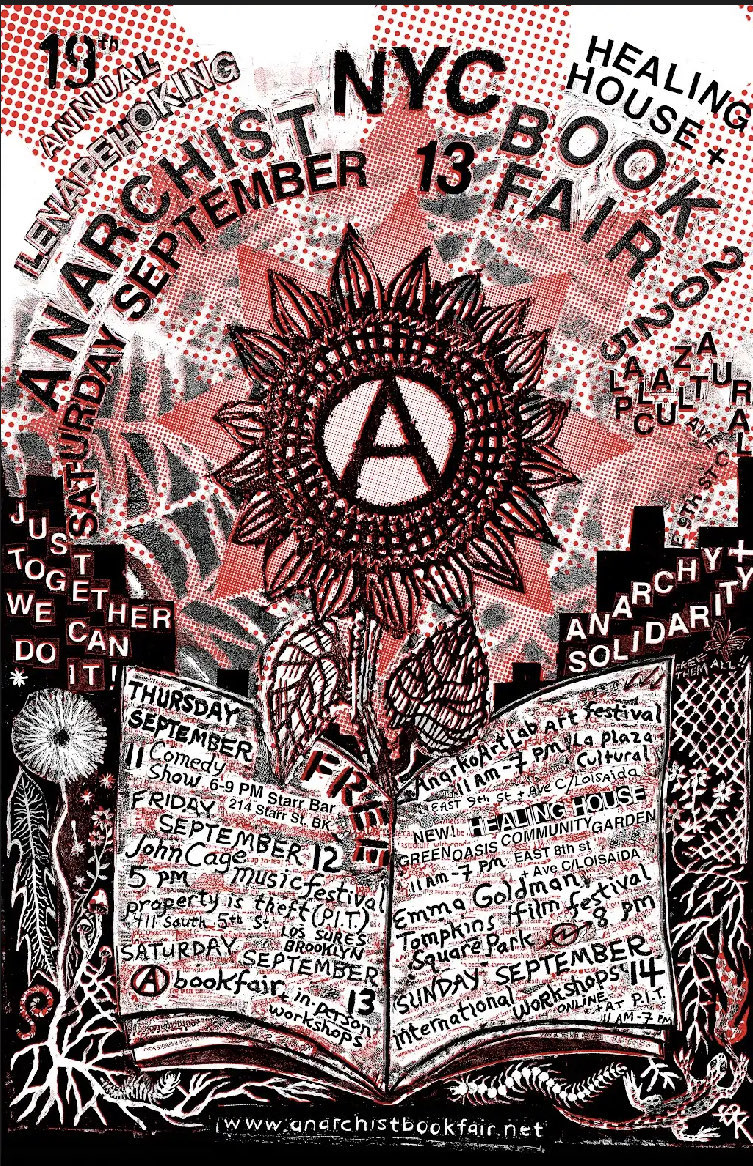
C4SS at the 19th Annual NYC Anarchist Bookfair!

Come drop by and say hey to C4SS comrades on Saturday, September 13th from 11am to 7pm EDT at 674 E 9th Street, La Plaza Cultural de Armando Perez in New York City! There is a ton of programming the weekend of September 13th, however the bookfair itself is on that Saturday.

We will be selling copies of our flagship book Markets Not Capitalism along with a range of books from our catalogue including Studies in Mutualist Political Economy, The Desktop Regulatory State, Organization Theory: A Libertarian Perspective, and more! It’s always a great time with wonderful conversations to be had. We hope to see you there. We will also have tons of stickers and buttons and zines galore.

If you can’t make it to the bookfair you can check out all the materials we will have on offer on the C4SS Store!

Feature Articles
Self-Employment, Workplace Democracy, and Moral Theory

What Matt Zwolinski Gets Wrong About Left-Libertarianism

Over at The Bleeding Heart Libertarian,1 Matt Zwolinski has a recent post about what we left libertarians get right and get wrong. According to Matt, we left libertarians are correct in going after traditional right libertarians for being vulgar libertarians. Further, he argues that we left libertarians are correct for broadly pursuing socialist normative ends—namely, a more egalitarian and prosperous society for the poorest—via market means.

However, Zwolinski claims that we left libertarians make implausible predictions about how radically different a freed market economy would be. These implausible predictions include that stateless ness would result in more self-employment, more worker-managed firms, or the abolition of landlordism. Zwolinski further claims that left libertarians are just ‘plain old Rothbardians,’ committed to an absurd view of deontic self-ownership with unclear conclusions for compensatory justice and/or absurdities like the prohibition of all pollution.

In this response, I will argue that Zwolinski overstates the empirical and theoretical case against a freed market being radically different than capitalism, particularly focusing on the case of self-employment and workplace democracy. Further, I will argue that Zwolinski overlooks the broad diversity of moral philosophies amongst left libertarians.

The Empirical Case for Self-Employment

First, Zwolinski seems to run together two very different empirical predictions most of us left-libertarians make. We predict both that there will be more individual self-employment and that there will be more worker-managed firms under a stateless market with polycentric law. However, these are distinct predictions that require related but distinct forms of comparative institutional analysis. Self-employment refers to the idea of individuals owning and managing their own business, while worker-managed firms or workplace democracy refers to a form of collective management over firms.

Before we delve into the empirical case, it is worth pointing out that the left libertarian belief in and advocacy of such institutional rearrangements is far thicker than merely an empirical prediction. It is also that, but perhaps more fundamentally, they are normative commitments. In truth, there are many institutional forms that a stateless free market society could conceivably take place depending on the preferences, beliefs of the individuals within that market society, and technological status of such a society: from objectionably hierarchical technofeudalist dystopias, to highly localist economies with socialist tendencies, to the sort of cosmopolitan, broadly liberal and libertarian society I and Matt prefer. This is not to say any form of market order is equally likely to obtain in the absence of the state, given social scientific facts and human psychological propensities as well as the path dependent nature of sociopolitical evolution. However, the nomological possibilities of what a stateless market order could look like are quite varied and broad. What we insist is not simply that a freed market would magically lead to an egalitarian utopia, but that we are the market, and by the very act of morally advocating for and attempting to actively build less hierarchical economic and social arrangements, we are helping to bring such arrangements about. Unlike critics like Zwolinski, we do not take the existing preferences of the mean or modal market actor under capitalism as a mere given, but view it as something which itself can be shaped and reformed in the marketplace of ideas.

Having said that, we do make empirical predictions that some more traditionally capitalistic modes of production are particularly unlikely to sustain their dominance in the absence of a state interventions that seem very counter-intuitive to the uninitiated and warrant sustained defense. So for the rest of this section, I will proceed focusing on empirical matters as a possibility proof of the left libertarian vision of what a stateless society could look like. Let’s start with the prediction about self-employment. Zwolinski thinks self-employment is relatively rare in capitalism for the following reasons:

The reason most people don’t work in employee-managed firms isn’t that the state makes it hard for them to do so. It’s that they don’t want it, period. A lot of people are happy to have someone else be the boss, and to leave the headaches of management and risk-bearing to somebody else. That’s not cronyism; it’s just the division of labor.

To understand why self-employment is so rare under status quo statist capitalism requires more than just asserting there is a division of labor between managers with a comparative advantage in directing the firm and assuming risk. We must ask: why exactly is management under capitalism such a headache that it requires such a strong comparative advantage in the first place?

To a significant extent, this is because a large part of management under capitalism is just catering to demands the state makes for firms to make their economic transactions, their workers, and their production methods legible2 to the state for the sake of taxation and regulatory compliance. Indeed, a huge part of any management team of capitalist firms is accounting and compliance specialists who ensure the firm can report to a litany of regulatory bodies and the tax-collecting authority. In a stateless society, many of these functions would likely be heavily streamlined. Some of these roles would still need to exist for firms to comply with a tort law system of polycentric courts and private third-party regulators who contract with firms for signaling certifications.[3] However, the competitive pressures of market competition would likely streamline compliance and make managerial overhead overall a lot less of a problem.

Let us not overstate our case, however. There are other institutionally independent parts of management—such as human resources, risk management, long-term business planning, and so on—which are just necessarily part of the job of a manager of a firm. Zwolinski thinks very few people want to develop a comparative advantage in such things and would prefer to just clock in and clock out in a hierarchical firm. There might be some truth to this, but there is plenty of empirical evidence that he is overstating his case. For example, a Gallup poll last year found that 60% of Americans wanted to be their own boss. 60% of those who wanted to start a business cited lack of startup funds as the biggest hurdle, and only 50% said concerns about financial risk were the hurdle to them starting their own business.4 

Zwolinski might say talk is cheap and revealed preference shows their preferences otherwise when confronting such poll evidence, but even revealed preference shows people moving in the direction of self-employment. Consider the growth and prevalence of the gig economy through services like Uber or Lyft for taxi drivers, DoorDash or Grubhub for delivery drivers, Rula or Better Help for counselors, or LPL or AssetMark for independent investment advisors and financial planners, or Varsity Tutors or Tutor.com for tutors. In every case, these are individuals contracting with a firm that provides a platform that takes care of much of the headache of legal compliance, tax accounting, and marketing as well as offloading some investment risk. This allows individuals to set their own hours and build their own businesses on their terms, effectively rendering it a form of self-employment even if nominally they have some sort of Statutory W2 or 1099 with their platform’s company listed as an employer. Now none of these solutions are perfect5 and the state’s distortions like intellectual property and vagaries in tax law do allow for these platforms to exploit their contractors in various ways, but the fact that the gig economy is flourishing is definitely evidence that many would want more autonomy over their work lives.

Further, one whole reason why people need so much money to start their own business isn’t always high fixed costs which requires a large amount of investment capital and risk. Such natural economies of scale do exist in many industries, but to a very significant extent, there are artificial economies of scale which only exist due to statist legal institutions. These artificial economies of scale include all the ways the state requires every economic actor to become legible for the purposes of tax collection and regulatory compliance, as well as state subsidies to incumbent firms which makes it even harder for smaller market-entrants like self-employed entrepreneurs to challenge. Absent such artificial barriers to entry and economies of scale, I would bet more than 60% would want to pursue self-employment.

For an illustrative example of how the state creates institutions that prevents self-employment, take the case of agriculture. There is no reason to think agriculture needs to be dominated by huge multibillion dollar companies as it is. Agriculture is a relatively capital-intensive industry with high fixed costs, requiring millions of dollars of investment in tractors, combines, silos, barns, fertilizer, and land. However, small-scale self-employed farmers once were the norm and still elsewhere in the world.6 Yet high levels of subsidies which have gone to politically connected farmers7 for generations have created a strong tendency towards centralization.

These artificial economies of scale have been worsened by regulatory barriers from environmental regulations by the EPA, agricultural regulations from the Department of Agriculture, labor regulations from OSHA, and further food regulations from the FDA, all of which create opportunities for regulatory capture by established farmers. The result: even though agriculture has the highest rate of self-employment,8 it has been steadily declining for decades9 as only previously established market incumbents or the wealthiest are able to overcome both the natural and artificial barriers to entry, resulting in increasing levels of market concentration. There is very strong reason to think that absent those distortions by government the agricultural business would more competitive, with self-employed farmers far more common, as was historically the norm. Similar stories have been told in many other industries.

The Empirical Case for Workplace Democracy

Now let us move to the empirical case for workers’ self-management and workplace democracy. What left libertarian defenders of workplace democracy critique is not the notion of division of labor between managers and workers full stop, but the intensely hierarchical form of capitalist management of the joint-stock company in which workers collectively have little to no say in major business decisions nor profit-sharing. Instead such decisions are made by CEOs, corporate boards, and activist investors and any and all excess profit goes to them.

A more democratic workplace need not and should not abolish the existence of functionary managers who make some business decisions any more than a more democratic society requires the abolition of democratic representatives and implementation of direct democracy. Instead, all it requires is that the workers have more ownership decisions over the firm through voting for management representatives instead of outside investors, as well as more share in the profits rather than mere wage labor contracts.

This is a model that has and continues to exist even under state capitalism. It existed for decades (1864-1929) in the barrel-making Cooperage Cooperatives of Minneapolis.10 It existed in the industrial mold making plant under a firm called Marland Mold in Pittsfield Massachusetts from 1992-2017.11 It continues to exist in both Spain’s Mondragón cooperative12 and Germany’s admittedly legally mandated co-determination model of workplace management.13

Zwolinski might acknowledge such things as an empirical reality and that their growth in a more free market is possible, but claim that they are not more common in status quo markets because such firms are simply not competitive. However, this just misunderstands the history of both the joint stock company and worker managed firms.

First, the entire existence of the modern joint-stock company is not a result of pure market competition but colonial conquest. Indeed, the first large-scale modern joint stock companies in the west were firms like the Dutch East India Company, Muscovy Company, and Company of Merchant Adventurers to New Lands, all of which were granted legal monopolies, chartered by Kings and their closely-associated courts, and were heavily state-subsidized.

I would contend the joint-stock company continues to dominate as a consequence of both that distorted institutional inertia, and growing legal edicts which absolves investors from legal liability and makes economic activity more legible to the state for tax and regulatory compliance. While I do not think that the traditional hierarchical joint-stock style companies would entirely disappear in the absence of the state, the fact that they have needed so much state support to start up and continue to dominate is evidence that their prevalence might be diminished in the institutional context of a greatly diminished state and a freer market.

Second, workplace democracies under existing state capitalism have been competitive for extended periods under capitalism even with the institutional deck stacked against them. The Minneapolis Cooperage Cooperatives, while they became slightly less pure workplace management over time, survived until the Great Depression despite intense competitive pressures and largely closed their doors due to the economic downturn rather than anything inherent to their management model. The aforementioned Marland Mold in Pittsfield Massachusetts closed its doors in 2017 after it merged with a French company after 15 years of relative success.14 Mondragon and German codetermination companies continue to be successful on an international market dominated by traditionally hierarchical joint-stock capitalist firms.

The Theoretical Case for Both Self-Employment and Workplace Democracy

Further, in the realm of classical liberal economic theory, there is quite a bit of reason to think self-employment and workplace democracy would be more successful in a more free market institutional context. It has long been observed that the Capitalist firm is like a little island of socialist command-style dictatorship.15 This should be perplexing to a market liberal for Hayekian reasons.

If it is important for individuals to act on their localized tacit knowledge rather than be coerced by a central planner who is far removed from their tacit and localized knowledge, why shouldn’t workplaces give the people actually involved in the day to day production of goods—ie., employees—more power over the firm’s decisions given that they have most of the localized, tacit knowledge about the day-to-day operations of the firm? Indeed, just as there is a knowledge problem for socialist central planners, there is a knowledge problem for corporate central planners, leading to significant inefficiencies.16

The traditional Coasean story for why this is in mainstream economic theory is some level of central planning at the level of the firm helps reduce transaction costs.17 Though there is some truth to this, it is heavily overstated. Consider how often firms make extremely short-sighted and unethical decisions in status quo capitalism, much to the protestations of employees. Take, for example, the recent Boeing 737 Max debacle in which engineers were blowing the whistle on how rushed the project was, but management pushed it through anyway resulting in disastrous and costly accidents.18 Such problems are pervasive in hierarchical firms.

While hierarchical firms do result in fewer transaction costs, this comes at the expense of stifling the localized and tacit knowledge that workers have in guiding the firm. How this tradeoff should be resolved—between minimizing transaction costs and incorporating the worker’s local knowledge—is something that the market should determine. But under status-quo capitalism the thumb has been put on the scale against workplace democracy and created artificial pressure towards firm hierarchy. This undermines Zwolinski’s assumption that hierarchy in firms merely reflects natural specialization rather than distorted institutional incentives.

We left libertarians could be wrong about that prediction. Further, I fully expect there will be some industries with such high natural barriers to entry due to natural economies of scale and networking effects such as transportation infrastructure, electric utilities, or telecommunications that the firms would have to be so large that something closer to a capitalist firm would probably dominate to reduce transaction costs. However, such industries are likely a small minority. Regardless, just handwaving about comparative advantages in management and transaction costs, as many right libertarian and capitalist economists do, is by itself insufficient to discuss this complicated empirical question. Similar things could be said about why we left libertarians think wealth inequality and landlordism are largely a symptom of the crony capitalist state rather than the market process itself.

The Diversity of Moral Views Within Left Libertarianism

So much for the empirical point, now let us address the moral foundations of left libertarianism. According to Zwolinski, “In terms of its underlying philosophical principles, left-libertarianism is basically just plain old Rothbardianism.” While some left libertarians, like Jason Lee Byas,19 Cory Massimino,20 and Roderick Long are far more sympathetic to Rothbard than either Matt or I are, this is simply a straw man of their views.

Even the most Rothbardian among us at C4SS do not merely believe in deontic self-ownership as the basis of all morality like Rothbard did. Long is a eudemonistic Aristotelian virtue ethicist who, unlike Rothbard, believes that the unity of virtue means our conception of property rights need to be held in something of a reflective equilibrium with our commitment to equality.21 Byas also is a eudemonistic virtue ethicist and defends a form of relational egalitarianism that would have made Rothbard in his later years squirm22 and has forthcoming work in which he critiques the notion of self-ownership for implying an alienability of natural rights.23

Further, most left libertarians are not even Rothbardians in a broad sense. Some of us, like the late Fred Foldvary, are more Georgist.24 Gary Chartier, one of only two left libertarians Matt mentions by name, bases his moral philosophy on New Natural Law theory rather than Rothbardian deontology.25 Many of us, like Kevin Carson26 and Shawn Wilbur,27 are far closer to Proudhonian mutualism than Rothbard. William Gillis is straight-up a consequentialist who is extremely opposed to any Rothbardian theory of negative natural rights.28 I myself defend a form of Rossian pluralist deontology rather than strict Rothbardian or Nozickean self-ownership. I think we must attain a reflective equilibrium to resolve tensions between deontic rights considerations that come from prima facie duties of autonomy and non-malfeasance and more consequentialist considerations that come from prima facie duties of benevolence, and that balancing act avoids a lot of the absurdities Zwolinski sees in Rothbard. This is to say nothing of some social anarchist who are far more sympathetic to Marxist critiques of markets based in alienation and see more room for syndicalist cooperatives are who are even more radically opposed to Rothbard than most of us left market anarchists.

There are simply more left libertarianisms on heaven and earth than are dreamt of in Zwolinski’s philosophy. Just as most if not all libertarian and classical liberals in academic philosophy are not simply unreformed Nozickians, few if any left libertarian anarchists are unreformed Rothbardians. This pluralism renders the notion of a unified ‘Rothbardianism’ among left-libertarians not just simplistic, but empirically inaccurate.

Conclusion: The Relationship Between Bleeding Heart Libertarians and Left Libertarians

Much of what Zwolinski says about how he is a fellow traveler of us left libertarians who has strong sympathies with us could be stated mutually. Zwolinksi’s work, as well as the work of other bleeding heart libertarians like Thomasi, Brennan, and the late Steve Horwitz have been very influential over me over the years. I do not write this criticism of him in the spirit of derision. I, too, would take a more moderate bleeding heart libertarianism/neoclassical liberalism over a reactionary Hoppean or late Rothbardian paleo libertarianism any day.

However, I think if bleeding heart libertarians were to more carefully engage with us left libertarian anarchists, they would see that the philosophical differences between us are far less stark than it would seem. Further, our empirical predictions, as radical as they might sound, have far more theoretical and empirical support than you might expect.


Footnotes

[1] Zwolinski, Matt. “Thoughts from a Bleeding Heart Fellow Traveler.” The Bleeding Heart Libertarian. 25 July 2025. https://bleedingheartlibertarian.substack.com/p/thoughts-on-left-libertarianism 

[2] I’m using legibility in James C. Scott’s sense from Seeing Like a State. For an extensive discussion of how left libertarian incorporate this notion of legibility see Carson, Kevin. “Legibility & Control: Themes in the Work of James C. Scott.” Center for a Stateless Society, 12 (Winter/Spring 2011). https://c4ss.org/wp-content/uploads/2011/05/James-Scott.pdf 

[3] I’m referring here to firms like Underwriter Laboratories which firms might contract with to put a brand on to show consumers they are meeting a level of quality and safety. For an extensive discussion of such non-state regulatory schemes see Yilmaz, Yesim. “Private Regulation: A Real Alternative for Regulatory Reform.” Cato Policy Analysis, 303 (20 April 1998).

[4] Jones, Jeffry M. “Desire to Be Own Boss Widely Held in U.S.” Gallup. 6 June 2024. https://news.gallup.com/poll/645593/desire-own-boss-widely-held.aspx 

[5] For a discussion of the flaws and promises of the gig economy, see Carson, Kevin. “Which Way for the Gig Economy,” Center for a Stateless Society, 14 February 2016. https://c4ss.org/content/43397 

[6] For an extensive discussion of policies which have driven consolidation in agriculture and their costs, see Chrisman, Siena. “Bigger is Not Better: The High Cost of Agribusiness Consolidation.” Action Aid, September 2021. https://www.actionaidusa.org/publications/bigger-is-not-better-the-high-cost-of-agribusiness-consolidation/ 

[7] For an extensive discussion of how subsidies in particular have driven regulatory capture, see Best, Paul. “Farm Bill Sows Dysfunction for American Agriculture.” Cato Institute, 10 January 2024. https://www.cato.org/policy-investigation/farm-bill-sows-dysfunction-american-agriculture#chance-reform 

[8] Pew Research Center, “National Trends in Self-Employment and Job Creation.” PewResearch.org, 22 October 2015. https://www.pewresearch.org/social-trends/2015/10/22/national-trends-in-self-employment-and-job-creation/ 

[9] St. Louis Federal Reserve. “Self-employed persons: Farms.” StLouisFed.org, 25 October 2023. https://fred.stlouisfed.org/series/N4503C0A173NBEA 

[10] Prychitko, David. “Worker Cooperatives Within a Market Process: Lessons from the Cooperage Cooperatives of Minneapolis, 1864-1929.” In Marxism and Worker’s Self Management, David Prychitko (Praeger, 1991) 83-100.

[11] Center for Learning and Action. “The Case of Marland Mold.” Williams College, 2017. https://learning-in-action.williams.edu/breaking-the-mold/the-case-of-marland-mold/ 

[12] Kremle, Andrew. “Radicalizing Mondragon: Size, Polycentricity, and the Obsolescence of Management.” Center for a Stateless Society: 19 February 2021. https://c4ss.org/content/54413 

[13] McGaughey, Ewan. “The Codetermination Bargains: The History of German Corporate and Labour Law.” Columbia Journal of European Law 23, No. 31 March 2015.  https://dx.doi.org/10.2139/ssrn.2541877 

[14] Dobrowolski, Tony. “French firm to close Curtil Marland Mold in Pittsfield; 40 positions lost.” The Berkshire Eagle, 16 February 2017. https://www.berkshireeagle.com/archives/french-firm-to-close-curtil-marland-mold-in-pittsfield-40-positions-lost/article_9f5e509d-e91b-55c9-ac27-88b482f4476e.html 

[15] See, for example, Anderson, Elizabeth. Private Government: How Employers Rule Our Lives (and Why We Don’t Talk about It). Princeton University Press: 2017.

[16] Theodore Burczak makes this same argument in Socialism After Hayek. Ann Arbor: University of Michigan Press, 2006), 117-121. See also Carson, Kevin. “Economic Calculation in the Corporate Commonwealth.” Center for a Stateless Society, 16 November 2012. https://c4ss.org/content/14497

[17] Coase, RH. “The Nature of the Firm.” Economica 4, no. 16 (November 1937): 386-405. https://onlinelibrary.wiley.com/doi/10.1111/j.1468-0335.1937.tb00002.x 

[18] For an extended discussion of how Boeing’s management decisions led to this problem, see “Designed by Clowns!”| How Boeing’s Mistakes Led to the 737 MAX Crashes!” posted 9 December 2004 by Mentour Now, You Tube, 28 min., 38 sec., https://www.youtube.com/watch?v=L5KQ0g_-qJs 

[19] Byas, Jason L. “How Rothbardians Occupy Part of the Occupancy and Use Spectrum.” Center for a Stateless Society, 23 November 2015. https://c4ss.org/content/41581 

[20] Massimino, Cory. “Two Cheers for Rothbardianism,” in The Routledge Handbook of Anarchy and Anarchist Thought, ed. Gary Chartier and Chad Van Schoelandt. (New York: Routledge, 2021) 163-186. https://ebrary.net/282346/history/cheers_rothbardianism 

[21] Long, Roderick T. “Why Does Justice Have Good Consequences?” Presented at the Alabama Philisophical Society, Orange Beach October 2002. https://praxeology.net/whyjust.htm. Long further defended this view in my interview with him on Mutual Exchange Radio. See Woodman, Zachary, host, Interview with Roderick Long. Mutual Exchange Radio. Podcast Audio, 13 February 2020. https://c4ss.org/content/52611

[22] Woodman, Zachary, host, Interview with Jason Lee Byas. Mutual Exchange Radio. Podcast Audio, 5 May 2020. https://c4ss.org/content/52862

[23] Ibid. See also Byas, Jason L. “Works in Progress: A paper on the alienation and forfeiture of natural rights.” JasonLeeByas.com, https://www.jasonleebyas.com/research.

[24] Foldvary, Fred. “Georgist Occupancy with Rent.” Center for a Stateless Society, 20 November 2015.  https://c4ss.org/content/41563 

[25] Chartier, Gary. Flourishing Lives. Cambridge University Press, 2019

[26] Carson, Kevin. “Are We All Mutualists?” Center for a Stateless Society, 8 November 2018. https://c4ss.org/content/40929 

[27] Wilbur, Shawn P. “Limiting Conditions and Local Desires.” Center for a Stateless Society, 10 November 2015. https://c4ss.org/content/41502 

[28] Woodman, Zachary, host, Interview with William Gillis. Mutual Exchange Radio. Podcast Audio, 30 July 2019. https://c4ss.org/content/52295 

Indonesian, Stateless Embassies
Mengapa Libertarian Harus Membuang “Kapitalisme”

Oleh: Gary Chartier. Teks aslinya berjudul “We Should Abandon the Term “Capitalism”. Diterjemahkan ke Bahasa Indonesia oleh Ameyuri Ringo.

Support Ringo by considering becoming his Patron.

Mendukung kebebasan berarti menolak penggunaan kekuatan untuk membatasi pertukaran sukarela yang damai. Namun, itu tidak harus berarti bahwa sistem pertukaran sukarela yang damai harus disebut sebagai “kapitalisme.”

Sebagian orang mungkin berpendapat bahwa inilah makna “kapitalisme” yang sesungguhnya. Saya tidak bisa membuktikan mereka salah, karena istilah ini bisa memiliki arti berbeda bagi setiap individu. Meski begitu, saya percaya bahwa jika para pendukung kebebasan ingin menyampaikan bahwa mereka mendukung pertukaran bebas dengan menyebut diri mereka sebagai “kapitalis,” mungkin lebih baik jika mereka memilih istilah lain.

Istilah “kapitalisme” membawa banyak beban makna, sebagian besar bersifat negatif. Tidak jelas kapan kata “capitalism” dalam bahasa Inggris pertama kali digunakan. Menurut Oxford English Dictionary, William Makepeace Thackeray menggunakannya (dalam konotasi netral) pada tahun 1854–55 dalam novelnya The Newcomes. Namun, istilah ini sudah digunakan secara kritis jauh sebelum itu. Misalnya, penulis pasar bebas radikal Thomas Hodgskin telah menggunakan istilah ini dengan konotasi negatif sejak tahun 1825. Dalam bukunya yang diterbitkan pada tahun 1827, Popular Political Economy, ia bahkan berbicara dengan nada yang cukup modern tentang “kapitalis yang serakah”!

Tentu saja, fakta bahwa seorang penulis pro-pasar radikal menggunakan istilah “kapitalis” atau “para kapitalis” secara negatif tidak membuktikan bahwa kata tersebut sepenuhnya tidak bisa diperbaiki. Namun, saya menyebut Hodgskin untuk menunjukkan bahwa istilah ini telah digunakan secara peyoratif sejak lama, dan bukan hanya oleh penentang pasar bebas. Saat ini, cukup jelas bahwa banyak orang yang berbicara tentang “kapitalisme” atau “kapitalis” sama sekali tidak memikirkan kebebasan.

Sebagai contoh, media arus utama sering menggunakan istilah “kapitalisme” untuk merujuk pada “sistem ekonomi yang kita miliki saat ini.” Selain itu, tidak jarang istilah ini dipakai sebagai sinonim dari dominasi oleh para pemilik modal di tempat kerja dan masyarakat. Pendukung kebebasan jelas tidak perlu diidentifikasi sebagai pendukung kapitalisme dalam pengertian ini.

Seperti yang dikemukakan filsuf libertarian Roderick Long, penggunaan istilah “kapitalisme” yang menyesatkan sering terjadi ketika orang menggunakannya untuk merujuk sekaligus pada “pertukaran bebas” dan “status quo,” atau “penguasaan oleh para kapitalis,” atau kombinasi dari keduanya. Dalam konteks ini, “kapitalisme” berfungsi sebagai konsep “paket-deal” yang menggabungkan dua ide independen seolah-olah keduanya selalu saling terkait. Para pendukung kebebasan memiliki alasan kuat untuk menolak penggunaan istilah “kapitalisme” semacam ini, kecuali mereka ingin membenarkan gagasan bahwa pasar bebas secara inheren melibatkan hak istimewa dan berujung pada hierarki, otoritarianisme, serta kemiskinan.

Dalam banyak hal, sistem ekonomi yang kita miliki saat ini tidak mendukung pertukaran yang damai dan sukarela. Jaringan saling terkait dari aturan hukum dan regulasi menguntungkan orang kaya dan berpengaruh, sambil sering mengorbankan masyarakat luas (misalnya paten, hak cipta, tarif, pembatasan perbankan, aturan lisensi pekerjaan, dan pembatasan penggunaan lahan). Kompleks industri-militer menyalurkan uang dalam jumlah luar biasa—secara paksa—dari kantong rakyat biasa ke rekening para kontraktor pemerintah dan kroninya. Berbagai subsidi memperkuat hak istimewa bagi bisnis besar dan organisasi nirlaba. Negara juga melindungi kepemilikan tanah yang diperoleh secara paksa atau melalui keputusan sewenang-wenang sebelum didistribusikan kepada individu atau kelompok tertentu.

Memang benar bahwa ekonomi di AS, Kanada, Eropa Barat, Jepang, dan Australia tidak direncanakan secara sentralistik. Negara tidak secara resmi mengklaim kepemilikan (sebagian besar) sarana produksi. Namun, keterlibatan negara di berbagai tingkatan dalam menjamin dan memperkuat hak istimewa ekonomi membuat sulit menggambarkan sistem saat ini sebagai “bebas.” Jadi, jika “kapitalisme” merujuk pada sistem yang ada sekarang, siapa pun yang mendukung kebebasan memiliki alasan kuat untuk skeptis terhadap kapitalisme.

Hak istimewa yang ada dalam tatanan ekonomi saat ini, apapun sebutannya, secara tidak proporsional menguntungkan mereka yang memiliki pengaruh politik dan kekayaan terbesar. Hak istimewa yang dipertahankan negara cenderung memperkuat posisi para kapitalis di tempat kerja. Dalam konteks tempat kerja, hak istimewa yang dijamin negara dapat mengurangi kesempatan berwirausaha (dengan menaikkan persyaratan modal dan biaya masuk, sekaligus mengurangi sumber daya yang dapat digunakan orang untuk memulai dan mempertahankan bisnis mereka). Negara juga memberlakukan pembatasan hukum terhadap aktivitas serikat pekerja, yang mengurangi kemampuan pekerja menawar secara efektif, termasuk Undang-Undang Wagner (Wagner Act) yang membatasi kekuatan serikat dan opsi negosiasi non-kekerasan. Dengan mengurangi alternatif pekerjaan bergaji dan peluang tawar-menawar kolektif pekerja, negara secara substansial meningkatkan leverage pemberi kerja. Singkatnya, dominasi tempat kerja dan masyarakat oleh “kapitalis” seperti yang kita lihat saat ini sangat bergantung pada campur tangan merugikan negara. Jika ini “kapitalisme,” pendukung kebebasan tidak memiliki alasan untuk menerimanya.

Tentu saja, seseorang bisa berargumen bahwa meskipun istilah “kapitalisme” sering digunakan untuk merujuk pada fenomena sosial yang dipersoalkan, istilah ini juga kadang digunakan untuk menggambarkan sistem ekonomi di mana kebebasan benar-benar menjadi inti. Beberapa orang memang menggunakannya demikian. Namun, penggunaan negatif istilah ini telah ada sejak lama dan sangat umum saat ini. Kata tersebut telah ternoda. Ketika orang-orang di jalanan negara-negara berkembang menolak “kapitalisme”—yang sebenarnya merujuk bukan pada kebebasan sejati, melainkan dominasi tidak adil oleh kekuatan Barat dan kroni korporasi mereka—sangat penting bagi pendukung kebebasan untuk menjelaskan bahwa sistem penindasan yang mereka maksud bukanlah sistem yang didukung pendukung kebebasan.

Para kontributor halaman editorial Wall Street Journal, komentator di Faux News, dan juru bicara elit politik dan ekonomi lainnya mungkin akan terus menggunakan istilah “kapitalisme” untuk apa pun yang mereka dukung. Mereka bukan sekutu alami libertarianisme, dan tidak ada alasan bagi libertarian untuk meniru mereka. Dukungan terhadap pasar bebas sejatinya sama dengan mengucapkan selamat tinggal kepada istilah “kapitalisme.”

Seluruh hasil publikasi didanai sepenuhnya oleh donasi. Jika kalian menyukai karya-karya kami, kalian dapat berkontribusi dengan berdonasi. Temukan petunjuk tentang cara melakukannya di halaman Dukung C4SS: https://c4ss.org/dukung-c4ss.

Terjemahan untuk artikel ini:

● Dutch, We moeten afstand doen van de term “Kapitalisme”.

● Italian, Dovremmo Abbandonare la Parola “Capitalismo”.

Indonesian, Stateless Embassies
Membela Pasar, Melawan Kapitalisme

Oleh: Garry Chartier. Teks aslinya berjudul “Embracing Markets, Opposing “Capitalism. Diterjemahkan ke Bahasa Indonesia oleh Ameyuri Ringo.

Support Ringo by considering becoming his Patron.

Menjadi seorang libertarian berarti menolak penggunaan kekuatan untuk menghalangi pertukaran yang damai dan sukarela. Namun, itu bukan berarti secara otomatis menjadi bentuk dukungan atas kapitalisme.

Apakah pernyataan ini masuk akal atau tidak tergantung pada apa yang kamu maksud dengan “kapitalisme.” Bagi sebagian orang, istilah ini mungkin hanya merujuk pada pertukaran bebas. Jika itu yang kamu maksudkan saat membicarakan “kapitalisme,” maka kamu benar bahwa tidak ada pertentangan yang berarti antara pandangan itu dan pemikiran libertarian yang rasional.

Namun, banyak orang sering memiliki makna lain ketika mereka menyebut kapitalisme. Misalnya, media arus utama sering menyebut “kapitalisme” untuk merujuk pada “sistem ekonomi yang kita miliki sekarang.” Selain itu, tidak jarang “kapitalisme” digunakan sebagai sinonim untuk “dominasi oleh para kapitalis di tempat kerja dan masyarakat.” Prinsip-prinsip libertarian, seperti yang saya pahami, jelas tidak mendukung kapitalisme dalam kedua pengertian ini.

Dalam banyak hal, sistem ekonomi yang kita miliki sekarang tidak mendukung pertukaran yang damai dan sukarela. Terdapat jaringan saling terkait dari aturan hukum dan regulasi yang menguntungkan orang kaya dan berpengaruh sambil sering mengorbankan masyarakat luas (misalnya paten, hak cipta, tarif, pembatasan perbankan, aturan lisensi pekerjaan, dan pembatasan penggunaan lahan). Industri militer dan senjata menyalurkan dana yang sangat besar—secara paksa—dari kantong rakyat biasa ke rekening para kontraktor pemerintah dan kroninya. Berbagai subsidi memperkuat hak istimewa bagi bisnis besar dan organisasi nirlaba. Di sisi lain, negara melindungi kepemilikan tanah yang diambil secara paksa atau diperoleh melalui keputusan sewenang-wenang sebelum didistribusikan kepada individu dan kelompok tertentu yang diuntungkan.

Memang benar bahwa ekonomi di AS, Kanada, Eropa Barat, Jepang, dan Australia tidak direncanakan secara sentralistik. Negara tidak secara resmi mengklaim kepemilikan (kebanyakan) sarana produksi. Namun, keterlibatan negara di berbagai tingkatan dalam menjamin dan memperkuat hak istimewa ekonomi bagi kroninya membuat sulit bagi kita untuk menggambarkan sistem ekonomi saat ini sebagai sistem yang bebas. Jadi, jika “kapitalisme” merujuk pada sistem yang ada sekarang, siapa pun yang mendukung kebebasan memiliki alasan kuat untuk skeptis terhadap kapitalisme.

Hak istimewa yang ada dalam tatanan ekonomi saat ini, apapun sebutannya, secara tidak proporsional menguntungkan mereka yang memiliki pengaruh politik terbesar dan kekayaan melimpah. Hak istimewa yang dipertahankan oleh negara cenderung memperkuat posisi para kapitalis di tempat kerja. Dalam konteks tempat kerja, hak istimewa yang dijamin negara dapat mengurangi kesempatan berwirausaha dengan menaikkan persyaratan modal dan biaya masuk, sambil mengurangi sumber daya yang dapat digunakan orang untuk memulai dan mempertahankan bisnis mereka sendiri. Selain itu, negara juga memberlakukan batasan terhadap aktivitas serikat pekerja, yang mengurangi kemampuan pekerja untuk bernegosiasi secara efektif dengan pemberi kerja. Dengan mengurangi alternatif pekerjaan bergaji dan peluang tawar-menawar kolektif pekerja, negara secara substansial meningkatkan kekuatan tawar-menawar pemberi kerja.

Singkatnya, dominasi tempat kerja dan masyarakat oleh “kapitalis” tidak dapat dipahami dalam bentuknya yang sekarang tanpa mempertimbangkan peran buruk yang dimainkan oleh negara. Jika ini adalah apa yang disebut “kapitalisme,” maka istilah ini menjadi tidak relevan untuk didukung oleh mereka yang menganut kebebasan.

Sangat mungkin seseorang berargumen bahwa, meskipun “kapitalisme” sering digunakan untuk merujuk pada fenomena sosial yang tidak diinginkan, istilah ini juga dipakai untuk menggambarkan sistem ekonomi di mana kebebasan benar-benar menjadi inti. Saya tidak yakin mengenai proporsi yang relevan atau seberapa besar bobot yang harus diberikan pada setiap penggunaan istilah “kapitalisme.” Namun, saya cukup yakin bahwa penggunaan negatifnya sudah ada sejak lama (istilah “kapitalis” dalam arti merendahkan digunakan oleh pendukung pasar bebas seperti Thomas Hodgskin pada paruh pertama abad ke-19) dan semakin umum saat ini.

Bahkan, saya khawatir, ketika “kapitalisme” digunakan dalam arti positif, istilah ini sering menjadi dua sisi mata koin yang tak terpisahkan, yang mencakup baik “pertukaran bebas” maupun “status quo” atau “pemerintahan oleh kapitalis,” seperti yang dengan baik dijelaskan oleh Roderick Long. Istilah ini telah ternoda. Ketika orang-orang di jalanan negara-negara berkembang menyuarakan penolakan mereka terhadap “kapitalisme”—yang sebenarnya bukan berarti kebebasan sejati, melainkan dominasi imperial oleh pemerintah AS dan sekutunya—sangat penting bagi libertarian untuk menjelaskan bahwa sistem penindasan yang disebutkan pengunjuk rasa bukanlah yang didukung pendukung kebebasan.

Para kontributor di halaman editorial Wall Street Journal, komentator di Faux News, dan juru bicara elit politik dan ekonomi lainnya mungkin akan terus menggunakan istilah “kapitalisme” untuk merujuk pada apa pun yang mereka dukung. Mereka bukan sekutu alami libertarianisme, dan tidak ada alasan bagi libertarian untuk meniru mereka. Dukungan terhadap pasar bebas (atau pasar yang dibebaskan) sepenuhnya konsisten dengan semangat anti-kapitalisme.

Seluruh hasil publikasi didanai sepenuhnya oleh donasi. Jika kalian menyukai karya-karya kami, kalian dapat berkontribusi dengan berdonasi. Temukan petunjuk tentang cara melakukannya di halaman Dukung C4SS: https://c4ss.org/dukung-c4ss.

Spanish, Stateless Embassies
Repensando los Sistemas para Estructurar y Usar el Tiempo

Por Vishal Wilde. Artículo original: Rethinking Systems for Structuring Time, 24 de Mayo, 2025. Traducido por Felix Hallowkollekt.

Repensando los sistemas para estructurar y usar el tiempo

El tiempo es fundamental para la existencia y la experiencia humana. Los marcos sociales para estructurar y entender el tiempo y la experiencia temporal han, sin embargo, permanecido estancados y pueden que potencialmente ya no sean aptos para su finalidad prevista o, más importante, para los propósitos que podríamos tener para ellos en la actualidad. En efecto, cuando consideramos la historia de las ciencias y las “maneras de saber” de manera más amplia, los paradigmas usados por las sociedades, (sub)culturas y comunidades (científicas) para el entendimiento, el conocer y el vivir han cambiado con frecuencia, adaptándose y siendo generalmente modificados; estos paradigmas son, sin embargo, basados, o incluso enteramente centrados, en concepciones particulares del tiempo.

Tomemos el sistema del calendario gregoriano —basado en un año común de 365 días con 12 meses irregulares— que fue presentado en 1582. Este calendario continúa siendo usado en la mayoría de los lugares del mundo, a pesar de un dinamismo ambiental creciente (incluyendo volatilidad e incertidumbre) y avances tecnológicos acelerados. Esto significa que las sociedades y el ritmo al que cambian, para los cuales este sistema de calendario se introdujo, contrastan marcadamente con las sociedades que lo utilizan actualmente (hasta el punto de ser casi completamente irreconocibles). La manera en la que las personas vivían sus vidas en el siglo XVI e incluso tan recientemente como en el siglo XX es muy diferente a la del siglo XXI.

Aunque habría habido motivaciones socioculturales, agrícolas, comerciales y administrativas para transicionar al calendario gregoriano, estas esferas de actividades son significativamente diferentes a lo que eran en siglos precedentes. Sea por la globalización acelerada, la omnipresencia de la informática y las tecnologías de la información, o transiciones graduales que se alejaban de la agricultura y manufactura preindustrial como bases de la actividad económica, el sistema del calendario gregoriano no estaba diseñado con nuestra realidad presente en mente. Aunque los cambios en estos fenómenos socioeconómicos se manifiesten de manera dispar (por ejemplo, en el Norte Global frente al Sur, en comunidades rurales, semi-rurales o urbanas, en países con alto, medio o bajo nivel de riqueza, en distintas poblaciones y sistemas ecológicos, etc.), el hecho de que el modo general de existencia humana se ha alterado fundamentalmente a nivel global comparado con el siglo XVI se mantiene.

La norma ISO 8601 es un estándar internacional para la presentación de la fecha, la hora del día, la hora universal coordinada (UTC), la diferencia horaria local con respecto a la UTC, los intervalos de tiempo y los intervalos de tiempo recurrentes. Usa el calendario gregoriano como su base y busca ayudar a la eliminación de dudas que pueden surgir de las diversas convenciones de fecha y día, culturas temporales y zonas horarias que pueden impactar una operación global. Sin embargo, aunque busca mejorar la cohesión, el objetivo principal no aparenta ser acelerar el progreso universal ni permitir la optimización alineada con la gran variedad de actividades que realizan las civilizaciones y sociedades.

Disfunción sistémica

Es enteramente posible que estemos viendo y experimentando síntomas de disfunción sistémica emergentes de cómo desplegamos marcos para estructurar el tiempo. Algunos ejemplos incluyen llamados cada vez más frecuentes a una “semana laboral de cuatro días,” el aumento reportado del “agotamiento laboral” y observaciones acerca de la salud mental alrededor del mundo. Otros son los retos del trabajo globalizado en diferentes zonas horarias o estudios que demuestran una desconexión cada vez más evidente con la naturaleza. Luego está el hecho bien documentado de la plasticidad cerebral (y preguntas acerca de qué significa esto, más generalmente, para la humanidad en la era de la información comparado con sociedades industriales o preindustriales) o problemas del sueño, entre muchos otros fenómenos. Esta lista podría continuar, pero no pretende ser exhaustiva.

Han existido, y siguen existiendo, numerosos sistemas de calendario a lo largo de la historia mundial que continúan operando en paralelo. Precediendo al calendario gregoriano estuvo el calendario juliano, y entre las razones clave para el cambio estaba que el calendario juliano era propenso a “sobrecorregir por ocho días cada milenio”, mientras que la “sobrecorrección” del calendario gregoriano en referencia a la órbita de la Tierra alrededor del Sol era mucho menor.

Otros enfoques que continúan existiendo (tengamos en cuenta que los adherentes y miembros de estas comunidades pueden referirse a sí mismos con términos diferentes) incluyen el sistema de calendario budista, chino, etíope, hindú, islámico, judío y persa, aunque estos parecen tener principalmente propósitos culturales y religiosos (al menos a primera vista), cada uno con sus propias ventajas, desventajas, fundamentos técnicos y complejidades. Notablemente, las filosofías y teologías relacionadas, fundamentales o asociadas con varias religiones, regularmente hacen uso de diferentes concepciones del tiempo y de la experiencia temporal. Los economistas, inversores y actores/participantes del mercado suelen usar “calendarios económicos.” Sin embargo, nuevamente, esto entra dentro de las limitaciones de un sistema de calendario y de las estructuras preexistentes para el tiempo, aunque constituye una indicación de suboptimalidad en estas actividades. De manera comparable, los físicos han explorado concepciones y entendimientos del tiempo diferentes en sus asuntos científicos, con numerosos avances sustanciales acompañados o facilitados por aplicaciones contextuales y/o reconceptualizaciones del tiempo.

Claramente, algunos sistemas de calendarios son usados con propósitos socioculturales (incluyendo religiosos) específicos, mientras que otros, como los calendarios económicos, son más útiles para servicios financieros y análisis económicos; estos pueden ser usados de manera enteramente separada del calendario gregoriano, en paralelo, o encapsulados dentro del mismo. Intrigantemente, un artículo del diario de 1998 en Nomadic Peoples titulado “La Manipulación del Tiempo: Calendarios y Poder en el Sahara” describió cómo, “en la región del Sahara, no es difícil encontrar personas que usen tres o cuatro tipos diferentes de calendario contemporáneamente, usualmente para organizar distintos tipos de actividades.”

Sin duda, la adopción y el uso de sistemas de calendarios ha estado grandemente influenciada por factores socioculturales, así como por los aspectos prácticos de la agricultura, el comercio (internacional) y la administración. Aun así, la fragmentación estructural y la disparidad en los marcos puede llevar a ineficacias sistémicas y/o problemas; por el contrario, la adopción de un conjunto de estructuras tiene el potencial de amplificar problemas específicos del sistema. No estoy sugiriendo que las alternativas al calendario gregoriano representen mejoras absolutas o alternativas prácticas, pero sí ilustran la amplitud de posibilidades.

Es hora de un cambio?

Cuando consideramos el rango de diferencias entre sociedades y/o civilizaciones que han exhibido predominantemente tendencias nómadas o agrarias frente a la industrialización, la modernidad y la posmodernidad, es natural preguntarnos si los marcos actuales para estructurar el tiempo y la experiencia temporal (por ejemplo, a través de sistemas de calendarios continuos, usos de franjas horarias, relojes, estaciones y subdivisiones de unidades estándar básicas) siguen siendo adecuados en contextos y entornos contemporáneos. Tomemos las propuestas para una semana laboral de cuatro días como ejemplo: ¿quién dice que siete es el número óptimo de días para tener en una semana y no seis, ocho o nueve? ¿Deberíamos seguir teniendo 60 segundos en un minuto, 60 minutos en una hora o 12 meses en un año? ¿Son los años, meses, semanas, horas, días, minutos y segundos siquiera la mejor manera de estructurar interpersonal, colectiva y agregadamente nuestra experiencia del tiempo?

¿Habría beneficios en una reconceptualización más maleable y flexible de las estaciones y los meses que, además de tener en cuenta las actividades agrícolas y los eventos socioculturales, incorpore otros fenómenos como el trastorno afectivo estacional y el cambio de estaciones? Después de todo, los cambios en el medio ambiente y el clima, en el contexto de debates contemporáneos u otros, han sido un hecho durante la existencia del planeta Tierra por miles de millones de años hasta ahora, y durante los cientos de millones de años en que razonablemente se espera que permanezca habitable. ¿Podríamos, de manera efectiva, implementar dinamismo y adaptabilidad en nuestras medidas (cuantificables) y conceptualización del tiempo para, por ejemplo, permitir que estos sistemas estructurados y marcos mejoren continuamente y se optimicen frente a un rango de actividades, circunstancias y métricas, como las diferencias transversales e internacionales en el uso del tiempo, dormir, trabajar, el ocio, el trabajo globalizado y las conexiones interpersonales entre zonas horarias, felicidad, bienestar, productividad, ejercicio, espiritualidad, el clima e incluso cambios en las estaciones?

A prueba del futuro

Si nada más, parece haber varios problemas y cuestiones cuya similitud subyacente es que se experimentan con el tiempo. Volviendo a los sistemas de calendarios como ejemplos salientes de sistemas civilizacionales y sociedades para estructurar el tiempo y la experiencia temporal, no está claro cómo o por qué un sistema de calendario introducido en el siglo XVI puede ser óptimo para el siglo XXI o cómo puede estar realísticamente “a prueba del futuro”.

Aquellos sistemas, marcos y estructuras ejercen una enorme influencia en los comportamientos individuales y colectivos, así como en sus resultados y efectos; el modelo biopsicosocial es intuitivamente comprensible por apreciar las conexiones de factores socioecológicos, biológicos y psicológicos. Muestra cuán profundas pueden ser las consecuencias: en simples palabras, las interacciones socioecológicas y actividades directamente influencian la psicología de las personas así como su biología; por el contrario, los factores biológicos influyen en los aspectos psicológicos y socioculturales. Además, la psicología de un individuo puede influir en sus factores biológicos y socioculturales. Juntos, estos tres conjuntos de factores fundamentalmente interconectados determinan nuestra salud y bienestar (mental y físico).

Las civilizaciones y sociedades se enfrentan a diferentes conjuntos de desafíos y oportunidades en la Era de la Información, y es posible que las prioridades de la humanidad continúen cambiando en futuras eras y épocas. Si consideramos las subdivisiones del tiempo (segundos, minutos, horas, días y semanas), la implementación de franjas horarias, los sistemas de calendario, la recalibración de las estaciones y cómo/cuándo es mejor realizar diversas actividades, podríamos aprovechar varios beneficios a través de la reconceptualización (o modernización) de los marcos temporales y sistemas que sustentan nuestras experiencias colectivas.

Un marco novedoso, que mejore nuestra experiencia, podría ser dinámico y adaptable, opuesto al estático y rígido statu quo, continuamente ajustando sus parámetros, valores y métricas, mientras se recalibra a través de un gran rango de dimensiones físicas, socioculturales, tecnológicas, económicas, psicológicas y medioambientales que no se tuvieron en cuenta de manera integral en el calendario gregoriano y los sistemas asociados. Sin embargo, aquellos sistemas dinámicos no deben ser excesivamente complejos para asegurar la facilidad de uso, accesibilidad e inclusión, mientras posicionan al bienestar como el centro de la experiencia humana.

Además, aquellos sistemas deberían ser capaces de incorporar un rango de prioridades (por ejemplo, optimizar para el crecimiento, productividad, salud, innovación, sustentabilidad, actividades industriales, espiritualidad y más), poseyendo una fluidez integrada que permita la evolución de las prioridades humanas, misiones y objetivos, mientras progresamos a través de las décadas, siglos, milenios y más allá. Podría haber un conjunto transversal e integrado de superestructuras que permita flexibilidades localizadas y/o contextuales para tipos específicos de actividades, comunidades y/o circunstancias. En el presente, esto sucede en cierta medida (por ejemplo, los físicos usan concepciones del tiempo cambiantes para asuntos científicos dependientes del contexto, objetivo y propósito; los economistas y mercados financieros usan calendarios económicos; y diversos grupos étnico-culturales y religiosos implementan subdivisiones del tiempo basadas en requisitos), pero no es intencionado ni sistémicamente cohesivo. Apuntar intencionalmente a la optimalidad a través de un rango de factores puede facilitar beneficios más allá de aquellos realizados por el calendario gregoriano y sistemas relacionados.

Usando la ciencia, conocimientos técnicos y tecnología transversal sustentada por deliberación inclusiva y toma de decisiones colectiva, podemos reinventar estos sistemas para acelerar el progreso y optimizarlos mejor en función de las prioridades vigentes. Insto a personas de todos los ámbitos y procedencias, si consideran que esta línea de investigación tiene valor, a que reflexionen sobre estas cuestiones y temas relacionados, ya que no solo conciernen a sus campos y áreas, sino también a la interrelación y el solapamiento con otros.

Si te gustó el artículo y quieres apoyar mi trabajo, puedes donar con criptomonedas a través de esta dirección de transferencia: 0x452AD3Ab1cA6Ae42fCad2805705F42918edB8994. También ofrezco servicios de traducción, contáctame aquí: felix.hallowkollekt@proton.me. ¡Se agradece muchísimo!

Burmese, Stateless Embassies
မင်းမဲ့ဝါဒီတို့အတွက် သုံးသပ်စရာ အများသုံးအခြေခံဝင်ငွေအယူအဆ

By Logan Marie Glitterbomb. Original article: An Anarchist Case for UBI, April 25, 2019. Translated into Burmese by Hein Htet Kyaw.

Andrew Yang နှင့် သူ၏ထောက်ခံသူများ၏ ကျေးဇူးကြောင့် Universal Basic Income (UBI) သည် ဤရွေးကောက်ပွဲတွင် ကြီးမားသောပြောစရာအချက်တစ်ခု ဖြစ်လာခဲ့သည်။ သူ၏ မဲဆွယ်စည်းရုံးမှု စတင်စကတည်းကပင် အခြားကိုယ်စားလှယ်လောင်းများအား UBI နှင့်ပတ်သတ်သော ၎င်းတို့၏ရပ်တည်ချက်နှင့်ပတ်သက်၍ မေးမြန်းခဲ့ပြီး ၎င်းတို့မှ အများအပြားသည် စိတ်အားထက်သန်မှု နည်းပါးသော်လည်း ထောက်ခံမှုအဆင့်အချို့ကို ယခုအခါ ပြသလျက်ရှိသည်။ ကံမကောင်းစွာပင် Bernie Sanders ကဲ့သို့သော နိုင်ငံရေးသမားများသည် UBI အပေါ် သံသယရှိနေဆဲဖြစ်ပြီး မြင့်မားသော အနိမ့်ဆုံးလုပ်ခလစာ သို့မဟုတ် အစိုးရအလုပ်များကို အာမခံချက်ပေးသည့်အရာများကဲ့သို့ အရာများကို တွန်းအားပေးကြသည်။ ဤအယူအဆများသည် ခေတ်မမီတော့သော စီးပွားရေးတွေးခေါ်မှုအပေါ် အားကိုးပြီး အစိုးရနှင့် စီးပွားရေးလုပ်ငန်းကြီးများကို အလွန်အကျွံထိန်းချုပ်သည့် လက်ရှိစနစ်တွင် လူများအား တွယ်ကပ်နေစေပါသည်။ အခြားတစ်ဖက်တွင်မူ UBI သည် လူများအား ငွေကြေးလွတ်လပ်ခွင့် ပိုမိုပေးခြင်း၊ အစိုးရ၏ ဝင်ရောက်စွက်ဖက်မှုကို လျှော့ချနိုင်ပြီး အနာဂတ်တွင် ပိုမိုကောင်းမွန်သော စီးပွားရေးကို ဖန်တီးနိုင်မည်ဖြစ်သည်။

UBI နှင့် ၎င်း၏ပြဿနာများအား မဆွေးနွေးမီတွင် အခြားသောရွေးချယ်စရာများအား ဦးစွာကြည့်ရှုကြပါစို့။ လုပ်ခလစာနည်းပါးခြင်းအတွက် ပုံမှန်ဖြေရှင်းနည်းတစ်ခုမှာ အနည်းဆုံးအခကြေးငွေသတ်မှတ်ခြင်းပင်ဖြစ်သည်။ တစ်နာရီလုပ်ခ ၁၅ အမေရိကန်ဒေါ်လာအတွက် တိုက်ပွဲဝင်သော လှုပ်ရှားမှုသည် အဘယ်ကြောင့် ချို့ယွင်းချက်ရှိပြီး အနိမ့်ဆုံးလုပ်ခလစာဆိုင်ရာ ဥပဒေများသည် အဘယ်ကြောင့် အဓိကပြဿနာကို အမှန်တကယ် မဖြေရှင်းနိုင်သနည်းဟု ယခင်က ရှင်းပြခဲ့ဖူးသည်။ အကောင်းဆုံးမှာ ၎င်းတို့သည် စစ်မှန်သောဖြေရှင်းချက်ထက် ရေတိုပြင်ဆင်မှုအဖြစ် လုပ်ဆောင်သည်။ ဤဥပဒေများသည် အလုပ်သမားအချို့ကို ကူညီပေးသော်လည်း စီးပွားရေးလုပ်ငန်းများက ၎င်းတို့ကို ငှားရမ်းရန် မတတ်နိုင်သောကြောင့် အလုပ်အကိုင်ရှာဖွေရန် ပိုမိုခက်ခဲစေခြင်းဖြင့် အခြားသူများကိုလည်း ထိခိုက်စေပါသည်။

ဖက်ဒရယ်အလုပ်အကိုင်အာမခံချက်သည် ပြီးပြည့်စုံသော ဖြေရှင်းနည်းတစ်ခုကဲ့သို့ ထင်ရနိုင်သည်။ အကယ်၍ အစိုးရက လူတိုင်းအတွက် အလုပ်တစ်ခုစီ ပေးမည်ဟု ကတိပေးပါက မြင့်မားသောအနိမ့်ဆုံးလုပ်ခလစာသဘောသည် မည်သူ့ကိုမျှ စျေးကွက်မှ တွန်းထုတ်မည်မဟုတ်ပါ။ အခြေခံအဆောက်အအုံများအား ဆောက်လုပ်ခြင်းမှသည် အစိမ်းရောင်စွမ်းအင်နည်းပညာ တိုးချဲ့ခြင်းကဲ့သို့သော လုပ်ဆောင်ရမည့် အလုပ်များ ဒုနှင့်ဒေးရှိသေးသည်။ သို့သော် လူတိုင်းအတွက် လုံလောက်ကာမိသော အဓိပ္ပါယ်ပါဝင်သည့် အလုပ်အကိုင်တို့အား ကျွန်ုပ်တို့ တကယ်တမ်း ဖန်တီးနိုင်မည်လား? မလိုအပ်သော အလုပ်အကိုင် များစွာရှိနေပြီဖြစ်ပြီး အပိုဆောင်းအလုပ်များကို အလိုအလျောက်စနစ်ဖြင့် အစားထိုးခြင်းတို့ကြောင့် အလုပ်အာမခံချက်သည် လက်တွေ့တွင် အကောင်အထည်ဖော်နိုင်မည်ဟု သုံးသပ်ရန်မှာ အလွန် သံသယဖြစ်ဖွယ်ရှိပါသည်။ လူတိုင်းအတွက် အလုပ်အာမခံချက် ရှိစေရန် နည်းလမ်းနှစ်ခုသာရှိသည်။ ရွေးချယ်စရာတစ်ခုမှာ ကျွန်ုပ်တို့ အမှန်တကယ် လိုအပ်သည်ထက် ပိုမိုထုတ်လုပ်ရန်ဖြစ်ပြီး ထိုနည်းလမ်းမှာ စွန့်ပစ်ပစ္စည်းများစွာကို ဖန်တီးစေမည်။ အခြားရွေးချယ်စရာမှာ ရည်ရွယ်ချက်ရှိရှိ ထုတ်လုပ်မှုကို နှေးကွေးစေခြင်းဖြင့် အလုပ်သမားများ ပိုမိုလိုအပ်လာစေခြင်းဖြစ်သည်။ သို့သော် ၎င်းသည် စက်မှုလုပ်ငန်းများအား ထိရောက်မှုနည်းပြီး လေထုညစ်ညမ်းမှုကို တိုးစေကာ သဘာဝပတ်ဝန်းကျင်ကို ဘေးဥပါဒ်ဖြစ်စေမည်ဖြစ်သည်။ ၎င်းနည်းလမ်းနှစ်ခုစလုံးသည် သဘာဝပတ်ဝန်းကျင်ထိန်းသိမ်းရေးဆိုင်ရာ အစီအစဉ်ကို ထောက်ခံသူများ တောင်းဆိုနေသည့် သဘာဝပတ်ဝန်းကျင်ဆိုင်ရာ ရည်မှန်းချက်များနှင့် ဆန့်ကျင်ဘက်ဖြစ်သည်။ ဒီ့အပြင် အဓိပ္ပါယ်မဲ့သော လုပ်ရပ်များအား မည်သူမျှ ကြိုက်နှစ်သက်မည်မဟုတ်ပါ။

UBI (အများသုံးအခြေခံဝင်ငွေအယူအဆ) သည် လူတိုင်းအား ၎င်းတို့၏ အလုပ်အခြေအနေ မည်သို့ပင်ရှိစေကာမူ ပံ့ပိုးပေးသောကြောင့် ပိုမိုကောင်းမွန်သော ဖြေရှင်းချက်ဖြစ်သည်။ လူတစ်ဦး၏တန်ဖိုးသည် ၎င်းတို့ထုတ်လုပ်သည့်ပမာဏပေါ်တွင်မူတည်သည်ဟု မယူဆပါ။ ၎င်းသည် ကလေးများကို ပြုစုစောင့်ရှောက်ခြင်း၊ အိမ်ထောင်စုတစ်ခုကို စီမံခန့်ခွဲခြင်း သို့မဟုတ် ၎င်းတို့၏အသိုင်းအဝိုင်းတွင် စေတနာ့ဝန်ထမ်းလုပ်ခြင်းကဲ့သို့သော အခကြေးငွေမယူရသေးသော အလုပ်များကို လုပ်ဆောင်သူများကိုလည်း ကူညီပေးပါသည်။ UBI အပေါ် တစ်ချို့သောလူတို့မှာ ပြင်းပြင်းထန်ထန် ဝေဖန်ကြပြီး လူတိုင်းသဘောတူနေသည်တော့ မဟုတ်ပါ။ ဤစိုးရိမ်မှုအချို့သည် အခြားသူများထက် ပိုမိုမှန်ကန်သော်လည်း မတူညီသောရှုထောင့်ရှိသူများထံမှ ငြင်းခုံမှုများကို ကိုင်တွယ်ဖြေရှင်းပြီး ၎င်းတို့အား တရားမျှတစွာတုံ့ပြန်ရန် အစွမ်းကုန်လုပ်ဆောင်ပါမည်။

UBI (လူတိုင်းအတွက် အခြေခံဝင်ငွေအယူအဆ) သည် လက်ရှိ လူမှုဖူလုံရေးစနစ်တွင် မည်ကဲ့သို့ အံဝင်ခွင်ကျဖြစ်မည်ကို လူအများက စိုးရိမ်လျက် ရှိကြသည်။ အချို့သော ရှေးရိုးစွဲဝါဒီများက ၎င်းသည် အခြားကုန်ကျစရိတ်များကို မလျှော့ချဘဲ အစိုးရကို ပိုမိုသုံးစွဲစေမည်ဟု ထင်မြင်ကြပြီး အချို့သော လစ်ဘရယ်များက လုံလောက်သော ပံ့ပိုးမှုမပေးဘဲ လက်ရှိသက်သာချောင်ချိရေးကို အစားထိုးမည်ကို စိုးရိမ်ကြသည်။ စိုးရိမ်ပူပန်မှု နှစ်ခုစလုံးမှာ နားလည်နိုင်စရာရှိသည်။ ကျွန်ုပ်တို့သည် ရေရှည်တည်တံ့ရန် အလွန်စျေးကြီးသော စနစ်တစ်ခုကိုလည်း မလိုချင်ကြသလို လူထုအနေဖြင့် ရရှိနှင့်ပြီးသော အကူအညီများအားလည်း မဆုံးရှုံးစေလို။ သို့သော် လေးနက်သော မည်သည့် UBI အဆိုပြုချက်မဆိုသည် ဤအရာများထဲမှ တစ်ခုခုကို အမှန်တကယ် ဖြစ်စေမည်မဟုတ်ပါ။ အစီအစဉ်အများစုသည် အခွန်အသစ် (တရားမျှတသောအခွန် သို့မဟုတ် VAT ကဲ့သို့) သို့မဟုတ် စစ်အသုံးစရိတ်နှင့် လူမှုဖူလုံရေးစီမံခန့်ခွဲမှုကဲ့သို့သော နယ်ပယ်များအား ကုန်ကျစရိတ် ဖြတ်တောက်ခြင်းဖြင့် ရန်ပုံငွေထောက်ပံ့ရန် အကြံပြုကြသည်။ အဆိုပြုချက်များစွာသည် ချဉ်းကပ်မှုနှစ်ခုလုံးကို ပေါင်းစပ်ပြီး UBI ကို လက်ရှိအကျိုးခံစားခွင့်များ၏ထိပ်တွင် တန့်နေစေမည်မဟုတ်ပါပဲ အခြားရွေးချယ်စရာတစ်ခုအဖြစ် ထပ်တိုးရုံသာမက မတူညီသောနည်းဖြင့်လည်း ရည်ညွှန်းနေသည်။

UBI သည် ငှားရမ်းခ၊ အစားအသောက်တံဆိပ်ခေါင်းများနှင့် ကျန်းမာရေးစောင့်ရှောက်မှုအကူအညီအပါအဝင် မတူညီသောပရိုဂရမ် 70 ကျော်ပါရှိသော ကျွန်ုပ်တို့၏လက်ရှိသက်သာချောင်ချိရေးစနစ်ထက် ပိုမိုရိုးရှင်းပြီး စျေးသက်သာပါသည်။ ဤပရိုဂရမ်များတွင် တင်းကျပ်သောလိုအပ်ချက်များရှိသည်။ ဆိုလိုသည်မှာ လူများသည် ၎င်းတို့၏အကျိုးခံစားခွင့်များကို ထိန်းသိမ်းထားရန် အချို့သောဝင်ငွေကန့်သတ်ချက်များအတွင်းတွင် ရှိနေရမည်ဖြစ်သည်။ ၎င်းသည် လူတို့အား နောက်ပြန်ဆုတ်သွားစေနိုင်သည်— ၎င်းတို့သည် ငွေပိုရရန် အခွင့်အလမ်းများကို ငြင်းပယ်ခြင်း သို့မဟုတ် ၎င်းတို့၏ ရွေးချယ်မှုများကို ကန့်သတ်ထားသည့် အကန့်အသတ်များဒဏ် ခံရနိုင်သည်။ ထို့အပြင် လူမှုဖူလုံရေးအကျိုးခံစားခွင့်များသည် ကန့်သတ်ချက်များဖြင့် လာလေ့ရှိသည်။ ဥပမာအားဖြင့်၊ အစားအသောက်တံဆိပ်ခေါင်းများတွင် ဒေါ်လာ ၂၀၀ ရရှိသူတစ်ဦးသည် ၎င်းတို့အား ငွေကြေးပိုမိုတည်ငြိမ်စေမည့် လုပ်ငန်းတစ်ခုစတင်ရန် ထိုငွေကို အသုံးမပြုနိုင်ပါ။ အထူးသဖြင့် အိုးမဲ့အိမ်မဲ့များအတွက် ခက်ခဲသော အစားအသောက်တံဆိပ်ခေါင်းများဖြင့် ပူပူနွေးနွေး အစားအစာများကိုလည်း တရားဝင် မဝယ်နိုင်ပါ။ UBI သည် ဤအတားအဆီးများကို ဖယ်ရှားပြီး လူများအား ၎င်းတို့၏ဘဏ္ဍာရေးဆိုင်ရာ ဆုံးဖြတ်ချက်များဖြင့် ပိုမိုပြောင်းလွယ်ပြင်လွယ်ပေးမည်ဖြစ်သည်။

ဝင်ငွေမခွဲခြားဘဲ လူတိုင်းအား အရည်အချင်းပြည့်မီသည်ဟု ယူဆသော UBI (လူတိုင်းအတွက် အခြေခံ ဝင်ငွေသဘော) ဖြင့် လက်ရှိလူမှုဖူလုံရေးစနစ်များကို အစားထိုးခြင်းသည် လူတို့အား ငွေကြေးလွတ်လပ်ခွင့်နှင့် လိုက်လျောညီထွေဖြစ်စေမည်ဖြစ်သည်။ သို့သော်လည်း လက်ရှိတွင် အချို့သောလူများသည် UBI မှပေးစွမ်းနိုင်သည်ထက် သက်သာချောင်ချိရေးမှ ပိုမိုရရှိကြပြီး ၎င်းမှာ ပြဿနာတစ်ခုဖြစ်နိုင်သည်။ ဒါကိုဖြေရှင်းဖို့အတွက် Andrew Yang သည် လူတို့အား ရှေးရိုးစွဲလူမှုဖူလုံရေး နှင့် UBI အကြား လွတ်လပ်စွာ ရွေးချယ်ခွင့်ပေးရန်အလို့ငှာ အဆိုပြုခဲ့သည်။ ဤနည်းအားဖြင့် လူမှုဖူလုံရေးနှင့် UBI သည် တစ်ခုနှင့်တစ်ခုအပေါ်တွင် ဝန်မပိစေ‌သောလည်း အခွန်ထမ်းသူများကိုလည်း အလွန်အကျွံကုန်ကျစေမည်။ ယင်းအစား၊ တစ်ဦးချင်းစီသည် တင်းကျပ်သော လူမှုဖူလုံရေးအကျိုးခံစားခွင့်များ သို့မဟုတ် လူတိုင်းအတွက် အခြေခံ ဝင်‌ငွေသဘောအကြား ရွေးချယ်ခွင့် ရှိသင့်သည်။ UBI ကို ကျိုးကြောင်းဆီလျော်သော ငွေကြေးပမာဏအဆင့်တွင် သတ်မှတ်ထားပါက လူအများစုသည် ငွေသားကို နှစ်သက်ကြပြီး လူမှုဖူလုံရေးစနစ်ဟောင်းကို အချိန်ကြာလာသည်နှင့်အမျှ ကျောခိုင်းထွက်ခွာရေးကို ဦးတည်သွားမည်ဖြစ်သည်။ ပိုမိုကောင်းမွန်သော ကျန်းမာရေးစောင့်ရှောက်မှုနှင့် ပညာရေးလက်လှမ်းမီမှုတို့နှင့်အတူ UBI ကို ပေါင်းထည့်ခြင်းသည် လူများကို လူတန်းစားအက်ကြောင်းများအတွင်း ပြုတ်ကျခြင်းမှ ကာကွယ်နိုင်မည်ဖြစ်သည်။

UBI ကို တွန်းအားပေးမည့်အစား အလုပ်သမားများ၏ ညှိနှိုင်းမှုစွမ်းအားကို အားကောင်းစေရန် အာရုံစိုက်သင့်သည်ဟု ဝေဖန်သူအချို့က စောဒကတက်ကြသည်။ UBI သည် လူများကို စီးပွားရေးတွင် တက်ကြွစွာပါဝင်နေမည့်အစား passive စားသုံးသူများအဖြစ် ပြောင်းလဲမည်ကို စိုးရိမ်နေကြသည်။ သို့သော် ဤအမြင်သည် အလုပ်နှင့်ပတ်သက်သော တွေးခေါ်ပုံဟောင်းများအပေါ် အခြေခံထားသည်။ အလုပ်အကိုင်သစ်များ ရှိလာမည်ဖြစ်သော်လည်း၊ ပြန်လည်လေ့ကျင့်ရေးအစီအစဉ်များသည် လက်လုပ်လက်စားအလုပ်သမားအများစု သို့မဟုတ် အခြားအလုပ်သမားအများစုကို ကုဒ်ရေးခြင်းကဲ့သို့သော နည်းပညာမြင့်နယ်ပယ်များသို့ ကူးပြောင်းရာတွင် ကူညီပေးရာတွင် အလွန်ထိရောက်မှုမရှိပါ။ အလိုအလျောက်စနစ်သည် အလွန်လျင်မြန်စွာ တိုးတက်နေသဖြင့် အလုပ်သမားပိုင်စီးပွားရေးလုပ်ငန်းများသည် ချမ်းသာသောလူအနည်းငယ်ကသာ အပြည့်အဝအလိုအလျောက်ကုမ္ပဏီများပိုင်ဆိုင်သည့်အခြေအနေဖြစ်လာနိုင်ပြီး ကျန်သူများသည် အလုပ်အကိုင် သို့မဟုတ် ဝင်ငွေမရှိဘဲ ကျန်နေပါသည်။ လုပ်ငန်းတိုင်းအနေဖြင့် အလိုအလျောက်လုပ်ဆောင်ခြင်းအား ကျင့်သုံးမည်မဟုတ်သော်ငြား အလိုအလျောက်စနစ်သည် အလုပ်သမားများစွာအား ရွှေ့ပြောင်းစေရန် ခြိမ်းခြောက်နေဆဲဖြစ်သည်။ အလျှော့အတင်းလုပ်ပိုင်ခွင့်သည် အလုပ်ရှိသေးသူများကိုသာ ကူညီပေးသော်လည်း အလုပ်လက်မဲ့အလုပ်သမားများသည် ၎င်းတို့အပါအဝင် ပိုမိုကျယ်ပြန့်သော အကာအကွယ်များရရှိရန် တွန်းအားပေးရန်အတွက် အလုပ်ရှင်များကို အားကိုးနေရဆဲဖြစ်သည်။

UBI သည် အလုပ်သမားများအား အလျှော့အတင်းလုပ်ပိုင်ခွင့်ကို မမြှင့်တင်ဟူသော အယူအဆမှာ မှားယွင်းပါသည်။ အလုပ်ပြုတ်မည်ကို ကြောက်သည့်အတွက် အလုပ်သမားတော်တော်များများသည် အလုပ်သမားသမဂ္ဂတို့အား ရှောင်ရှားကြသည်။ သို့သော် ၎င်းတို့တွင် ၎င်းတို့၏ အခြေခံလိုအပ်ချက်များကို ကာမိစေရန် UBI ရှိပါက၊ ဤကြောက်ရွံ့မှုအား ဖယ်ရှားပေးပြီး အလုပ်သမားများအား လွတ်လပ်စွာ စည်းရုံးနိုင်စေမည်ဖြစ်သည်။ ထို့အပြင်၊ သူဌေးတစ်ဦးအတွက် အလုပ်မလုပ်လိုသူများသည် သမဝါယမနှင့် မိတ်ဖက်များကဲ့သို့ အလုပ်သမားလည်ပတ်သည့် လုပ်ငန်းများကို စတင်ရန် ၎င်းတို့၏ UBI ကို ၎င်းတို့၏ လူမှုအသိုင်းအဝိုင်းရှိ အခြားသူများနှင့် ပေါင်းစည်းနိုင်သည်။ ပိုမိုအားကောင်းသော အလုပ်သမားလှုပ်ရှားမှုများနှင့် ယုံကြည်စိတ်ချရသော ငွေကြေးအခြေခံဖြင့် အလုပ်သမားများသည် ၎င်းတို့၏အလုပ်ရှင်များ၏ ကရုဏာဖြင့်နေမည့်အစား ၎င်းတို့၏စီးပွားရေးအနာဂတ်အပေါ် ပိုမိုထိန်းချုပ်နိုင်မည်ဖြစ်သည်။

UBI သည် လူတို့အား အလုပ်လုပ်ချင်စိတ် မရှိတော့အောင် လုပ်နိုင်သည်ဟု လူတချို့မှ ငြင်းခုံကြသော်လည်း ၎င်းသည် အမှန်တကယ် လက်တွေ့တွင် ထိုသို့မဟုတ်ပါ။ ၎င်းသည် ရှင်သန်ရန်အတွက်သာ အလုပ်လုပ်နေရပါသော ဖိအားများကို ရိုးရှင်းစွာ ဖယ်ရှားပေးသည်။ ထို့ကြောင့် ၎င်းသည် မကောင်းသောအရာမဟုတ်ပါ။ အဓိပ္ပါယ်မဲ့သောအလုပ်များအတွက် အချိန်ဖြုန်းမည့်အစား လူများသည် ၎င်းတို့၏ဘဝနှင့် လူမှုအသိုင်းအဝိုင်းကို တိုးတက်ကောင်းမွန်စေမည့် အဓိပ္ပါယ်ရှိသောအလုပ်အပေါ် အာရုံစိုက်နိုင်သည်။ လူသားများသည် လူတိုင်းကို အကျိုးပြုသောကြောင့် အချင်းချင်း သဘာဝအတိုင်း ကူညီကြပြီး မလိုအပ်သော အလုပ်များတွင် ပိတ်မိသူ နည်းပါးလာခြင်းကြောင့် တကယ့်ပြဿနာများကို ဖြေရှင်းရန် အချိန်ပိုရလာခြင်းဖြစ်သည်။

UBI သည် ဆန်းသစ်တီထွင်မှုကို ရပ်တန့်မည်မဟုတ်သောကြောင့် — လူများသည် ၎င်းကို အတင်းအကြပ်လုပ်ခိုင်းခြင်းကြောင့်မဟုတ်ဘဲ ၎င်းကိုနှစ်သက်သောကြောင့် နည်းပညာအသစ်များဖန်တီးခြင်းကို ရပ်တန့်မည်မဟုတ်ပါ။ open-source လှုပ်ရှားမှုသည် ငွေကြေးဖိအားမရှိသည့်တိုင် လူများက ပံ့ပိုးပေးနေဆဲဖြစ်ကြောင်း သက်သေပြနေသည်။ အသေးအဖွဲ ကုန်ပစ္စည်းများ ထုတ်လုပ်မှု နည်းပါးပြီး မရှိမဖြစ် ပစ္စည်းများ၊ ဇိမ်ခံပစ္စည်းများ နှင့် အနုပညာ ပရောဂျက်များကို ပိုမို အာရုံစိုက်လာသည်ကို ကျွန်ုပ်တို့ မြင်တွေ့နိုင်သည်။ လူတို့အနေဖြင့် သူတို့၏ အလုပ်လုပ်ပုံနှင့် သုံးစွဲမှုပုံစံတို့ကို လွတ်လပ်စွာရွေးချယ်နိုင်သည့်အခါတွင် စျေးကွက်အတွင်းရှိ တကယ့်ဝယ်လိုအားနှင့် လိုက်လျောညီထွေဖြစ်ပြီး ပိုထိရောက်စေမည်ဖြစ်သည်။ အကျပ်ကိုင်မှုနည်းသောစနစ်သည် စီးပွားရေးကို အမှန်တကယ်တိုးတက်စေပြီး လွတ်လပ်သောစျေးကွက်နှင့် လွတ်လပ်သောလူများကို ဖြစ်စေသည်။

UBI သည် လူမှုဖူလုံရေးစနစ်၏ အရွယ်အစားကို လျှော့ချပေးပြီး စစ်အသုံးစရိတ်ကဲ့သို့သော နယ်ပယ်များတွင် ကုန်ကျစရိတ်များကို လျှော့ချနိုင်ချေရှိသည်။ ၎င်းသည် အလုပ်သမားများအား အမှန်တကယ်လွတ်လပ်သောစျေးကွက်ဆီသို့ ရွေ့လျားစေပြီး စေ့စပ်ညှိနှိုင်းမှုတွင် လွတ်လပ်မှုနှင့် စွမ်းအားကို ပိုမိုရရှိစေသည်။ UBI သည့် ပြီးပြည့်စုံသော ခရီးဆုံး ပန်းတိုင် (အဖြေ) မဟုတ်သည့်တိုင် လက်တွေ့ကျပါသော ခြေလှမ်းတစ်ခုဖြစ်သည်။ မင်းမဲ့ဝါဒီတိုင်းအနေဖြင့် ၎င်းအား ထောက်ခံဖို့ ထိုက်တန်ပါသော “အကြောင်းရင်းတစ်ခု” အဖြစ် သုံးသပ်သင့်သည်။

C4SS relies entirely on donations. If you want to see more translations like this, please consider supporting us. Click here to see how

Feature Articles, Laurance Labadie Archival Project
Laurance Labadie’s “Anarchism and the Money Problem”

Commentary

This piece was likely written in the early to mid 1930s, and the draft version was archived in the Joseph A. Labadie Collection of the University of Michigan Library. As per my update I have not noted small spelling and grammar fixes, but instead used brackets where possible to indicate corrections. Additionally I have decided, since these commentaries have become so minimal, to present them as short introductions instead of notes at the end along with some other format touch ups. I have gone back and done so for the previous piece in this series as well. Thank you to an anonymous comrade who helped transcribe this document.

Anarchism and the Money Problem – Laurance Labadie

In early times cooperation was limited to members of small groups such as the family and tribe. But due to the natural localization of different materials and capabilities for production and also because of the different potentialities of individuals, the desirability and need for a division of labor into industries and to specialization within industries became manifest. And as specialization implies exchange it became necessary to discover some method of making these exchanges as easily as possible. The difficulties encountered in simple barter preclude any attempt toward extended specialization. It was then discovered that any commodity possessing the qualities of comparative stability in value, durability, recognizability, divisibility without impairing its value, utility, uniformability, portability, and [comparatively] great value in small quantities would be universally acceptable and would serve admirably as a medium of exchange. For obvious reasons the precious metals especially gold and silver became recognized as possessing these qualities more than anything else but as long as these metals were used as a monetary substance men had not emerged from the stage of simple barter. The advent of credit was more or less a matter of accident. So long as gold was used as a monetary substance it was necessary that its amount and quality be accurately determined hence goldsmiths were employed to weigh and assay the metal sometimes giving those who left it in their charge receipts of deposit. The discovery that these receipts circulated as readily as gold itself marked the beginning of credit in the field of exchange there then being two kinds of money, commodity money and credit money.

Money, [especially] credit money, is the greatest cooperative discovery made but its control has been so shamefully abused that this abuse alone has far outdistanced all other influences tending toward contention among men. From the first, the goldsmiths seeing the inadequacy of the amount of money conceived the idea of lending out the gold left in their care at interest and when it was seen that paper claims or receipts for gold circulated as readily as gold itself they “loaned” such claims on or for other security always keeping [enough] gold on hand to meet contingent demands of the original “depositors”. They, of course, charged interest on these loans, the rate depending on the need for money and always as “high as the market would bear”. The monarchs of the time who constituted the State observing this lucrative business soon found pretext to taking a hand in it stamping their visages on the coins they issued. Their continual debasing of the money by means of diminishing their gold content caused the people to demand a standard to which all the coins of a certain time must conform. And so it exists to the present day with either governments directly extorting “interest” from the people or protecting individual groups in doing this. The United States Govt. maintain this system by prohibiting by imposing a fine of ten percent any currency issue no matter how well secured that do not conform to laws that virtually give to a comparatively few banking interests the monopolistic power to extort interest.

Today, in virtually all countries in which specialization plays an important part, nearly all commercial exchanges are immediately consummated by credit instruments. Therefore the nature of credit, a clear idea of the legitimate functions of a bank, of the terms value, standard of value, basis of issue, and of the cause and effects of interest are subject the understanding of which is imperative for the knowledge of what the money problem consists and the means of the solution. To this end it is the purpose of this article to present a brief attempt.

Credit.

A voluntary exchange implies the possession by each party of something acceptable to the other. In the event that one party only has something acceptable to the other an exchange can be made only by getting in return a credit instrument which is a promise to deliver at some future date something acceptable to him. There are several considerations showing the necessity of this type of exchange. One may not want at the time [what the] other possesses, or he may never want it all, in which case he can exchange the promise to another who does have something he desires and who may want what the original issuer promised, or we may consider the final delivery [postponed] thru many exchanges until it is ultimately redeemed. Another use of credit instruments is in large scale production where specialization is so developed and product of such kind that it [is] impossible to apportion the respective values contributed by the many individuals except by means of credit instruments, i.e. money.

Obviously then the acceptance of a credit instrument depends upon the estimate which its receiver has of the promisor’s willingness and ability to keep his promise. This estimate is based on the business reliability of the promisor and his ability of the promisee to have the laws of the contract enforced.

A credit exchange is one in which an interval intervenes between its completion. An exchange of this kind may be considered as a complete exchange of the rights to ownership but an incomplete exchange of actual goods. The importance of this type of exchange is evinced by the fact that over 95% of all commercial transactions are conducted in this manner.

Credit is considered as personal credit when the promise is based upon the promisor’s ability to procure the promised thing at the specified time and as tangible or secured credit when the promise is based on the actual possession of tangible value proportionate to the amount specified in the promise.

Money may be considered as a specific kind of credit if as money is considered a generally circulating medium of exchange. Money is of two kinds: commodity and credit money. Commodity money, as a gold piece, has its value inherent in its substance and its use is barter pure and simple. It has no place in the discussion of credit.

The value of credit money depends on the marked value of the security upon which it is based, gold when gold is used as a basis. Its value is also affected by the probability of its ultimate redemption. If more money should be issued than the security upon which it is based warrants it will most probably depreciate in purchasing power.

Money serves as a medium for facilitating exchanges. The farmer needs it as a secured advance so that the values which he is creating which are in an unusable condition may be used as an earnest for the receipt of goods which he may immediately need. The manufacturer needs it for a similar reason, one of the goods which he immediately needs is labor so some of the money he receives he pays as wages. Producers of all kinds need money to make fluid the values which they are creating. Money greases the wheels of production and the receipt of money is always accompanied by a proportionate decrease of production.

In all cases where the loan of money is accompanied by the furnishing of security by the borrower he may be considered as the real issuer of the money for it is his wealth which must be used for redemption in case he should default. The terms “borrower” and “lender” used in reference to bank “loans” are therefore misnomers. Banks do not lend money they merely insure credit. Except serving as a clearing house for credit and debts this is the only legitimate function of a bank. A promissory note issued by an individual or a single firm would not circulate very far because they may not be generally known or their responsibility uncertain. Hence the necessity of banks. The function of a bank is to inquire into the security on which their “loan” is based, to which may be added serving as depository for savings.

Value.

For a thorough understanding of what is to follow it may well to briefly investigate the meaning and determination of value. Utility is the estimate which man places upon the ability of anything to satisfy his desires. There are three main factors determining the intensity of his desire: First, the subjective condition of the individual–his tastes, opinion, knowledge, need; second, the material, form, and qualities of the objective thing; and third, the environment in which he finds himself as affected by time, place, climate, etc. The opposite of desire is aversion which, while also being affected by the same three factors, is mainly determined by the obstacles necessary to overcome in the satisfaction of desire. The balancing of desire with aversion results in a conclusion whether effort will be expended or not. Starting with the theses utility and desire, and the antithesis aversion, and the synthesis —formation of the will, we are prepared to inquire into the theory of nature of value.

The concept of value arises under conditions which presuppose property, division of labor, and exchange. Robinson needed no (Crusoe) concept of value for he produced utilities only and not values. The analogy between value and utility is close, however. Both imply a psychological estimate based on a relation involving desire and aversion. Value is the exchange power of one thing for another thing. When two things are “brought to market” there arises the question: How much of one should exchange for a definite amount of the other. Naturally each party wants to make the best “bargain” he can. One will make an offer. The mental process of the other would proceed somewhat along this manner: “Let’s see! Is there any way  I can procure this product with any less effort than which I have expended on my own? And also which do I do desire most, what my confederate has or what I have? And also let me estimate what his thoughts and desires are in respect to the exchange.” This is what, consciously or unconsciously, goes on in each individual’s mind making a sale or purchase. Should it happen that one party reaps an advantage all out of proportion to the other the probability will be that others will produce and compete with him in order to reap the benefit of this decrease of effort in acquiring what they ultimately want. So, eventually, products will exchange in proportion to the effort necessary to be overcome in their production. Under a freely competitive economic system, i.e. where the opportunities of production are equal, not only will supply adjust itself to demand but exchange rates will be determined by equal productive effort. Nothing for which there is no desire could be sold, thereby stopping its production; anything for which there is an actual or potential demand will be sure to have producers. Any discrepancies to this law will be due to the different capabilities and efficiency of producers or to an unbalanced condition in the supply of and demand for particular commodities. The advent of money into the transactions should not complicate the matter when it is understood that the value of money, i.e. its power in exchange, is determined by the effort necessary to overcome the obstacles necessary to the production of the security on which it is based.

We have assumed that the obstacles necessary to production, omitting personal factors of competence and efficiency, were the same for all producers, i.e. that individuals or groups had each an equal opportunity for production and exchange. Those assumptions is unwarranted if we are to deal with actual conditions in the present industrial [world]. Here we come in contact with privileges and handicaps maintained by the government. These artificial restrictions and handicaps, no less than natural obstacles, affect the exchange value of things under which they are produced.

The effect of the law on value.

So long as opportunities for using natural resources are free and equal, opportunities to adopt and use all known productive processes free and equal, and opportunities to exchange products free and equal irrespective of place, and hence no producer having any advantage over a competitor except the unavoidable differences due to managing ability, and location, no producer can possibly get rich [at the] expense of others. Competition will keep prices down to production costs and will also adjust the supply of goods offered on the market to the demand for them. But, unfortunately, due to the privileges which governments grant to some and the handicaps placed upon others it necessarily happens that, as all prices are determined by the cost of production of the marginal producer, that is the producer that, having the greatest production cost, is still able to maintain himself in business, and producers having a production cost less than he are able to make a profit equal to the respective differences. These handicaps and privileges are caused by a system of land ownership wherein any person or persons can own land irrespective whether he or they use it themselves and can rent the privilege of using the land (mines, oil wells, or other natural resources for anyone who has a desire for its use. In this respect we may divide people into land owners and land users, the former having ostensibly an economic advantage over the latter and the “use value” of respective pieces of land constitutes the monopolistic rental value. The prices of ownership tribute constitute an increased production cost which the non-owner has over owner.

The next difference which exists between producers is in the use of processes of manufacture. Due to a patent [system] by which a monopoly is made of a certain process by which a better or cheaper article can be produced, all producers protected by law in the sole use of this process have an advantage over all those prohibited from its use which advantage is measured by the differences of desire for the similar articles and by the difference of production cost which the user of the patent has over his prohibited competitor.

A third instance of how the power of government causes unequitable exchanges is the prohibition it places upon foreign producers in selling products which they can produce better or cheaper than native producers except they pay a price called a tariff. The effect of this is to cause consumers in a country to pay a higher price for articles than if the producers in their own country were subjected to the competition of foreign producers. All native producers, therefore are able to charge a price for their goods over their production cost, the difference very closely approximating the rate of tariff.

And finally we come to the business of insuring credit, the banking business, which is made a monopoly by governments by virtue of the special privileges attributed to gold to serve as the only basis of issue of money and by prohibiting, [by] imposing a tax of ten percent on all notes not backed by gold, any issue of money that is attempted by persons not the holders of gold. Of the effects of this monopoly is the principal point of this article.

Standard of value.

Value is the exchange equivalency of one thing measured in terms of another. We may say the the exchange value of a certain building is, say, 25,000 ft. of lumber of specified kind and quality, and that the value of the lumber is 100 suits of clothes, and the value of the suits is 1 automobile, and the automobile equivalent to 5,000 bu, of apples, etc. The practical impossibility of estimating, every time an exchange is made, these innumerable value relationships [are] apparent so men choose one commodity, say wheat, and measure all things in terms of it. Wheat, in such a case, would be a standard of value. The amount of labor necessary to produce wheat would be considered to have been “constituted” which means that the amount of labor necessary to produce the unit of wheat which has been adopted as a standard has been recognized as [comparatively] stable and unchanging and that this amount of labor can be used to measure the relative values of other commodities (or services) in which other kinds of labor have been incorporated.

The functions of a bank.

Having shown the utility and almost necessity of money as a credit instrument used for facilitating the exchange of values, whether completed or in the process of production, and shown that values cannot be easily exchanged without [referring] them to a standard unit, we can now investigate the manner in which money can come into existence. Ostensibly it is possible for anyone to issue a credit instrument or promissory note but the [probability] of its circulating very far depends on the extent to which its issuer is known and his dependability esteemed. Obviously many enterprises, principally small ones, would have difficulty in having their notes circulate farther than a few immediate constituents and thus their business would be visibly hampered. For this reason the inauguration of banks or institutions who make it their special business to inquire into the dependability of its patrons and to endorse or insure their dependability by giving them notes in exchange for the right to confiscate their property in case they should default. This right is necessary to insure to those who have surrendered him goods for the notes will be repaid by him. (Insert bottom of page 2 here). It may be appropriate to state here that the actual labor cost of printing notes, inquiring into security, and doing the general run of bank business is about one half of one percent.

Distinction between basis of issue and standard of value.

As money must serve [both as] a representative of value and a measure of value, and as gold has almost universally served in both capacities, there is widespread confusion as to the meaning of these terms. Anything which serves as security on which a promise is based is the “basis of issue” for that promise. However the security may be evaluated in terms of some commodity used as a standard. Society in discovering that gold served admirably as a commodity money failed to generalize one of its functions as credit money came into [existence]. Instead of retaining gold merely as a standard of value, for which it serves quite well, and admitting all wealth which has exchange value to serve as a basis of issue, it retained gold for both functions thereby giving the holders of gold a [monopoly] on the issue of money with the result of enslaving all other holders of wealth to them. Anyone who desired to have his credit insured had to go to the holders of gold, the bankers, and he charged a price for this service almost equal to the advantage which the use of money conferred upon him. [Government], on the pretext of protecting its subjects has always protected this monopolistic system and have, generally been the recipients of part of the royalty thus extorted from business and industrial enterprises. The payment for the use of money is called interest and we are now prepared to inquire into its justifiability and whether it is unavoidable or not.

Interest.

In order to clarify the discussion of interest it may be advisable to inquire into the meaning of some of the words necessary to be employed. Some economists claim that interest is paid for the use of money and others that it is paid for the use of capital. Others claim that money has the power to command interest because capital has such a power and as money can be exchanged for capital, it also will command interest. Others say that money is capital so a great confusion arises evidently due to different conceptions of what the word capital means. The two definitions of capital which give rise to this confusion are, first: Capital is that part of a product which is used in the production of more products (or wealth), the other: Capital is the means by which we are afforded an income. The first would include only products of labor; the second would include labor itself and also any law created privilege the use of which an income would be afforded to the privileged parties. Needless to say it is vital in logical discussion to have a word mean but one definite thing so it is feasible to determine which of these definitions is more valid in the discussion of economic subjects. If money can be considered capital then we must admit the strange statement that by increasing the amount of currency in a country we thereby increase the amount of capital. If by capital, in the last sentence, is meant the means of affording an income then it necessarily follows that by increasing the amount of money we thereby increase the amount of wealth or income which the lending of money involves. But any other law-oriented privilege which gives one competitor an advantage over another must, then, also be created by law and not only by human work. So, at least for the present, we deem it desirable to consider the final conception valid and consider capital only labor or the products of labor. It will be necessary, therefore to discard the idea that interest is paid for the use of capital, and use the more logical statement that interest is paid for the use of money. The reason any men will pay for the use of money, which is unproductive, is not far to seek. Its use as a credit instrument so facilitates production and exchange [that for] this benefit men are willing to pay a price which may go as high as the value of this added advantage which the use of money yields. The insuring of credit is a service and as reason and experience proves that, in a competitive field, the exchange of services, either directly or incorporated in a product, always levels itself to an exchange of equally arduous accomplishments, we will have to determine whether the rate of interest is determined by the difficulty of insuring credit, by the difficulty of making the supply equal to the demand, or because of some legal restriction which confers a [monopoly] of this service.

Various Interest Theories.

If interest is payment for the use of money, or, to speak more accurately, payment for the insurance or authentication of credit, the question arises how much this payment ought to be and to whom it should be paid. Statistics of banking costs show that actual running expenses, cost of printing money, the investigation of the value of securities, book-keeping, salaries, building [upkeep], etc. closely approximate to one-half of one percent. This amount would, of course, depend on the amount of business done in money values. There remains, then, the difference between one-half of one percent and the rate actually charged, 3 5 6 10 or whatever it may be, which payment must be accounted for in some manner. The conventional [explanation] and justification for interest are: That it is payment for sacrifice; that it is payment for relinquishment of capital without immediate return; that it is payment for benefit which the use of money confers on the borrower; that makes men overestimate the advantages of present goods over future goods. It is not within the bounds of this paper to make an extended examination of the authenticity of these theories. We may summarily dispose of them as follows: If interest is paid for sacrifice, what is the nature of sacrifice?

Commentary
When Owning the Libs Trumps Fighting Fascism 

Recently Beth, an online anarchist friend, commented that “people’s models for genocide are wrong.” Genocide “rarely looks like the Holocaust,” involving the killing of “thousands and millions in camps.” It’s more likely to result from “ordinary prisons and deportations run so badly people start dying. It is an extension, not a break with everyday abuses.”

You’ll notice, of course, that these are things that happen under “normal” capitalist regimes as well. This is because fascists — while a unique threat who must be fought in different ways — do not invent shit. They pick up already available tools of repression and go to fucking town [emphasis added].

This is a level of nuance which, unfortunately, a certain kind of Very Online leftist edgelord fails to grasp. For these people, fine distinctions in the names we call things are a form of ideological capitulation. If late stage, financialized, or vulture capitalism involves an intensification of tendencies that always existed under capitalism, then it makes no sense to have a special name for vulture capitalism. If someone uses the term “alt right” instead of “fascist” for Richard Spencer and his ilk, they’re somehow guilty of soft-pedaling the fascist nature of their politics. If present-day American fascism as it has emerged from the MAGA movement is an outgrowth of characteristics that have always existed in American culture to dome degree, then American capitalism and the bourgeois liberal state have always been fascist.

The problem with this bludgeon approach to language is that it renders language less useful as a tool for analysis. Someone on Twitter once asked me what benefit there was to using the term “vulture capitalism,” if capitalism has always involved rent extraction, with large elements of value destruction or impeding value creation in its profit model. I responded that under vulture capitalism or financialized capitalism, asset stripping and enshittification as the primary source of profit had reached such a quantitative level as to amount to a qualitatively new stage of capitalism. But if this is an inevitable late stage of capitalist development, this person asked, what is to be gained by having a special name for it; isn’t the existence of that stage implied in the generic name ‘capitalism’?” By that argument, I said, you shouldn’t have separate words for a baby or an old person, since they’re all implied in the human life cycle; but that would make language a great deal less useful for describing human life.

Similarly, if you simply refer to the alt right as “fascist” with no further distinction, you have no conceptual apparatus for addressing the unique features of the specific form of fascism that emerged on social media in the 00s, under the influence of neo-reaction and gamer culture, and is exemplified by Richard Spencer or GamerGate.

And getting back to our original example of Trumpian fascism as an outgrowth of the many preexisting toxic, authoritarian tendencies in American culture, we’re left with no way of distinguishing the level of authoritarianism that has emerged from the Tea Party on, and culminated in Trump, from the levels of authoritarianism in previous American history. If we lack anything more nuanced than “America was always fascist,” how are we to deal conceptually with an administration that takes a Schmittian view of executive power and legality, and is following the playbooks of Orban, Erdoğan and Putin in attempting to systematically destroy the independence of the courts and all civil society organizations? As Beth argued above, fascists make use of the authoritarian tools of the existing society — but they do so on a greatly intensified level.

In stressing the unique level of the fascist threat today, we do not deny that it is an outgrowth of strong racist, patriarchal, and authoritarian currents which have existed throughout the country’s history. If anything, the fact that this new level of authoritarianism has grown out of the previous American culture makes it clear that we cannot go back to the status quo ante. Once Trumpism is defeated, we can never return to “normal.” We must finish the work of Reconstruction that was never more than half-heartedly begun after the Civil War, and ended before it was fairly started with the Great Betrayal of 1877; we must reckon with the toxic political, social, and economic culture of our society, and all its structural injustices, on a scale greater than the denazification of postwar Germany, in order to make sure this never happens again.

There seems to be a great deal of overlap, probably not by accident, between the edgelords who say “America/capitalism has always been fascist,” and the assorted tankie, campist, and Dirtbag Left types — Greenwald, Dore, Taibbi, etc. — who actually hate liberals and centrists worse than they hate full-blown fascists. They have a lot in common with Third Period Stalin, who, by denouncing Social Democrats as “social fascists” and forbidding Communists to join them in united fronts, facilitated the Nazi rise to power while at the same time alienating many potential sympathizers. Indeed, as they say “America was always fascist” and “liberals are fascist,” these people often wind up denying that the actual fascists themselves are fascist. Hence their unique level of hatred for “shitlibs” and the “professional-managerial class,” to the point of repeating right-wing talking points (“TDS,” “Russiagate was a big nothingburger”) to own them. We see it in their jostling for guest slots on Tucker Carlson, and in people like Matt Taibbi volunteering as “Twitter files” hacks for Elon Musk. Behind the facade of leftism, they are actually friends of fascism.

The practical effect of saying “America was always fascist,” “capitalism was always fascist,” etc., is the same as that of the Eleventh Edition of the Newspeak Dictionary in 1984: it leaves us less capable of making meaningful statements about reality or acting to change it.  

Italian, Stateless Embassies
Myanmar: Agorà per Caso

Hein Htet Kyaw. Originale pubblicato il 10 luglio 2025 con il titolo Myanmar: The Accidental Agora. Tradotto in italiano da Enrico Sanna.

Sono decenni che i regimi totalitari e un potente apparato militare influenzano l’economia e la politica di Myanmar. L’organizzazione cooperativa sotto il controllo dello stato, iniziata nel 1962 come la “Via birmana al socialismo”, si è trasformata in una dittatura militare non ideologica negli anni Novanta. Tra il 2015 e il 2020, con il governo della Lega Nazionale per la Democrazia (LND), c’è stata una breve apertura al mercato. Ma dopo il colpo di stato del 2021 l’attuale regime militare ha reimposto il modello economico stato-cooperativo del Partito del programma socialista Birmano (PPSB). Nonostante la minaccia di pene pesanti, il mercato nero funziona e ha sempre funzionato come forma di resistenza popolare quotidiana contro il sistema economico a controllo statale.

Sconvolta dalla guerra civile all’indomani dell’affrancamento dal colonialismo britannico, Myanmar subì nel 1962 il colpo di stato di Ne Win, che instaurò lo stato socialista monopartitico dando vita alla “Via birmana al socialismo.” Questa ideologia fondeva nazionalismo, cultura buddista e marxismo contro la socialdemocrazia e il capitalismo. Il governo del PPSB nazionalizzò scuola e sanità, rifiutò gli aiuti internazionali e costrinse le compagnie petrolifere straniere ad andarsene. Furono imposte forti limitazioni ai viaggi in Occidente e rafforzati i legami con i paesi socialisti. Nel 1963 iniziò un drastico programma di nazionalizzazioni che portò sia le industrie principali che le piccole aziende sotto il controllo statale, colpendo soprattutto le imprese di proprietà straniera. Anche i giornali furono nazionalizzati e le pubblicazioni private vietate.

Nel 1998, una serie di proteste diffuse contro la “Via birmana al socialismo” del PPSB chiesero democrazia e economia di mercato. Intervenne l’esercito, che portò al potere i militari con il Consiglio per il Ripristino della Legge e dell’Ordine (CRLO). Il PPSB fu abrogato e rinominato Consiglio di Stato per lo Sviluppo e la Pace (CSSP). Pur abbandonando il socialismo, fino al 2010 il CRLO/CSSP mantenne una struttura autoritaria, con una dittatura militare priva di un’ideologia chiara. In seguito alle sanzioni imposte dai governi occidentali, il CSSP vietò il possesso di valute estere come il dollaro statunitense, e impose l’uso di “certificati di cambio valutario” con tassi di cambio stabiliti dal regime militare. Furono severamente censurati molti prodotti culturali: musica, film e libri. Fu vietato il film Rambo (2008) per via della rappresentazione negativa dell’esercito di Myanmar. Furono anche censurate canzoni di protesta tradizionali (Thangyat) e autori di hip-hop socialmente impegnati. Anche i concerti erano soggetti a forti controlli, per cui autori e musicisti finirono per rivolgersi al mercato nero, con piccoli ambulanti che vendevano illegalmente libri e musica vietati. I DVD a basso prezzo venduti nelle bancarelle erano più accessibili di quelli legali.

L’accesso a internet era un lusso riservato soprattutto ai ricchi. Chi aveva un reddito da salario si serviva degli internet café che, spesso con connessioni inaffidabili, permettevano di comunicare con famigliari all’estero tramite piattaforme come VZO, Gtalk, Skype o MIRC. Film popolari internazionali erano alla portata dei pochi che avevano internet, in genere i proprietari degli internet café che poi li copiavano in CD, DVD o VHS. Le copie piratate erano vendute da ambulanti che rischiavano l’arresto. Lo stato si serviva dell’industria cinematografica locale come veicolo di propaganda: tra le altre cose, c’era l’obbligo di mettere slogan politici nei titoli di testa. Il compito cruciale di tenere viva la coscienza sociale spettava ad attori che satireggiavano il governo. Le scenette erano vendute in nero, il che permetteva una facile diffusione tramite acquisto o noleggio. Anche per prodotti di alta gamma, come computer e accessori, i venditori autorizzati che offrivano garanzie erano pochi. Molti venditori locali offrivano gli stessi prodotti, ma importati illegalmente a basso prezzo dalla Tailandia o dalla Cina corrompendo il personale doganale. Per ridurre le tasse dovute al regime militare e aumentare i profitti, i venditori spesso confondevano i prodotti legali con quelli contrabbandati. Da notare che, visto che i salari erano perlopiù in contanti, i lavoratori erano virtualmente esenti da tasse sul reddito.

L’energia elettrica era fortemente razionata: nei sobborghi cittadini la corrente arrivava sei ore su ventiquattro. L’energia idroelettrica era sufficiente, ma il regime militare preferiva venderla alla Cina, che, dato l’isolazionismo strategico e l’orientamento antiimperialistico, era il principale partner commerciale. La popolazione aveva un’opinione doppiamente negativa della dittatura militare, vista come illegittima e indegna di governare. La conseguenza fu la diffusione dell’elusione fiscale e la crescita di attività totalmente o parzialmente nascoste al fisco come forme prevalenti di opposizione e di sopravvivenza economica.

Tra il 2010 e il 2020, il panorama mondiale ha visto un forte cambiamento economico, energetico e infrastrutturale. Dopo il colpo di stato del 2021, a Myanmar la tendenza si è invertita. Seguendo la volontà di agire in prima persona, la popolazione ha dato vita ad un movimento resistenziale basato sui principi di democrazia e federalismo. Alcuni sono arrivati significativamente a dimettersi da cariche governative o dal lavoro nel settore pubblico a sostegno del Movimento per la Disobbedienza Civile. La conseguenza è che il potente Consiglio per l’Amministrazione dello Stato (CAS) ha rivisto la propria intenzione di reintrodurre il sistema cooperativistico di stato. In seguito al colpo di stato, il CAS ha messo in atto misure restrittive come la l’oscuramento parziale di internet e la limitazione dell’accesso ai social. Per il proprio sostegno finanziario, la rivoluzione si serve di tecnologie non centralizzate, come la blockchain e le criptomonete. Sono stati confiscati i beni di sostenitori del movimento di resistenza e del Movimento per la Disobbedienza Civile (MDC). L’arresto dei cambiavalute, inoltre, ha di fatto reso pressoché illegale il possesso di valuta straniera, una prassi politica che ha riportato il paese ai tempi del Consiglio di Stato per lo Sviluppo e la Pace, prima dell’introduzione dei certificati di cambio valutario. Se ne ricava un senso di amaro déjà vu o, secondo gli orientamenti, di nostalgia dell’epoca del vecchio Partito del Programma Socialista Birmano e del Consiglio di Stato per la Pace e lo Sviluppo.

La crescita di attività totalmente o parzialmente in nero, evidenziata dal contrabbando e dai finanziamenti occulti da paesi vicini come la Tailandia, testimonia una crescente economia resistenziale popolare. Il movimento, originato più che da questioni di necessità pratica che da una conscia adozione dei principi agoristici di Samuel Edward Konkin III, finisce per rappresentare questi ultimi in maniera tangibile e forte.

Le nostre traduzioni sono finanziate interamente da donazioni. Se vi piace quello che scriviamo, siete invitati a contribuire. Trovate le istruzioni su come fare nella pagina Sostieni C4SS: https://c4ss.org/sostieni-c4ss.

Stateless Embassies, Thai
ภาคต่อว่าด้วยแนวคิดเลิกโต

โดย เควิน คาร์สัน
เควิน คาร์สัน. บทความต้นฉบับ. More Degrowth Dogma. 5 เมษายน 2025. แปลเป็นภาษาไทยโดย Kin

การวิพากษ์แนวคิดเลิกโต (degrowth) โดยฝ่ายซ้าย “อีโคโมเดิร์นนิสต์” และเร่งสภาพการณ์นิยมอย่างลีห์ ฟิลิปส์ (อ่านคำวิจารณ์ของผมได้ที่นี่) และอิสรเสรีนิยมฝ่ายขวาอย่างสตีเฟน กรีนฮัท คล้ายคลึงกันเป็นอย่างมาก ทั้งคู่ต่างแสดงความเกียจคร้านเชิงแนวคิดในระดับสูง ความเกียจคร้านนี้ปรากฏเป็นพิเศษจากการที่พวกเขาไม่ยอมนิยามคำว่าเลิกโตให้ชัดเจน เลือกใช้ประโยชน์จากสิ่งที่เชื่อมโยงกับคำคำนี้ในแง่ลบ และหยิบยกประเด็นที่ไม่ได้สนทนากับทฤษฎีเลิกโตจริงๆ อย่างตรงไปตรงมาและซื่อสัตย์ กรีนฮัท (“The ‘Degrowth’ Mentality Promises a World of Poverty and Misery,” Reason October 25 — reprinted from Orange County Register) เป็นตัวอย่างที่ชัดเจนของแนวโน้มดังกล่าว

ตอนต้นของบทความ กรีนฮัทสรุปว่าแนวคิดเลิกโตเสนอว่า “ความพยายามอย่างต่อเนื่องของมนุษยชาติในการพัฒนาความเป็นอยู่ทางเศรษฐกิจนั้นไม่ยั่งยืนและเป็นภัยคุกคามต่อโลกใบนี้” ในตอนท้าย เขาสรุปอย่างหยาบๆ กว่าเดิมว่า โลกในฝันของขบวนการเลิกโตคือโลกที่พวกเรา “ใช้เวลาทั้งวันตระเวนหาอาหารและซักผ้าด้วยก้อนหิน”

กรีนฮัทอ้างอิงเว็บไซต์ Degrowth.info ว่าแนวคิดเลิกโต “ต้องการการกระจายทรัพยากรใหม่อย่างถอนรากถอนโคน (radical redistribution) ลดขนาดเศรษฐกิจในแง่วัตถุลง และเปลี่ยนผ่านสู่ค่านิยมร่วมในการดูแล เป็นน้ำหนึ่งใจเดียว และยืนด้วยลำแข้งของตนเองได้” แน่นอนว่าเขาไม่พูดถึงส่วนที่เรียกร้อง “ชีวิตที่ดีสำหรับทุกคนภายใต้ขีดจำกัดการรองรับของโลก”

ตามคาด เขามองข้ามประเด็นนี้โดยกล่าวหาว่ามันเป็น “มุมมองเน้นสิ่งแวดล้อมรูปแบบล่าสุดที่สะท้อนลัทธิเผด็จการฝ่ายซ้ายแบบเดิมๆ” เขาโยงประเด็นนี้กับบทความเกี่ยวกับการก้าวกระโดดอันยิ่งใหญ่ (Great Leap Forward) ของจีน

เนื่องจากการกระจายทรัพยากรใหม่อย่างถอนรากถอนโคนและการกำหนดว่าจะจัดระเบียบสังคมใหม่อย่างไรต้องอาศัยอำนาจมหาศาลของรัฐ ดังนั้น ไม่ว่าในทางปฏิบัติแนวคิด[เลิกโต]นี้จะหน้าตาเป็นอย่างไร แต่ผลลัพธ์ย่อมลงเอยด้วยการกดคนให้เป็นทาสและทำให้ทุกคนยากจนลงด้วยกันทั้งหมด และนำไปสู่ความอดอยากและความทุกข์ยากอย่างแน่นอน

…บางคนอาจแย้งว่า ผู้กำหนดนโยบายหัวก้าวหน้าในแคลิฟอร์เนียกำลังดำเนินแนวทางนี้ในลักษณะที่นุ่มนวลอ่อนโยนกว่า ด้วยการทำลายอุตสาหกรรมน้ำมันและก๊าซ และพยายามซ่อมสร้างเศรษฐกิจและปรับรูปแบบการใช้ที่ดินเพื่อส่งเสริมอนาคตที่ “ยั่งยืน” และปลอดคาร์บอน

เป็นเรื่องย้อนแย้งที่กรีนฮัทยกนโยบายก้าวกระโดดอันยิ่งใหญ่ของจีนมาใช้เปรียบเทียบในที่นี้ เพราะนโยบายดังกล่าวไม่ได้ขับเคลื่อนด้วยการรัดเข็มขัด แต่เกิดจากความตั้งใจที่จะเร่งขยายกำลังการผลิตทางอุตสาหกรรมอย่างรุนแรง

โดยสาระสำคัญแล้ว ข้อความที่ยกมาข้างต้นเต็มไปด้วยตรรกะวิบัติแบบหุ่นฟาง ทั้งยังสะท้อนอคติส่วนตัวของเขาเอง กรีนฮัทมองข้ามเรื่องที่ว่า ประวัติศาสตร์จริงๆ ของทุนนิยมที่เกิดขึ้นในโลกแห่งความเป็นจริง ซึ่งแตกต่างจากเทพนิยายที่ไม่สนใจบริบทประวัติศาสตร์ที่นิตยสาร Reason คอยปกป้องอยู่เสมอ ก่อตัวขึ้นผ่านการใช้อำนาจรัฐอย่างมหาศาลเพื่อกระจายทรัพยากรใหม่อย่างถอนรากถอนโคนและจัดระเบียบสังคมใหม่ การสร้างระบบค่าแรง (wage system) ซึ่งตั้งอยู่บนฐานของการแยกชนชั้นแรงงานไร้ทรัพย์สิน (propertyless working class) ออกจากปัจจัยการผลิตที่กระจุกอยู่ในมือของเจ้าของที่ไม่ได้ลงแรงเอง (absentee owners) ไม่เพียงต้องอาศัยการล้มล้างสิทธิ์ร่วมในที่ดินตามจารีต (customary communal rights) ของชาวนาทั้งระบบตั้งแต่ปลายยุคกลาง แต่ยังต้องอาศัยกฎหมายว่าด้วยการจรจัด (vagrancy laws) ซึ่งลงโทษชาวนาผู้ที่เพิ่งไร้ที่ดินด้วยการเฆี่ยน ตัดใบหู และบังคับใช้แรงงานเสมือนทาส (peonage) หากพวกเขาไม่ยอมทำงานกับเจ้าของที่ดินตามเงื่อนไขที่ฝ่ายเจ้าที่ดินเป็นผู้เสนอ

ในความเป็นจริง การกระจุกตัวของความมั่งคั่งแบบที่เป็นอยู่ รวมถึงการบริโภคทรัพยากรและสินค้าสิ้นเปลืองแบบที่เป็นอยู่ต่างหากที่พึ่งพิงการแทรกแซงของรัฐ มุกตลกที่อำกันบ่อยๆ คือรัฐบาลของประเทศที่เกิดจากการตั้งถิ่นฐานของผู้ล่าอาณานิคม (settler states) อย่างสหรัฐอเมริกาและแคนาดา แท้จริงแล้วก็คือกลุ่มบริษัทเหมืองแร่และน้ำมันที่ปลอมตัวมาในคราบรัฐบาล

หนึ่งในหน้าที่หลักของลัทธิล่าอาณานิคมตะวันตก คือการยึดและผนวกทรัพยากรธรรมชาติของประเทศที่ถูกล่าอาณานิคม ส่วนหน้าที่หลักของระเบียบแบบเสรีนิยมใหม่ในโลกหลังอาณานิคม คือการบีบบังคับให้ประเทศซีกโลกใต้ต้องพัฒนาแบบเน้นการส่งออก โดยมีทรัพยากรธรรมชาติเป็นสินค้าหลักที่ส่งออกไปยังโลกตะวันตก ภายใต้เงื่อนไขที่กำหนดโดยฝ่ายหลัง แนวทางการเติบโตของทุนนิยมตั้งอยู่บนฐานของการเติมทรัพยากรที่ถูกทำให้ดูเหมือนมีอยู่อย่างเหลือเฟือเข้าไปในระบบมาตั้งแต่แรก

การอ้างถึงเชื้อเพลิงฟอสซิลและรูปแบบการใช้ที่ดินเป็นตัวอย่างชั้นดีของการตั้งคำถามโดยมีธงในใจ

ในโลกแห่งความเป็นจริง สิ่งเดียวที่จำเป็นต้องทำเพื่อ “ทำลาย” อุตสาหกรรมเชื้อเพลิงฟอสซิล คือการยกเลิกการใช้อำนาจเวนคืนที่ดินเพื่อสร้างท่อส่งน้ำมัน (eminent domain for pipelines) ยกเลิกเพดานความรับผิดตามกฎหมายสำหรับเหตุการณ์น้ำมันรั่ว และเปิดให้อุตสาหกรรมนี้ต้องรับผิดทางแพ่งอย่างเต็มที่ต่อผลกระทบภายนอกทั้งหมดที่มันก่อขึ้น

ตัวแสดงหลักเบื้องหลังรูปแบบการใช้ที่ดินที่มีรถยนต์เป็นศูนย์กลางแบบในปัจจุบันก็คือรัฐ ไม่ว่าจะผ่านการอุดหนุนอย่างมหาศาล (รวมถึงการใช้อำนาจเวนคืนที่ดินเพื่อรื้อถอนชุมชนทั้งชุมชน) การสร้างระบบทางด่วนในเมือง

การบังคับใช้การพัฒนาเชิงเดี่ยว (monoculture development) และการพัฒนาความหนาแน่นต่ำ (low-density development) ผ่านกฎหมายผังเมืองและแผนผังการออกแบบเมือง รวมถึงการอุดหนุนพื้นที่พัฒนาใหม่รอบนอกโดยให้พื้นที่พัฒนาชั้นในที่อยู่มาก่อนและมีความหนาแน่นสูงต้องแบกรับต้นทุนในการขยายถนนและสาธารณูปโภคออกไปยังพื้นที่พัฒนาใหม่อย่างไม่เป็นธรรม

สำหรับเรื่อง “การปรับโครงสร้างสังคม” รูปแบบการพัฒนาของทุนนิยมอุตสาหกรรมแบบอเมริกันตั้งแต่ปลายศตวรรษที่ 19 จนถึงกลางศตวรรษที่ 20 ส่วนใหญ่เป็นผลมาจากนโยบายของรัฐ หากไม่มีระบบรถไฟพลเรือน ระบบการบินพลเรือน และระบบทางหลวงที่รัฐเป็นผู้ลงทุนสร้างเกือบทั้งหมด รวมถึงการใช้สิทธิบัตรเพื่อรวมศูนย์และผูกขาดอุตสาหกรรมแล้ว โมเดลการผลิตแบบรวมศูนย์ขนาดใหญ่ที่มีต้นทุนการผลิตสูงซึ่งเกิดขึ้นในศตวรรษที่ 20 ก็คงจะไม่เกิดขึ้น ในทางกลับกัน เราน่าจะได้เห็นรูปแบบการพัฒนาอุตสาหกรรมที่ตั้งอยู่บนฐานของเศรษฐกิจการผลิตท้องถิ่นหลายสิบหรือหลายร้อยแห่ง คล้ายกับเขตอุตสาหกรรมเอมิเลีย-โรมาญ่าในอิตาลี ซึ่งเป็นการผลิตแบบต้นทุนต่ำ ใช้เครื่องจักรไฟฟ้าเอนกประสงค์ และสามารถเปลี่ยนสายการผลิตได้บ่อยครั้งตามความต้องการของตลาดเป็นหลัก

กรีนฮัทแสดงให้เห็นถึงจุดบอดเชิงแนวคิดในระดับพื้นฐานด้วยการเสนอประเด็นนี้ราวกับเป็นการเปรียบเทียบระหว่าง “เศรษฐกิจแบบตลาด” กับ “เศรษฐกิจแบบสั่งการและควบคุม” เขาอ้างว่าเศรษฐกิจแบบตลาดสร้างแรงจูงใจที่ปลดปล่อยความคิดสร้างสรรค์ของมนุษย์และก่อให้เกิดความอุดมสมบูรณ์ในระดับที่น่าทึ่ง ในขณะที่เศรษฐกิจแบบสั่งการและควบคุม ไม่ว่าจะดำเนินการโดยขุนศึกหรือเทคโนแครตนักวางแผนก็ล้วนแต่ลงเอยด้วยความขาดแคลนและยากจนทั้งสิ้น

การเหมารวมเอาว่า “เศรษฐกิจแบบตลาด” เป็นสิ่งเดียวกับทุนนิยมแบบบรรษัทข้ามชาติในโลกโลกาภิวัตน์แบบที่เป็นอยู่นั้นเป็นเรื่องผิดฝาผิดตัว ที่จริง แนวคิดเรื่อง “เศรษฐกิจแบบตลาด” ที่เขาว่ามาแทบจะไร้ความหมายในตัวเอง เศรษฐกิจแบบตลาดโดยนิยามแล้วคือระบบที่เปิดโอกาสให้ราคาสินค้าปรับตัวตามกลไกอุปสงค์อุปทานโดยปราศจากการแทรกแซง ซึ่งแนวคิดนี้ไปกันได้กับกฎเกณฑ์ด้านกรรมสิทธิ์ (sets of property rules) หลากหลายรูปแบบ โครงสร้างพื้นฐานของเศรษฐกิจแบบบรรษัทข้ามชาติระดับโลกยังตั้งอยู่บนฐานของอำนาจรัฐ บรรษัทข้ามชาติต้องอาศัยโครงสร้างพื้นฐานด้านสาธารณูปโภคและการขนส่งที่รัฐอุดหนุนอย่างมหาศาล รวมถึงการอุดหนุนด้านต้นทุนการผลิตอื่นๆ นอกจากนั้นยังใช้ทรัพย์สินทางปัญญาในการล้อมรั้วกระบวนการผลิตที่จ้างเหมาภายนอก (outsourced production) โดยผู้รับเหมาที่ดูเผินๆ เหมือนจะเป็นอิสระ แต่กลับต้องอยู่ภายใต้อำนาจของบรรษัทอย่างเต็มที่ ข้อตกลงทรัพย์สินทางปัญญาแบบสุดโต่งอนุญาตให้ทุนตะวันตกสามารถส่งออกการผลิตจริงๆ ทั้งหมดหรือเกือบทั้งหมดออกไปยังผู้รับจ้างผลิตในเอเชีย โดยจ่ายค่าจ้างต่ำเตี้ยให้กับโรงงานทาสที่ผลิตสินค้าให้พวกเขา โดยที่ตัวเองยังคงถือสิทธิผูกขาดตามกฎหมายในการควบคุมการจัดจำหน่ายสินค้าเหล่านั้นอยู่ในมือ ทำให้สามารถบวกกำไรเพิ่มอีกหลายร้อยเปอร์เซ็นต์เมื่อนำไปวางขายตามร้านค้าปลีก

แต่กรีนฮัทตกเป็นเหยื่อของความล้มเหลวทางแนวคิดที่หนักหนากว่านั้น ความล้มเหลวที่ผมพูดถึงไปก่อนหน้านี้ ว่าเขาไม่ให้คำนิยามที่ชัดเจนของคำว่า “การเติบโต” และ “การเลิกโต” เลยแม้แต่น้อย ยกตัวอย่างเช่น

สังคมที่เศรษฐกิจเติบโตสามารถรับมือกับปัญหาสิ่งแวดล้อมได้ดีที่สุด เพราะมีทรัพยากรส่วนเกินไว้ใช้ปรับปรุงสิ่งแวดล้อม สังคมที่เติบโตและเป็นเสรีจะก่อให้เกิดเทคโนโลยีใหม่ๆ ที่ช่วยลดการปล่อยมลพิษได้อย่างมีประสิทธิภาพ ไม่น่าแปลกใจเลยที่ประเทศคอมมิวนิสต์กลับกลายเป็นผู้ก่อมลพิษรายใหญ่ของโลก

ที่ย้อนแย้งก็คือ ประเทศมาร์กซิสต์-เลนินนิสต์ในศตวรรษที่ 20 สร้างของเสียและมลพิษปริมาณมหาศาลด้วยเหตุผลเดียวกันกับประเทศทุนนิยมตะวันตก นั่นคือทั้งสองต่างมีความเข้าใจร่วมกันเกี่ยวกับคำว่า “การเติบโต” ทฤษฎีว่าด้วยผลิตภาพส่วนเพิ่มของจอห์น เบสต์ คลาร์ก มองว่าความสามารถในการเรียกเก็บเงินจากสิ่งใดสิ่งหนึ่งเท่ากับการสร้างมูลค่า[ให้กับสิ่งสิ่งนั้น] ทั้งระบบบัญชีที่คิดบนฐานของ GDP ระดับชาติและระบบบัญชีบริหารของบรรษัทตามมาตรฐาน GAAP ต่างก็มีแนวโน้มที่จะมองการบริโภคทรัพยากรว่าเป็นการสร้างมูลค่า และเมื่อทรัพยากรที่ใช้ในการผลิตได้รับการอุดหนุนโดยรัฐ ส่วนบริษัทที่สร้างผลกระทบภายนอกเชิงลบกลับได้รับการปกป้องไม่ให้ต้องรับผลของการกระทำของตน แรงจูงใจในการลดของเสียหรือมลภาวะจึงยิ่งน้อยลงไปอีก ทำนองเดียวกัน หน่วยงานวางแผนเศรษฐกิจของโซเวียตอย่างกอสแพลน (Gosplan) ถือว่าการใช้ทรัพยากรเพื่อผลิตสินค้าให้ได้ตามโควตาที่กำหนดไว้ในแผนคือการสร้างมูลค่า โดยไม่คำนึงว่าสินค้าที่ผลิตออกมาจะมีใครใช้งานหรือใช้งานได้จริงหรือไม่ เมื่อนักวางแผนของภาครัฐไม่ได้กำหนดมูลค่าหรือราคาสำหรับผลกระทบภายนอกเชิงลบเหล่านี้ เพื่อมุ่งเน้นการเพิ่มปริมาณผลผลิตให้สูงสุด พวกเขาจึงมีแรงจูงใจที่จะหลีกเลี่ยงมลพิษน้อยกว่าประเทศตะวันตก

นอกจากนี้ โครงสร้างของเศรษฐกิจแบบผลิตปริมาณมากยังสร้างแรงจูงใจเพิ่มเติมในการสร้างของเสียและความไร้ประสิทธิภาพ อุตสาหกรรมอเมริกันที่พึ่งพิงเครื่องจักรราคาแพงที่ใช้ผลิตสินค้าเฉพาะอย่าง จึงมีต้นทุนค่าใช้จ่ายในการผลิตสูงและมีแรงจูงใจอย่างมากในการผลิตสินค้าออกมาให้ได้มากที่สุดเพื่อลดต้นทุนต่อชิ้นลง นำไปสู่การผลิตสินค้าสิ้นเปลืองปริมาณมหาศาล (ไม่ว่าจะเป็นระบบอุตสาหกรรม-ทหาร (military-industrial complex) การขยายเมืองแบบไร้ทิศทางพร้อมกับวัฒนธรรมที่พึ่งพารถยนต์ หรือการออกแบบสินค้าให้เสื่อมสภาพเร็วโดยตั้งใจ (planned obsolescence) ทั้งหมดนี้ก็เพื่อให้ระบบเดินหน้าต่อไปได้อย่างต่อเนื่อง

ตรงนี้เองที่ความเข้าใจที่ถูกต้องเกี่ยวกับคำว่าการเติบโตและการเลิกโตเป็นเรื่องสำคัญ กรีนฮัทอ้างอิงงานเกี่ยวกับขบวนการเลิกโตหลักๆ สองชิ้น ชิ้นแรกจาก Vox อีกชิ้นจาก World Economic Forum เขาเลือกอ้างอิงข้อความจากทั้งสองบทความโดยจงใจละเลยรายละเอียดและคำอธิบายสำคัญจำนวนมาก ทำให้เกิดภาพที่บิดเบือนอย่างรุนแรง เขาพูดถึงข้อโต้แย้งเพื่อปกป้องแนวคิดเลิกโตโดยนักเขียนอย่างเจสัน ฮิกเคิล และคนอื่นๆ แค่พอเป็นพิธี แล้วรีบกล่าวหาว่าคนเหล่านี้กำลัง “ตกแต่ง” หุ่นฟางของแนวคิดที่เขาแปะป้ายแบบผิดๆ ให้ “ให้ฟังดูมีเหตุมีผล” (sanewashing)

บทความทั้งสองชิ้นที่กรีนฮัทอ้างถึง อย่างน้อยที่สุดก็มีข้อดีตรงที่พยายามถ่ายทอดข้อโต้แย้งของแนวคิดเลิกโตจริงๆ อย่างซื่อตรง แม้พวกเขาจะยังตกหล่มความสับสนที่ซื่อตรงพอๆ กัน เนื่องจากเทียบคำว่า “การเติบโต” กับคุณภาพชีวิต “การเลิกโต” กับการรัดเข็มขัด และ GDP กับความเจริญรุ่งเรือง บทความทั้งสองอ้างคำพูดของคนอื่นอยู่หลายครั้ง เช่น (บทความใน WEF) อ้างถึงคำพูดของฮิกเคิล ว่าแนวคิดเลิกโตไม่ใช่เรื่องของการรัดเข็มขัดตรงๆ แต่คือการ “ลดปริมาณการใช้ [พลังงานและทรัพยากร] โดยรวม”

บทความใน Vox โควตคำพูดของฮิกเคิลที่ยาวกว่านั้นมาก

ถ้าเครื่องซักผ้า ตู้เย็น และโทรศัพท์ของเราใช้งานได้นานเป็นสองเท่า เราก็จะบริโภคสิ่งเหล่านี้เพียงครึ่งหนึ่ง (ซึ่งหมายความว่าผลผลิตของอุตสาหกรรมเหล่านี้จะมีปริมาณลดลง) โดยที่เราไม่ได้สูญเสียการเข้าถึงสินค้าเหล่านี้เลยแม้แต่น้อย…

…คำว่าความยากจนเป็นการเข้าใจผิดอย่างมาก เพราะสินค้าที่ใช้งานได้นานขึ้น ค่าจ้างที่เลี้ยงชีพได้ ชั่วโมงการทำงานที่สั้นลง การเข้าถึงบริการสาธารณะที่ดีขึ้น และที่อยู่อาศัยในราคาที่เอื้อมถึง สิ่งที่เรากำลังเรียกร้องเหล่านี้ตรงกันข้ามกับความยากจนโดยสิ้นเชิง แน่นอน อุตสาหกรรมอย่างรถ SUV และแฟชั่นรวดเร็วอาจหดตัวลง แต่ไม่ได้แปลว่าเรายากจน เราสามารถแทนที่สิ่งเหล่านั้นด้วยระบบขนส่งสาธารณะและเสื้อผ้าที่มีอายุการใช้งานยาวนาน ซึ่งยังคงตอบสนองความต้องการของทุกคนได้อยู่ดี

หัวใจอยู่ตรงนี้เอง การให้ความสำคัญกับการ “ลดการผลิต” ไม่มีความหมายอะไรเลย เว้นแต่เราจะคำนึงด้วยว่าสิ่งที่เราผลิตจริงๆ แล้วเป็นสินค้าสิ้นเปลืองและสร้างอรรถประโยชน์เชิงลบ (negative utility) มากน้อยเพียงใด

เนื้อในส่วนใหญ่ของ GDP มาจากระบบอุตสาหกรรม-ทหาร ตำรวจ และเรือนจำ ทางหลวงระหว่างรัฐที่ได้รับเงินอุดหนุนจากรัฐบาลทำให้ต้นทุนการขนส่งสินค้าครอบคลุมพื้นที่ตลาดขนาดใหญ่ถูกลงอย่างไม่เป็นธรรม ทั้งที่ในความเป็นจริง สินค้าเหล่านั้นควรจะผลิตเพื่อบริโภคในท้องถิ่นจึงจะคุ้มค่าทางเศรษฐกิจกว่ามาก การขยายเมืองแบบไร้ทิศทางและวัฒนธรรมรถยนต์ที่ได้รับการอุดหนุนจากรัฐก่อให้เกิดระยะทางเทียม (artificial distance) ระหว่างสิ่งต่างๆ ทำให้ผู้คนต้องพึ่งพารถยนต์ และกลายเป็นอุปสรรคต่อระบบขนส่งสาธารณะที่สะดวกและมีประสิทธิภาพ การออกแบบให้สินค้าเสื่อมสภาพเร็วโดยเจตนาเกิดขึ้นทุกหนแห่ง สินค้าจำนวนมากถูกออกแบบมาเพื่อให้ซ่อมแซมยากและมีอายุการใช้งานสั้น ภาคเศรษฐกิจส่วนใหญ่เต็มไปด้วย “งานเฮงซวย”

และสินค้าสิ้นเปลืองพวกนี้ส่วนใหญ่จะกำจัดให้หมดไปได้ไม่ใช่ด้วยการควบคุมบังคับ แต่ด้วยการยกเลิกการอุดหนุนและการคุ้มครองไม่ให้ต้องรับผิดทางกฎหมาย เพื่อให้ราคาของการบริโภคทรัพยากรสะท้อนต้นทุนที่แท้จริง รวมถึงกำจัดการใช้กฎหมายทรัพย์สินทางปัญญาในการสนับสนุนการออกแบบสินค้าให้เสื่อมสภาพไว

หากไม่มีความขาดแคลนเทียมที่ถูกสร้างขึ้นโดยกฎหมาย อาทิ ทรัพย์สินทางปัญญา ซึ่งขัดขวางไม่ให้ผลประโยชน์จากการใช้ทรัพยากรอย่างมีประสิทธิภาพ และการผลิตและออกแบบผลิตภัณฑ์ให้มีอายุใช้งานที่เหมาะสม ถูกส่งต่อไปยังผู้บริโภค ผลลัพธ์ตามธรรมชาติของประสิทธิภาพที่เพิ่มขึ้นก็คือ GDP จะหดตัวลง สิ่งที่ขัดขวางคุณภาพชีวิตไม่ให้แยกตัวออกจาก GDP ก็คือความขาดแคลนเทียมนี่เอง ดังที่ทอม ปีเตอร์สเคยโอ้อวดเอาไว้ว่า ราคากล้องตัวใหม่ของเขาส่วนใหญ่มาจาก “ปัญญา” (intellect) มากกว่าต้นทุนแรงงานหรือวัสดุ

เรายังถกเถียงกันได้ว่า การยุติการอุดหนุนการบริโภคทรัพยากรและสินค้าสิ้นเปลื้องจะเพียงพอหรือไม่ต่อการลดรอยเท้านิเวศให้ได้ตามเป้าที่ต้องการเพื่อบรรเทาความเสียหายต่อสิ่งแวดล้อม แต่ขอให้เราถกเถียงกันอย่างตรงไปตรงมา ไม่ใช่ด้วยการพูดอะไรมั่วๆ อย่าง “นี่คือการย้อนเวลากลับไปล้มเลิกความก้าวหน้ามากมายที่เคยยืดอายุขัยและยกระดับคุณภาพชีวิตของพวกเรา” หรือคอยเทศนาให้กับผู้ฟังที่เห็นคล้อยตามกันอยู่แล้วในพื้นที่อย่าง OC Register

C4SS relies entirely on donations. If you want to see more translations like this, please consider supporting us. Click here to see how

Burmese, Stateless Embassies
မြန်မာ — လျှပ်တပျက်ဖြစ်ပေါ်လာသော မှောင်ခိုစျေးကွက်ဖြင့် အာဏာကို မမျှော်လင့်ပဲတွန်းလှန်မိခြင်း

By Hein Htet Kyaw. Original: Myanmar: The Accidental Agora, published on July 10, 2025. Translated into Burmese by Hein Htet Kyaw.

မြန်မာ့စီးပွားရေးနှင့် နိုင်ငံရေးစနစ်သည် ဆယ်စုနှစ်များစွာကြာအောင် အာဏာရှင်အစိုးရများနှင့် အင်အားကြီးစစ်တပ်များ၏ ပုံဖော်မှုကို အကြီးအကျယ်ခံခဲ့ရသည်။ ၁၉၆၂ ခုနှစ်တွင် “မြန်မာ့နည်း မြန်မာ့ဟန် ဆိုရှယ်လစ်စနစ်” အောက်တွင် စတင်ခဲ့သော အစိုးရထိန်းချုပ်ထားသော သမဝါယမစနစ်မှသည် နောက်ဆုံး ၁၉၉၀ ပြည့်လွန်နှစ်များတွင် အယူဝါဒလွှမ်းမိုးမှု မရှိသော စစ်အာဏာရှင်စနစ်သို့ ကူးပြောင်းခဲ့သည်။ NLD အစိုးရ (၂၀၁၅ မှ ၂၀၂၀ အတွင်း) လက်ထက်တွင် စျေးကွက်စီးပွားရေးစနစ်ဆီသို့ ဦးတည်သော ဖွံ့ဖြိုးတိုးတက်မှုတို့ရှိခဲ့သည့် ကာလတိုတစ်ခု ဖြစ်ပေါ်ခဲ့သည်။ သို့သော်လည်း ၂၀၂၁ ခုနှစ် အာဏာသိမ်းမှုအတွင်း မဆလခေတ်ကို အမှတ်ရနေစေမည့် “နိုင်ငံတော်-သမဝါယမ စီးပွားရေးပုံစံ” ကို လက်ရှိစစ်အစိုးရလက်ထက်တွင် ပြန်လည်ပြဌာန်းခဲ့သည်။ သို့သော် တင်းကြပ်သော ပြစ်ဒဏ်များ၏ ခြိမ်းခြောက်မှုအောက်တွင်ပင် အစိုးရထိန်းချုပ်ထားသော စီးပွားရေးစနစ်ကို ဆန့်ကျင်သည့် လူထု၏ နေ့စဉ်ခုခံမှုပုံစံအဖြစ် မှောင်ခိုဈေးကွက်အား သမိုင်းတစ်ကျော့ပြန်သကဲ့သို့ပင် ဆက်လက်လုပ်ဆောင်နေပါသည်။

ဗြိတိသျှကိုလိုနီလက်အောက်မှ လွတ်လပ်ရေးရပြီးစကပင် တောက်လောင်နေခဲ့သော ပြည်တွင်းစစ်ဒဏ်တို့ကြောင့် မြန်မာနိုင်ငံသည် “မြန်မာ့နည်း မြန်မာ့ဟန် ဆိုရှယ်လစ်စနစ်” ကို အသက်သွင်းခဲ့သော ဦးနေဝင်း ဦးဆောင်ကာ ၁၉၆၂ ခုနှစ်တွင် စစ်အာဏာသိမ်းမှုကို ကျူးလွန်ကာ တစ်ပါတီဆိုရှယ်လစ်နိုင်ငံကို ထူထောင်သဖြင့် လူထုသည် အာဏာရှင်စနစ်အား လက်တွေ့ကြုံခဲ့ရသည်။ “မြန်မာ့နည်း မြန်မာ့ဟန် ဆိုရှယ်လစ်စနစ်” ဝါဒသည် အမျိုးသားရေးဝါဒ၊ ဗုဒ္ဓဘာသာ ယဉ်ကျေးမှုနှင့် မာ့က်စ်ဝါဒကို ရောနှောကာ ဆိုရှယ်ဒီမိုကရေစီဝါဒနှင့် အရင်းရှင်စနစ်ကို ဆန့်ကျင်ခဲ့သည်။ မဆလ (မြန်မာ့ဆိုရှယ်လစ်လမ်းစဥ်ပါတီ) အစိုးရသည် ပညာရေးနှင့် ကျန်းမာရေးစောင့်ရှောက်မှုဆိုင်ရာ လုပ်ငန်းများကို ပြည်သူပိုင်သိမ်းကာ နိုင်ငံတကာအကူအညီများကို နှင်ထုတ်ရင်း နိုင်ငံခြားရေနံကုမ္ပဏီများကို ထွက်ခွာခိုင်းခဲ့သည်။ မဆလ (မြန်မာ့ဆိုရှယ်လစ်လမ်းစဥ်ပါတီ) အစိုးရသည် ဆိုရှယ်လစ်နိုင်ငံများနှင့် ဆက်ဆံရေး ခိုင်မာလာချိန်တွင် အနောက်နိုင်ငံများသို့ ခရီးသွားလာမှု ကန့်သတ်ချက်များ တင်းကျပ်ထားခဲ့သည်။ ၁၉၆၃ ခုနှစ်မှ စတင်သော ကျယ်ပြန့်သည့် ပြည်သူပိုင်သိမ်းခြင်း အစီအစဉ်သည် အဓိကစက်မှုလုပ်ငန်းများနှင့် အသေးစားစီးပွားရေးလုပ်ငန်းများကို နိုင်ငံတော်ထိန်းချုပ်မှုအောက်သို့ ယူဆောင်လာခဲ့ပြီး နိုင်ငံခြားပိုင်လုပ်ငန်းများကို ပြင်းပြင်းထန်ထန် ထိခိုက်စေခဲ့ပါသည်။ သတင်းစာများကိုလည်း ပြည်သူပိုင်သိမ်းခဲ့ပြီး ပုဂ္ဂလိက စာစောင်များကို ပိတ်ပင်ခဲ့သည်။

၁၉၈၈ ခုနှစ်တွင်မူ လူထုမှ မဆလ၏ “မြန်မာ့နည်း မြန်မာ့ဟန် ဆိုရှယ်လစ်စနစ်” ကို ကျယ်ကျယ်ပြန့်ပြန့် ကန့်ကွက်ဆန္ဒပြခဲ့ကြပြီး ဈေးကွက်စီးပွားရေးနှင့် ဒီမိုကရေစီကို တောင်းဆိုခဲ့ကြသည်။ သို့သော်လည်း တပ်မတော် (စစ်တပ်) က SLORC (နိုင်ငံတော် အေးချမ်းသာယာရေး နှင့် ဖွံ့ဖြိုးရေး ကောင်စီ) အဖြစ် အသွင်းပြောင်း အာဏာသိမ်းပြီး မဆလကို ဖျက်သိမ်းကာ နောက်ပိုင်းတွင် နအဖ (နိုင်ငံတော် ငြိမ်းချမ်းရေးနှင့် ဖွံ့ဖြိုးတိုးတက်ရေးကောင်စီ) အဖြစ် အမည်ပြောင်းခဲ့သည်။ SLORC/SPDC သည် ဆိုရှယ်လစ်စနစ်ကို စွန့်လွှတ်ခဲ့သော်လည်း အာဏာရှင်နိုင်ငံတော်ဖွဲ့စည်းပုံကို ထိန်းသိမ်းခဲ့သည်။ သို့သော် ထိုနောက်တွင် ၂၀၁၀ ခုနှစ်ဝန်းကျင်အထိ ရှင်းလင်းပြတ်သားသော အယူဝါဒမရှိပါဘဲ စစ်အုပ်ချုပ်ရေးသက်သက်ဖြင့်သာ ထိထိရောက်ရောက် ဆက်လက်အုပ်ချုပ်ခဲ့သည်။ အနောက်နိုင်ငံများကလည်း ဒဏ်ခတ်ပိတ်ဆို့ထားသောကြောင့် နအဖအစိုးရသည် USD ကဲ့သို့သော နိုင်ငံခြားငွေများ လက်ဝယ်ပိုင်ဆိုင်ခွင့်ကို တားမြစ်ထားပြီး စစ်တပ်မှ သတ်မှတ်သော ငွေလဲနှုန်းဖြင့်သာ “နိုင်ငံခြားငွေလက်မှတ်များ ” ကို အသုံးပြုရန် အမိန့်ပေးခဲ့သည်။ ဂီတ၊ ရုပ်ရှင်နှင့် စာအုပ်များ အပါအဝင် နိုင်ငံခြား ယဉ်ကျေးမှု ထုတ်ကုန်များသည် ပြင်းထန်သော ကန့်သတ်ချက်များနှင့် ရင်ဆိုင်ခဲ့ရသည်။ ဥပမာအားဖြင့်၊ ရမ်ဘို (၂၀၀၈) ရုပ်ရှင်သည် မြန်မာစစ်တပ်အပေါ် အပျက်သဘောဆောင်သော သရုပ်ဖော်မှုကြောင့် တားမြစ်ခံခဲ့ရသည်။ ရိုးရာဆန္ဒပြတေးဂီတ (သံချပ်) နှင့် လူမှုဘဝကိုဖော်ကျုးသော ဟစ်ဟော့အနုပညာရှင်များကိုလည်း ဆင်ဆာဖြတ်တောက်ခဲ့ပြီး ဖျော်ဖြေပွဲများကို အနီးကပ်စောင့်ကြည့်ခဲ့သည်။ ထို့ကြောင့် အနုပညာရှင်များနှင့် စာရေးဆရာများသည် ၎င်းတို့၏ လက်ရာများကို မှောင်ခိုဈေးကွက် လမ်းကြောင်းများမှတစ်ဆင့် ဖြန့်ဝေကာ လမ်းဘေးဈေးသည်ငယ်များက သီချင်းများနှင့် ဆင်ဆာဖြတ်ထားသော စာအုပ်များကို တရားမဝင် ရောင်းချကြသည်။ တရားဝင်လိုင်စင်ရ ဒီဗီဒီများသည် မှောင်ခိုဈေးကွက် အရောင်းဆိုင်များမှ ရောင်းချသည့် စျေးပေါသော ဒီဗီဒီများနှင့် နှိုင်းယှဉ်ပါက သာမန်လူများအတွက် နည်းပါးပါသည်။

အင်တာနက်အသုံးပြုခွင့်သည် ချမ်းသာသူများသာ စံစားနိုင်သော ဇိမ်ခံပစ္စည်းတစ်ခုဖြစ်ခဲ့သည်။ သာမန်အလုပ်သမားလူတန်းစားများသည် VZO၊ Gtalk၊ Skype နှင့် MIRC ကဲ့သို့သော ပလပ်ဖောင်းများကို အသုံးပြု၍ နိုင်ငံရပ်ခြားတွင် ရပ်တည်နေကြသော မိသားစုနှင့် ဆက်သွယ်ရန်အတွက် နှေးကွေးလေးလံကာ စိတ်မချရသော အင်တာနက်ကို သုံးစွဲရန်အတွက် ပြည်တွင်းအင်တာနက်ကဖေးများသို့ သွားရောက်လည်ပတ်မှုအပေါ် အားကိုးအားထားပြုကြသည်။ လူကြိုက်များသော နိုင်ငံတကာရုပ်ရှင်များကို အင်တာနက်အသုံးပြုခွင့်ရှိသူ အနည်းငယ်က ဒေါင်းလုဒ်လုပ်ခဲ့ပြီး ပုံမှန်အားဖြင့် အင်တာနက်ကဖေးပိုင်ရှင်များက စီဒီများ၊ ဒီဗီဒီများနှင့် VHS တိပ်ခွေများမှတစ်ဆင့် တရားမဝင်ကူးယူခဲ့ကြသည်။ အဆိုပါ ခိုးကူးရောင်းချသူများကို မြို့တော်ကောင်စီတာဝန်ရှိသူ  (စည်ပင်ဝန်ထမ်း) များက အဆက်မပြတ်ဖမ်းဆီးရန် ကြိုးစားကြသည်။ သို့သော် ထိုအန္တရာယ်များအကြားမှပင် လမ်းဘေးဈေးသည်များက ရောင်းချခဲ့ကြသည်။ အစိုးရသည် ပြည်တွင်းရုပ်ရှင်လုပ်ငန်းကို ဝါဒဖြန့်ရန်အတွက် ကြားခံအဖြစ် အသုံးပြုကာ တရားဝင်ရုပ်ရှင်တိုင်း၏ အစတွင် နိုင်ငံရေးကြွေးကြော်သံများ ထည့်သွင်းကာ ဝါဒဖြန့်ခဲ့သည်။ ထိုအချိန်များတွင် လူရွှင်တော်များသည် အစိုးရ၏ ချို့ယွင်းချက်များကို ဟာသနှောကာ ဝေဖန်ခြင်းဖြင့် လူထုနိုင်ငံရေး အသိပညာများ မြှင့်တင်ရာတွင် အရေးပါသော အခန်းကဏ္ဍမှ ပါဝင်ခဲ့သည်။ ဤဟာသဖျော်ဖြေပွဲများကို မှောင်ခိုဈေးကွက်မှတဆင့် မှတ်တမ်းတင်ပြီး ဖြန့်ဝေခဲ့ပြီး ငှားရမ်းခြင်း သို့မဟုတ် ဝယ်ယူခြင်းမှတစ်ဆင့် ကျယ်ကျယ်ပြန့်ပြန့် ဝင်ရောက်ကြည့်ရှုခွင့်ပေးခဲ့သည်။ ကွန်ပျူတာများနှင့် အိုင်တီဆက်စပ်ပစ္စည်းများကဲ့သို့ တန်ဖိုးကြီးကုန်ပစ္စည်းများအတွက်ပင် ခွင့်ပြုချက်ရ အရောင်းကိုယ်စားလှယ်အနည်းငယ်ကသာ အာမခံပေးနိုင်ခဲ့သည်။ သို့သော်လည်း နယ်စပ်အရာရှိများကို လာဘ်ထိုးခြင်းဖြင့် ထိုင်းနှင့် တရုတ်နိုင်ငံတို့မှ တူညီသော ကုန်ပစ္စည်းများကို ပြည်တွင်းရောင်းချသူ အများအပြားက တရားမဝင် တင်သွင်းခဲ့ကြသည်။ ဤရောင်းချသူများသည် စစ်အစိုးရထံပေးဆောင်သော အခွန်များကို လျှော့ချရန်နှင့် အမြတ်အစွန်းအများဆုံးရရှိရန် မှောင်ခိုပစ္စည်းများနှင့် တရားဝင်စတော့ရှယ်ယာများကို ရောနှောလေ့ရှိသည်။ ထို့အပြင် ငွေသားအခြေခံလစာစနစ်သည် အလုပ်သမားလူတန်းစားအတွက် ဝင်ငွေခွန်မရှိသလောက်ပင်ဖြစ်သည်ဟု ဆိုလိုသည်။ ထိုကာလအတွင်း လျှပ်စစ်ဓာတ်အား ပေးဝေမှုမှာ ပြင်းထန်စွာ ကန့်သတ်ခံခဲ့ရပြီး မြို့နယ်များတွင် တစ်နေ့လျှင် အနည်းဆုံး ခြောက်နာရီနှင့် အများဆုံး ဆယ့်ရှစ်နာရီခန့် လျှပ်စစ်မီး ပြတ်တောက်မှု ကြုံတွေ့နေခဲ့ရသည်။ လျှပ်စစ်ဓာတ်အားထုတ်လုပ်ရန်အတွက် လုံလောက်သော ဆည်အခြေခံအဆောက်အအုံများ ရှိသော်လည်း အာဏာရစစ်အစိုးရသည် ၎င်းတို့၏ တံခါးပိတ်ဝါဒ မဟာဗျူဟာနှင့် (အနောက်တိုင်း) နယ်ချဲ့ဆန့်ကျင်ရေး အမည်ခံ ရပ်တည်ချက်ကြောင့် ၎င်းတို့၏ အဓိက နိုင်ငံတကာကုန်သွယ်ဖက်အဖြစ် ကျန်ရှိနေသော တရုတ်နိုင်ငံသို့ ပြည်တွင်းထုတ် လျှပ်စစ်ဓာတ်အား တင်ပို့မှုအား ဦးစားပေးခဲ့သည်။ ပြည်သူများက စစ်အာဏာရှင်စနစ်အပေါ် နက်နက်ရှိုင်းရှိုင်း အပျက်သဘောဆောင်သော အမြင်ဖြင့်သာ ရှုမြင်ခဲ့ကြပြီး ၎င်းတို့အား တရားမ၀င်အစိုးရသာသာ သုံးသပ်ကြပြီး နိုင်ငံအား အုပ်ချုပ်ရန် မထိုက်တန်ဟု ယူဆခဲ့ကြသည်။ အကျိုးဆက်အနေဖြင့် ကျယ်ပြန့်သော အခွန်ရှောင်ခြင်း၊ အနက်ရောင်စျေးကွက်လှုပ်ရှားမှုများ (တရားမဝင်စျေးကွက်) နှင့် မီးခိုးရောင်စျေးကွက်လှုပ်ရှားမှုများ (အခွန်အစား လာဘ်ပေးလာဘ်ယူစျေးကွက်) တွင် ပါဝင်ပတ်သက်မှုသည် စစ်အာဏာရှင်စနစ်အား ခုခံမှုနှင့် စီးပွားရေး ကိုယ်ပိုင်ထိန်းသိမ်းမှုပုံစံများ အဖြစ် ပျံ့နှံ့လာခဲ့သည်။ ၂၀၁၀ နှင့် ၂၀၂၀ ခုနှစ်ကြားကာလများတွင် စီးပွားရေး၊ လျှပ်စစ်ဓာတ်အားရရှိရေးနှင့် အခြေခံအဆောက်အအုံဆိုင်ရာ တိုးတက်မှုများတွင် ထင်ရှားသော အသွင်ကူးပြောင်းမှုများကို မြင်တွေ့ခဲ့ရသည်။

သို့သော်လည်း မြန်မာနိုင်ငံသည် ၂၀၂၁ ခုနှစ် စစ်တပ်အာဏာသိမ်းပြီးနောက် ပြင်းထန်သော ခေတ်နောက်ပြန်ဆွဲခံရမှုကို သိသိသာသာ ကြုံတွေ့ခဲ့ရသည်။ ၎င်းတို့၏ ကိုယ်စားပြုမှု လုယူခံရမှုကို ပြန်လည်ရယူလိုသော ဆန္ဒကြောင့် ပြည်သူများသည် ဒီမိုကရေစီနှင့် ဖက်ဒရယ်စနစ်၏ အခြေခံမူများကို အခြေခံ၍ တော်လှန်ရေးလှုပ်ရှားမှုအသီးသီးကို ဆင်နွှဲခဲ့ကြသည်။ ထို့အပြင် အချို့သော ပုဂ္ဂိုလ်များသည် အာဏာဖီဆန်ရေး လှုပ်ရှားမှုကို ထောက်ခံသောအားဖြင့် အစိုးရအလုပ်များမှ နုတ်ထွက်ရန် အရေးပါသော ခြေလှမ်းကို လှမ်းခဲ့ကြသည်။ ၎င်းနောက် နိုင်ငံတော် အုပ်ချုပ်ရေး ကောင်စီ (SAC) စစ်အာဏာရှင်တို့ သည် “သမဝါယမစနစ်” ကို ပြန်လည် ထူထောင်ရန် ရည်ရွယ်ချက်ရှိကြောင်း ထုတ်ဖော် ပြောကြား ခဲ့သည်။ အာဏာသိမ်းပြီးနောက်တွင် စစ်ကောင်စီသည် နိုင်ငံတစ်ဝန်း အင်တာနက်ပြတ်တောက်မှုနှင့် ဆိုရှယ်မီဒီယာအသုံးပြုခွင့်ကို ကန့်သတ်ခြင်းအပါအဝင် တင်းကျပ်သောအစီအမံများကို ပြဋ္ဌာန်းခဲ့သည်။ တော်လှန်ရေးအတွက် ငွေကြေးပံ့ပိုးမှုကို blockchain နှင့် cryptocurrency အပါအဝင် ဗဟိုချုပ်ကိုင်မှုလျှော့ချထားသော နည်းပညာများမှတစ်ဆင့် တစ်စိတ်တစ်ပိုင်း ပံ့ပိုးပေးသည်။ စစ်ကောင်စီဖက်မှလည်း တော်လှန်ရေး ကြိုးပမ်းမှုများကို ထောက်ခံသော ပုဂ္ဂိုလ်များ သို့မဟုတ် အာဏာဖီဆန်ရေး လှုပ်ရှားမှု (CDM) တွင် ပါဝင်သူများ၏ ပိုင်ဆိုင်မှုများကို သိမ်းဆည်းခဲ့သည်။ ထို့အပြင် နိုင်ငံခြားငွေလဲလှယ်နှုန်း လဲလှယ်သူများကို ဖမ်းဆီးခြင်းသည် နိုင်ငံခြားငွေ လဲလှယ်ရေး လက်မှတ် (FEC) ကို အသုံးပြုခဲ့ရသော နအဖ၏ ဆိုရှယ်လစ်အကြွင်းအကျန်ဆန်သောခေတ်ကို déjà vu ကို ဖြစ်ပေါ်စေခဲ့သည်။

ထိုင်းကဲ့သို့ အိမ်နီးချင်းနိုင်ငံများမှ မှောင်ခိုတင်သွင်းလာသော ကုန်ပစ္စည်းများ လျှို့ဝှက်စီးဆင်းမှုနှင့် ငွေကြေးပံ့ပိုးမှုများကြောင့် မှောင်ခိုနှင့် မီးခိုးရောင် စျေးကွက်လှုပ်ရှားမှုများ တိုးများလာခြင်းသည် အခြေခံလူတန်းစားများ၏ စီးပွားရေး ခုခံမှုကို မီးမောင်းထိုးပြနေသည်။ Samuel Edward Konkin III ၏ Agorism ဒဿနိကဗေဒကို ရည်ရွယ်ချက်ရှိရှိ မွေးစားခြင်းထက် လက်တွေ့ကျသော လိုအပ်ချက်ကြောင့် ပေါက်ဖွားလာသော ဤလှုပ်ရှားမှုသည် ၎င်း Agora ဝါဒ ၏အခြေခံမူများကို မြင်သာထင်သာရှိစေပြီး အကျိုးသက်ရောက်မှုရှိသောပုံစံဖြင့် စစ်အာဏာရှင်စနစ်ကို အာဏာဖီဆန်ခဲ့သည်ဟု ဆိုနိုင်မည်။

C4SS relies entirely on donations. If you want to see more translations like this, please consider supporting us. Click here to see how

Spanish, Stateless Embassies
Todo Menos los Helicópteros…

Kevin Carson. Artículo original: Everything but the Helicopters…  15 de Julio, 2025. Traducido por Felix Hallowkollekt.

... El “anarco”-capitalismo del desastre llega a la Argentina.

El presidente argentino, autodescrito “anarco-capitalista”, Javier Milei, ha —por decirlo moderadamente— generado un considerable entusiasmo en la derecha libertaria de los Estados Unidos. Poco tiempo después de la elección de Milei en diciembre de 2023, Katarina Hall, de Reason, elogió el proyecto de ley ómnibus impulsado éxitosamente por el “presidente libertario”, con políticas que transicionarían a Argentina a una “desregulada economía de libre mercado”. Más recientemente, Marcos Falcone, en Reason, describió la “Buenos Aires de Javier Milei” como “la ciudad donde la historia libertaria está sucediendo”, aunque esta “obviamente no estaba destinada a volverse un faro de libertad”. El tratamiento de Milei en otros lares, como Cato y Students for Liberty, es consistentemente adulador, enfocándose en sus logros “libertarios” y “de libre mercado” desde que entró a la oficina.

Pero incluso el elogioso artículo de Hall mencionaba, de pasada, que el proyecto de ley ómnibus que empoderaba a Milei —aquel que contenía todas esas disposiciones “libertarias”— incluía una medida que exigía:

la declaración de “una emergencia pública en el ámbito económico, financiero, fiscal, pensional, de defensa, tarifas, energía, salud, administración y social hasta el 31 de diciembre de 2025”. Si se aprobase, esto significaría que Milei tendría ambos, el poder ejecutivo y legislativo, que le permitirían decidir en problemas que son, hoy en día, únicamente regulados por el Congreso.

El proyecto también encapsula las nuevas políticas anti-protestas del gobierno, aumentando las penas a más de cinco años a aquellos que “dirijan, organicen o coordinen un encuentro o demostración que impida, entorpezca u obstaculice la circulación”.

Veamos… un ejecutivo con poderes de emergencia gobernando por decreto. Y penas de prisión draconianas para protestantes que bloqueen las calles. ¡Suena libertario para mí! Estoy seguro de que todos los libertarios que consideren lo último una respuesta razonable sintieron lo mismo acerca de los protestantes de Open Up en mayo de 2020, que provocaron disturbios públicos por su derecho a recargas gratuitas en Cracker Barrel, o los cortes de tráfico provocados por el “Convoy de la Libertad” en 2022.

Dejando de lado asuntos del debido proceso, la substancia de las políticas de “libre mercado” en el decreto de emergencia, de acuerdo con Hall, incluye la “privatización” de más de veinte industriales estatales —que será libre de la corrupción que caracterizó prácticamente a todos los planes de privatización anteriores, estoy seguro.

Otra disposición económica en el decreto es la restricción en el derecho a manifestarse en el caso de “servicios importantes” (en los cuales los trabajadores deben continuar para realizar al menos la mitad del trabajo hecho con normalidad) o “servicios críticos” (para los cuales el nivel requerido es del 75%). La primera categoría incluye “proveedores hospitalarios; compañías de transporte marítimo, aéreo, fluvial, terrestre y subterráneo; actividades industriales continuas (incluyendo industrias de acero y aluminio, químicas y de cemento); la industria alimentaria; proveedores de materiales de construcción; servicios bancarios, hoteleros y de restaurantes.” El segundo incluye “utilidades públicas, telecomunicaciones, transportes de combustible y escuelas públicas primarias.” Es difícil pensar algo que no esté cubierto.

En adición a los trabajadores sindicalizados, otro grupo cuyas libertades económicas no cuentan son los propietarios de las cooperativas de trabajadores.

…El Instituto Nacional de Asociativismo y Economía Social (INAES) —la agencia responsable de registrar cooperativas— votó para suspender 11.000 cooperativas por falta de documentación y otros supuestos incumplimientos.

En la conferencia de prensa, el vocero presidencial Adorni llamó a las cooperativas de trabajadores una “caja negra política” que sería eliminada, y sugirió que existía una ilegalidad a gran escala en los registros de cooperativas.

Así que la regulación estricta, incluyendo la “registración” de negocios, es aparentemente consistente con un “libre mercado”, siempre y cuando las empresas sean propiedad y estén controladas por trabajadores, en lugar de accionistas ausentes.

Así que la regulación estricta, incluyendo la “registración” de negocios, es aparentemente consistente con un “libre mercado” —siempre y cuando las empresas sean propiedad y estén controladas por trabajadores, en lugar de accionistas ausentes.

Otra libertad negada por este “anarco-capitalista” es la libertad de movimiento entre fronteras:

El presidente derechista argentino Javier Milei emitió un decreto el miércoles para frenar la inmigración a la nación sudamericana, un movimiento que coincide con las restricciones de inmigración llevadas a cabo por la administración de Trump.

La orden ejecutiva del miércoles endurece las restricciones en la ciudadanía, requiriendo que los inmigrantes vivan por dos años ininterrumpidos en Argentina o lleven a cabo significativas inversiones financieras en el país para asegurar un pasaporte argentino.

Los inmigrantes en búsqueda de residencia permanente deben mostrar pruebas de ganancias o “medios suficientes” y tener antecedentes penales limpios en sus países de proveniencia.

El decreto vuelve mucho más fácil para el gobierno deportar inmigrantes que entren al país ilegalmente, falsifiquen sus documentos de inmigración o cometan crímenes menores en Argentina. Previamente, las autoridades solo podían expulsar o denegar el acceso a un extranjero con una condena de más de tres años.

La sustancia de sus políticas económicas a un lado — tal y como es — el “libertario” Milei está también recurriendo a formas de gobierno drásticamente autoritaria, incluidas medidas represivas contra los medios de comunicación críticos que resultarán muy similares a los estadounidenses viviendo bajo la administración de Trump. De acuerdo con la revista Discourse:

[Decreto 780/2024] otorga al gobierno una amplia supervisión sobre los contenidos de los medios de comunicación bajo el pretexto de defender el orden público y la seguridad nacional. Empodera a las autoridades a monitorear y penalizar a periodistas por reportar lo que es percibido como “subversivo”, un término ambiguamente definido que deja un amplio espacio a la interpretación subjetiva. Bajo el decreto, los titulares críticos de la administración pueden ser catalogados como desestabilizadores o dañinos, llevando a multas, retractaciones forzadas o incluso cargos criminales contra periodistas y medios de comunicación.

Desde el comienzo, su gobierno ha difamado a los periodistas, etiquetándolos como los “enemigos del pueblo” y sometiéndolos a un incesante acoso verbal y digital. Como los Reporteros sin Fronteras —una organización global dedicada a defender la libertad de prensa— ha remarcado recientemente, Milei y sus funcionarios han estado envueltos en al menos 52 instancias documentadas de retórica estigmatizante tan solo en 2024. Estos incidentes van desde la intimidación verbal y la humillación pública hasta amenazas directas en las redes sociales.

Estos ataques son más que simbólicos; han creado un ambiente de temor que inhibe el reportaje crítico. Por ejemplo, los periodistas han enfrentado violencia física, con 12 casos documentados en 2024, algunos de los cuales fueron llevados a cabo por policías bajo un nuevo protocolo de seguridad designado para suprimir protestas públicas.

El decreto, más adelante, ha “considerablemente restringido el acceso a información pública por expandir las excepciones bajo las cuales el gobierno puede abstenerse de diseminar información y exigiendo a aquellos que solicitan información oficial registrarse e identificarse.”

Milei también está intensificando el estado de vigilancia; consideren su iniciativa reciente, la Unidad de Inteligencia Artificial Aplicada a la Seguridad. Aparentemente designada para mejorar la seguridad pública, este programa utiliza la IA para predecir y prevenir el crimen. En la práctica, es un plan para la vigilancia masiva. Publicaciones en redes sociales, conversaciones privadas y actividades rutinarias en la red ahora caerían bajo el atento ojo de un Estado dispuesto a categorizar el disentimiento como “amenazas potenciales.”

Pero va incluso más allá, persiguiendo el objetivo —directamente salido de una distopía ciberpunk— de predecir “crímenes futuros”:

la Unidad usará “algoritmos de aprendizaje automático para analizar datos de crímenes históricamente para predecir crímenes futuros.” También se espera desplegar software de reconocimiento facial para identificar “personas buscadas”, patrullar redes sociales y analizar grabaciones de cámaras de seguridad en tiempo real para detectar actividades sospechosas.

Y como si eso no fuese suficientemente malo, la Ministra de Seguridad ultra-autoritaria Patricia Bullrich —la Kristi Noem argentina— ha

visitado el controvertido Centro de Confinamiento del Terrorismo (CECOT) en El Salvador, buscando posiblemente replicar el mismo modelo en su país, como fue reportado. El presidente salvadoreño Nayib Bukele le ha dicho que estaba dispuesto a dar a Argentina cualquier asistencia que le sea requerida en cuanto a asuntos de seguridad.

Milei también comparte fuertes afinidades culturales con autoritarios de derecha y etnonacionalistas como Trump, Orbán y Bolsonaro —un dato que, junto con sus controles inmigratorios, sin duda contribuye a su popularidad entre paleolibertarios, hoppeanos y los racistas varios y autoritarios del Caucus Mises del Partido Libertario. Por ejemplo, “sugiere que es una parte integral del cluster de derechas por alienarse políticamente con líderes como Trump y Bukele.” Haciendo eco de los círculos más rancios de la derecha alternativa, él critica duramente a los “woke” y a la “ideología de género,” conduciendo a despidos masivos de personas trans en el sector público, y se posiciona abiertamente en contra del aborto. En Davos, denunció que los “Neo-Marxistas” —un término acuñado por el paleoconservador William Lind, quien es popular en la ultra-derecha— “se las habían arreglado para infiltrarse en el sentido común del mundo Occidental y que esto habría sido logrado apropiándose de los medios, la cultura, las universidades y también las organizaciones internacionales.” Creo que deberíamos consolarnos un poco en el hecho de que no llegó a acusarlos de “envenenar nuestra sangre.”

Sus afinidades van más allá de lo cultural; son personales. Su alabanza por Trump es bastante entusiasta; él y la primera ministra neo-fascista italiana Meloni fueron los únicos dos líderes extranjeros en el escenario durante la toma de posesión de Trump. También es famoso por haberle regalado una motosierra al desastre ambulante Elon Musk. Y, nauseabundamente, ha comparado su relación con Trump y Musk a “tocar el cielo.”

Milei y sus socios también son apologistas o negacionistas de los crímenes contra la humanidad cometidos durante la Guerra Sucia bajo la junta militar.

Milei y algunos de sus funcionarios más cercanos han provocado controversias por negar los crímenes de la última dictadura —las secuelas de ello siguen muy presentes en la sociedad. Durante la campaña, el presidente negó que 30.000 personas fueran desaparecidas durante la dictadura y se refirió a los crímenes contra la humanidad llevados a cabo por la junta militar como “excesos” en el contexto de “una guerra.” Lejos de ser un conflicto entre bandos enfrentados, la dictadura es referida en Argentina como un período de terrorismo de Estado.

La vicepresidenta de Milei, Victoria Villarruel, ha abogado abiertamente por los derechos de aquellos quienes cometieron genocidios.

Así que hagamos un repaso y evaluemos la situación. En sustancia, las “reformas” de Milei son solo “libertarias” o de “libre mercado” en el sentido neoliberal pro-corporaciones. Las mismas reducen las restricciones estatales sobre el poder económico y las libertades de los propietarios de capital a gran escala, y endurecen su mano contra el trabajo. El trabajo —en teoría, el propietario de un “factor de producción” igualitario—, de hecho, está sujeto a onerosas restricciones de su libertad para asociarse o retirar sus servicios del mercado, así como para poseer empresas comerciales. Si un gobierno regulase los monopolios corporativos tan estrictamente como Milei regula el derecho de los trabajadores a organizarse, o impusiese requisitos para el reconocimiento de una corporación bajo la propiedad capitalista tradicional de los accionistas como él ha hecho con las cooperativas, los aullidos de ira de los libertarios de derecha se podrían escuchar desde la luna.

Sus privatizaciones, del mismo modo, son típicas de las medidas capitalistas del desastre en el Chile de Pinochet, la Rusia de Yeltsin y la Autoridad Provisional de la Coalición en Irak. El patrón típico, de acuerdo con Nicholas Hildyard, es que un país invierta enormes cantidades de dinero en desarrollar una empresa nacionalizada —a expensas de los contribuyentes— y gaste incluso más en hacerla vendible, antes de subastarla por unos pocos centavos por dólar en un proceso de licitación trucado para favorecer a inversores globales con contactos políticos. La primera orden de la entidad recién “privatizada” es, por supuesto, la liquidación de activos. Y la empresa “privada” típicamente existe dentro de una red de protecciones estatales para asegurarse de que genere ganancias.

Las únicas “libertades” que Milei busca expandir son las de los inversores millonarios, terratenientes y foreros y criptobros blancos de veintipico años. Para citar a Cool Hand Luke: “Esos pobres viejos jefes necesitan toda la ayuda que puedan conseguir.”

En cuanto a los medios autoritarios con los que Milei ha impuesto a la fuerza estas medidas “libertarias”, también son parte del manual habitual del capitalismo del desastre. Tanto Pinochet como Yeltsin asumieron el poder dictatorial antes de implementar sus “medidas de libre mercado”, y Paul Bremer, de la CPA, las impuso en un enemigo derrotado y ocupado. Desafortunadamente, la historia de amor de los “libertarios” de derecha con Milei es parte de una larga tradición, como remarca Jesse Walker, de imponer “libres mercados” y “libertad” a través de una dictadura ideológicamente afín; en este tropo, Milei es alguna clase de Prester John libertario. Walker señala la falsedad del cliché de que Pinochet era “políticamente autoritario pero económicamente liberal”:

El general ni siquiera era consistente en su supuesto compromiso con la libertad económica. Provocó una recesión mediante la fijación de las tasas de cambio del peso; el historial de su régimen está plagado de rescates financieros, corrupción y otras formas de capitalismo de amiguetes; y reguló estrictamente al trabajo. (Pinochet, inicialmente, prohibió todos los sindicatos, y después de que fueran legalizados, siguió prohibiendo las huelgas de solidaridad, vetó los contratos de afiliación sindical obligatoria y restringió los temas que podían ser tratados en las negociaciones colectivas. Y luego estaba su tendencia a encarcelar a los líderes sindicales). Hayek no defendió aquellas incursiones contra la libertad, pero tampoco hay indicios de que expresara preocupación por ellas.

En resumen, Javier Milei es un brutal matón autoritario, comparable con otros dictadores de derecha y aspirantes a dictadores como Trump, Bolsonaro, Orbán, Putin, Erdoğan, Netanyahu y Modi. Cualquiera tan desvergonzado como para aclamarlo como un “libertario” debería ahogarse en sus propias palabras.

Si te gustó el artículo y quieres apoyar mi trabajo, puedes donar con criptomonedas a través de esta dirección de transferencia: 0x452AD3Ab1cA6Ae42fCad2805705F42918edB8994. También ofrezco servicios de traducción, contáctame aquí: felix.hallowkollekt@proton.me. ¡Se agradece muchísimo!

Burmese, Stateless Embassies
အစွန်းရောက်လက်ဝဲဝါဒ၊ ရယ်ဒီကယ်ဖြစ်မှု၊ အထက်အောက်၊ အရင်းရှင်စနစ်နှင့် အစိုးရ

By Nick Manley. Original article: Radical Leftism, Radicalism, Hierarchy, Capitalism, and Government, July 15 2014. Burmese translation by Hein Htet Kyaw.

တက္ကသိုလ်ပညာရပ်အသိုင်းအဝိုင်းမှ လက်ဝဲဝါဒီ Corey Robin သည် လူငယ် CIO (စက်မှုအဖွဲ့အစည်းကွန်ဂရက်) ၏ အစွန်းရောက်ဝါဒအဖြစ် သူမြင်သောအရာကို မကြာသေးမီက မှတ်ချက်ပေးခဲ့သည်။ ၎င်း၏နှစ်ပတ်လည်စည်းဝေးကြီးတွင်အကျိုးသက်ရောက်မှုအတွက် David Montgomery အားကိုးကားကာ CIO မှတောင်းဆိုမှုများကို အောက်ပါအတိုင်း ဆိုခဲ့သည်။

CIO သည် အစိုးရအား စျေးနှုန်းများကို ဆက်လက်ထိန်းချုပ်ရန်နှင့် တည်ငြိမ်မှုကို ထိန်းသိမ်းရန်အတွက် ထုတ်လုပ်မှုပစ္စည်းများကို ဖြန့်ဖြူးပေးစေလိုသည်။ ကုလသမဂ္ဂ၏ ကြီးကြပ်မှုအောက်တွင် အရပ်သားအသုံးပြုရန်အတွက် အဏုမြူစွမ်းအင်ကို တီထွင်လိုကြသည်။ လွတ်လပ်သောဈေးကွက်သည် ၎င်းတို့၏လိုအပ်ချက်များကို မဖြည့်ဆည်းပေးနိုင်သောကြောင့် အလုပ်သမားများကို ကူညီရန်အတွက် အစိုးရမှ ထောက်ပံ့ထားသော အိမ်ရာများကို တွန်းအားပေးခဲ့သည်။ နောက်ဆုံးတွင်၊ ၎င်းတို့သည် ကျန်းမာရေးစောင့်ရှောက်မှုအကျိုးခံစားခွင့်များပါ၀င်ရန် လယ်သမားများ၊ အိမ်ဖော်များနှင့် သင်္ဘောသားများကဲ့သို့သော အလုပ်သမားအမျိုးအစားများကို ကာမိစေရန် လူမှုဖူလုံရေးကို လိုလားကြသည်။

အစိုးရသည် အချိန်အတော်ကြာ တည်ရှိနေခဲ့ပြီး ၎င်းနှင့်အတူ ပါလာသော အထက်အောက် အဆင့်ခွဲခြားမှုစနစ်လည်း ရှိသည်။ သမိုင်းတစ်လျှောက်တွင် အစိုးရများသည် ၎င်းတို့၏လမ်းကို လျှောက်လှမ်းရန် အင်အားနှင့် ထိန်းချုပ်မှုကို အသုံးပြုခဲ့ကြသည်။ မင်းမဲ့ဝါဒီများ (ဝါ) လစ်ဘာတေးရီးယန်းဝါဒီများမဟုတ်သော လက်ဝဲဝါဒီအများအပြားသည် ကော်ပိုရိတ်အာဏာကို အစိုးရအာဏာဖြင့် အစားထိုးလိုပုံရသည်။ စျေးနှုန်းနှင့် အရင်းအမြစ်များ၏ ဗဟိုစီမံကိန်းဆိုသည်မှာ အစိုးရအား ထုတ်လုပ်မှုကို မည်ကဲ့သို့ စီမံခန့်ခွဲသည်ကို ဆုံးဖြတ်ရန် အခွင့်အာဏာကို ပေးခြင်းဖြစ်သည်။ အစိုးရတစ်ခုတည်းသည် ထုတ်လုပ်မှုနှင့် ဈေးနှုန်းအပေါ် လက်ဝါးကြီးအုပ်ထားသောအခါ၊ ၎င်းသည် အားကောင်းပြီး ထိန်းချုပ်နိုင်သော အင်အားဖြစ်လာသည်။

ဆန့်ကျင်ဖက်အားဖြင့် လက်ဝဲလစ်ဘာတေးရီးယနစျေးကွက် မင်းမဲ့ဝါဒသည် အထက်အောက်အဆင့်အတန်းများကို လျှော့ချခြင်း သို့မဟုတ် လုံးလုံးလျားလျား ဖယ်ရှားပြီးသည့် လူ့အဖွဲ့အစည်းအား ရည်ရွယ်သည်။ အစောပိုင်းက ဖော်ပြခဲ့သော အယူအဆများသည် အာဏာနှင့် အင်အားနှင့် ဆက်စပ်နေသည့် ခိုင်မာသော အစိုးရ၏ အထက်အောက် အဆင့်အတန်းခွဲမှုကို အကောင်အထည်ဖော်ရန် လိုအပ်မည်ဖြစ်သည်။ ထိုအယူအဆများ၏ အချို့သော အစိတ်အပိုင်းများတွင် စစ်မှန်သော အစွန်းရောက်ဝါဒကို ဖော်ထုတ်ရန် ခက်ခဲပြီး ၎င်းတို့ကို တစ်ခုလုံးကို ခြုံကြည့်သောအခါတွင် ပို၍ပင် ခက်ခဲသည်။

အစွန်းရောက်လက်ဝဲဝါဒသည် အင်အားနှင့် အထက်အောက်အသုံးပြုသည့် ပါဝါဖွဲ့စည်းပုံအားလုံးကို ငြင်းပယ်ခြင်းဖြစ်ပြီး မင်းမဲ့ဝါဒီများ သို့မဟုတ် လစ်ဘာတေးရီးယန်းဝါဒီများမဟုတ်သော လက်ဝဲဝါဒီအချို့သည် ၎င်းတို့ကို ကြမ်းတမ်းမှုနည်းစေရုံသာမက အစိုးရအာဏာကို ကန့်သတ်ရန် ကူညီပေးခဲ့ပြီး ၎င်းမှာ  ချီးမွမ်းထိုက်သော လုပ်ရပ်ဖြစ်သည်။ သို့သော် အမှန်တကယ် ရယ်ဒီကယ်ကျသော ချဉ်းကပ်မှုမှာ အစိုးရကို လုံးလုံးလျားလျား ဖယ်ရှားရန်ဖြစ်သည်။ အကြောင်းမှာ ၎င်း၏ အင်အားအသုံးပြုမှုသည် နက်ရှိုင်းစွာ အမြစ်တွယ်နေသည့် ပြဿနာဖြစ်သောကြောင့် ဖြစ်သည်။

အရင်းရှင်စနစ်သည်လည်း အခြားသော အင်အားသုံးကာ အုပ်ချုပ်သည့် အထက်အောက်စနစ်ဖြစ်သောကြောင့် ၎င်းသည် အစိုးရနှင့် နီးကပ်စွာ ဆက်စပ်နေသည်မှာ အံ့သြစရာမဟုတ်ပေ။ ကော်ပိုရိတ်သက်သာချောင်ချိရေးသည် ၎င်းတို့မည်မျှ နက်ရှိုင်းစွာ ချိတ်ဆက်နေကြောင်း သက်သေပြသည်။  ဤနေရာတွင် ပြုလုပ်ရမည့် အဓိကအချက်မှာ အစိုးရ ဖျက်သိမ်းရေးကို ကြိုးပမ်းခြင်းဖြစ်ပြီး ၎င်းသည် အရင်းရှင်စနစ်အား လွတ်လပ်စွာ ဖြတ်သန်းခွင့်ပေးခြင်းဟု မဆိုလိုပါ။ တကယ်တမ်းဆိုလျှင် ၎င်းမှာ ပြင်းပြင်းထန်ထန် ဖိနှိပ်ချုပ်ချယ်တတ်ပါသော ပါဝါဖွဲ့စည်းပုံ နှစ်ခုလုံးအား ဖယ်ထုတ်ခြင်း၏ အဓိကကျသော အစိတ်အပိုင်းတစ်ခု ဖြစ်သည်။ ၎င်းအား စတင် လုပ်ဆောင်ကြပါစို့။

C4SS relies entirely on donations. If you want to see more translations like this, please consider supporting us. Click here to see how

Portuguese, Stateless Embassies
Tudo Exceto os Helicópteros…

Por Kevin Carson. Artigo original: Everything but the Helicopters… de 15 de julho de 2025. Traduzido para o porguguês por p1x0.

Saludos amigues, soy p1x0, Tradutor & anarquiste de vila, interessado na superação do Estado das coisas como estão. Considere apoiar meu trabalho Clicando Aqui.

O “Anarco”-Capitalismo de Desastre chega a Argentina

O autodeclarado presidente “anarco-capitalista” da Argentina, Javier Milei, tem — para dizer o mínimo — gerado considerável entusiasmo entre libertarianos de direita nos Estados Unidos. Logo após a eleição de Milei em Dezembro de 2023, Katarina Hall da Reason, elogiou um pacote de leis capitaneado pelo “presidente libertário” por políticas que transicionariam a Argentina para uma “economia sem regulações, de mercado livre”. Mais recentemente, Marcos Falcone na Reason descreveu “a Buenos Aires de Javier Milei” como “uma cidade onde a história libertária está acontecendo”, apesar de “não ser obviamente destinada a se tornar um farol de liberdade”. O tratamento de Milei em outras mídias como Cato e Studentes for Liberty é consistentemente adulatória, focando em suas conquistas “libertárias” e de “livre mercado”, desde que assumiu o cargo.

Mas mesmo a peça elogiosa de Hall menciona, brevemente, que o pacote empoderando Milei — a com todas as cláusulas “libertárias — incluía uma medida defendendo

a declaração de “um estado de emergência em questões econômicas, financeiras, pensões, defesa, tarifas, energia, saúde, administrativas e sociais até 31 de Dezembro de 2025”. Se aprovada, isso significaria que Milei teria tanto o poder executivo quanto legislativo e poderia decidir questões que atualmente são reguladas somente pelo Congresso.

O projeto de lei também se estende às novas medidas anti-protesto do governo, aumentando penas para… até cinco anos de prisão para os que “dirigirem, organizarem, ou coordenarem um encontro ou manifestação que impeça, prejudique, ou obstrua circulação.”

Vejamos…um executivo com poderes emergenciais governando por decreto. E sentenças de prisões draconianas para manifestantes que bloquearem ruas. Parece libertário pra mim! Tenho certeza que todos os libertários que consideram isso uma resposta razoável sentiram o mesmo sobre os protestos do Open Up em Maio de 2020 que criaram disrupção pública por seus direitos a refis livres no Cracker Barrel, ou bloqueios de tráfego pelo “Freedom Convoy” em 2022.

Deixando de lado questões do devido processo legal, a substância de medidas do “livre mercado” no decreto de emergência, de acordo com Hall, inclui a “privatização” de até vinte indústrias estatais — que estarão livres da corrupção que virtualmente carateriza cada esquema de “privatização” anterior. Tenho certeza.

Outra decisão econômica da portaria é uma restrição ao direito de greve no caso de “serviços importantes” (na qual os trabalhadores devem continuar com no mínimo metade da quantia normal de trabalho) ou “serviços críticos” (na qual o nível exigido é de 75%). A última categoria inclui “fornecedores de hospitais: companhias de transporte marítimo, aéreas, por rios, terra e subterrâneos, atividades industriais contínuas (incluindo aço, ferro e alumínio, indústrias químicas e de cimento); a indústria alimentícia; fornecedores de materiais de construção; bancos, hotéis e serviços de restaurantes”. O último inclui utilidades públicas, telecomunicações, transporte de combustíveis, e escolas públicas primárias”. É difícil pensar em algo que não esteja incluso.

Além de trabalhadores sindicalizados, outro grupo cujas liberdades econômicas não contam são os participantes de cooperativas de trabalhadores.

…o Instituto Nacional de Associativismo e Economia Social (INAES) – agência responsável por registrar cooperativas – votou por suspender 11,000 cooperativas por falta de documentação e outras supostas irregularidades.

Na coletiva de imprensa [o porta-voz da presidência] Adorni chamou as cooperativas de “caixas-pretas políticas” que estariam sendo eliminadas e deu a entender que haveriam imensas ilegalidades nos registros das cooperativas.”

Então, regulações rigorosas, incluindo “registro” de empreendimentos econômicos, supostamente seria consistente com um “livre mercado” — desde que os empreendimentos sejam propriedades e controlados por trabalhadores e não por acionistas ausentes.

Outra liberdade negada por este “anarco-capitalista” é a liberdade de movimento através das fronteiras:

O presidente de direita da Argentina, Javier Milei, escreveu um decreto contendo a imigração para a nação sul-americana, um movimento que coincide com as restrições de imigrações estabelecidas pela administração Trump…

A ordem executiva de quarta-feira aumenta as restrições à cidadania, exigindo imigrantes a gastarem dois anos ininterruptos na Argentina ou fazerem investimentos financeiros significativos no país para garantirem um passaporte.

Imigrantes buscando residência permanente devem apresentar provas de renda ou “meios suficientes” ter históricos criminais limpos em seus países natais.

O decreto torna muito mais fácil para o governo deportar imigrantes que entram ilegalmente no país, tenham falsificado seus documentos de migração ou cometam crimes menores na Argentina. Anteriormente, as autoridades só podiam expulsar ou negar a entrada para um estrangeiro com uma condenação de mais de três anos.

Deixando de lado a essência de sua política econômica — tal como ela é — o “libertário” Milei também tem recorrido a formas de governanças drasticamente autoritárias, incluindo a repressão a mídias críticas que vão parecer bastante familiares aos estadunidenses vivendo sob a administração Trump. De acordo com a revista Discourse:

[Decreto 780/2024] garante ao governo supervisão total sobre o conteúdo das mídias sobre a justificativa de proteger a ordem pública e a segurança nacional. Empodera autoridades a monitorarem e penalizarem jornalistas por reportagens que sejam consideradas “subversivas”, um termo ambiguamente definido que deixa bastante espaço para interpretações subjetivas. Sob o decreto, manchetes críticas a administração podem ser marcadas como desestabilizadoras ou prejudiciais, levando a multas, retratações forçadas ou mesmo acusações criminais contra jornalistas e veículos de mídia…

Desde o princípio , seu governo tem vilificado jornalistas, os rotulando como “inimigos o povo” e os submetendo a um incansável assédio verbal e digital. Conforme o Reporters Without Borders — uma organização internacional dedicada a defender a liberdade de imprensa — recentemente destacou, Milei e seus oficiais estiveram envolvidos em ao menos 52 instâncias documentadas de retórica estigmatizante somente em 2024. Estes incidentes vão desde intimidação verbal a ameças abertas em redes sociais.

Estes ataques são mais que simbólicos; eles criaram um clima de medo que impede uma cobertura crítica. Por exemplo, jornalistas tem encarado violência física, com 12 casos documentados em 2024, alguns sendo realizados pela polícia sobre um novo protocolo criado para reprimir manifestações…

Ainda, o decreto “restringe consideravelmente o acesso à informação pública ao expandir as exceções sob as quais o governo pode conter a disseminação de informações e ao exigir que os requisitantes da informação oficial se registrem e se identifiquem…”

Milei também tem aumentado o estado de vigilância; considere sua iniciativa mais recente, a Inteligência Artificial Aplicada a Unidade de Segurança. Ostensivamente criada para aumentar a segurança pública, este programa emprega IA para prever crimes. Na prática, é uma fórmula para vigilância massiva. Publicações em redes sociais, conversas privadas e atividades rotineiras online agora estão sob o olhar vigilante de um estado disposto a rotular dissidências como “potenciais ameaças”.

Mas isso vai além, buscando o objetivo — direto de uma distopia cyberpunk — de prever “crimes futuros”: a Unidade

usará “algoritmos de machine-learning paara analisar dados históricos para prever crimes futuros.” Também é esperado que empregue software de reconhecimento facial para identificar “pessoas procuradas”, patrulhar redes sociais e analisar câmeras de segurança em tempo real para detectar atividades suspeitas.

Como se isso não fosse ruim o suficiente, a ministra de Segurança ultra-autoritária de Milei Patricia Bullrich — a Kristi Noem da Argentina — tem

visitado o controverso Centro de Confinamento para Terroristas (CECOT), em El Salvador, provavelmente buscando replicar o modelo em seu país, foi reportado que o Presidente salvadorenho Nayib Bukele disse a ela que estava aberto a dar qualquer assistência que a Argentina viesse a precisar com relação a questões de segurança.

Milei também compartilha fortes afinidades culturais com autoritários de direita e etno-nacionalistas como Trump, Orban, e Bolsonaro — um fato que junto de seus controles de imigração, sem dúvidas contribui para sua popularidade entre paleoconservadores, Hoppeanosm e demais racistas e autoritários do Libertarian Party do Mises Caucus. Por exemplo, ele “sugere ser uma parte integral da família de ‘direita’ por se alinhar politicamente com líderes como Trump e Bukele”. Ecoando os círculos mais fétidos da alt-right, ele é contra “woke” e a “ideologiaa de gênero”, executou demissõs em massa de pessoas trans no setor público, e é vocalmente anti-aborto. Em Davos, ele disse que “Neo-Marxistas” — um termo cunhado pelo paleoconservador William Lind, popular na extrema-direita — “conseguiram cooptar o senso comum do mundo Ocidentale alcançaram isso por se apropriarem da mídia, cultura, universidades, e também organizações internacionais”. Suponho que deveríamos encontrar algum conforto no fato de que ele não chegou a os acusar de “envenenarem nosso sangue”.

Suas afinidades são mais que culturais, elas são pessoais. Seus elogios a Trump são bastante entusiásticos; ele e a Primeira Ministra italiana, a neofascista Meloni, são os dois únicos líderes estrangeiros na inauguração de Trump. Ele também é famoso por ter presenteado o lixo ambulante Elon Musk com uma motosserra. E, ad nauseum, comparou seu relacionamento com Trumo e Musk com “tocar os céus”.

Milei e seus aliados também são apologistas ou negacionistas de crimes contra a humanidade cometidos durante a Guerra Suja sob a junta militar.

Milei e alguns de seus funcionários mais próximos têm gerado controvérsias ao negarem os crimes da última ditadura — cujas consequências continuam muito presentes na sociedade. Durante a campanha, o presidente negou que 30,000 pessoas foram desaparecidas durante a ditadura e se referiu aos crimes contra a humanidade cometidos pela junta militar como “excessos” no contexto de uma “guerra”. Longe de ser um conflito entre dois lados, a ditadura na Argentina é entendida como um período de terror estatal.

A vice-presidente de Milei, Victoria Villarruel, tem abertamente advogado peelos direitos daqueles que cometeram um genocídio.

Então vamos reavaliar e analisar tudo isso. Na realidade, as “reformas” de Milei só são “libertárias” ou de “livre mercado” no sentido neoliberal pró-corporações. Elas reduzem restrições estatais sob o poder econômico e a liberdade de proprietários de capital em larga escala. O trabalhador — teoricamente o proprietário de um “fator de produção co-igual — está de fato sujeito a restrições onerosas de suas liberdades de se associar ou suspender seus serviços para o mercado, e de ser proprietário de empreendimentos. Se um governo regulasse monopólios corporativos tão rigorosamente quanto Milei regula direitos trabalhistas de organização, ou impusesse exigências para reconhecimento de uma corporação, os uivos de ultraje dos libertarianos de direita poderiam ser ouvidos até na lua.

Suas privatizações, da mesma forma, são típicas medidas de Capitalismo de Desastre anteriores como o Chile de Pinochet, a Rússia de Yeltsin, e a Coalizão de Autoridades Provisória no Iraque. O padrão típico, de acordo com Nicholas Hildyard, é que um país invista quantias enormes de dinheiro desenvolvendo um empreendimento nacionalizado, as custas dos contribuintes, e gaste ainda mais para torná-lo vendável, depois disso ele o vende a um preço irrisório em um jogo de cartas marcadas para investidores globais politicamente conectados. A prioridade da entidade recém privatizada, é claro, é o desmonte de bens. E o empreendimento “privado” tipicamente existe dentro de uma rede de projeções estatais para garantir que gere lucro.

As únicas “liberdades” nas quais Milei está interessado em expandir são as dos investidores bilionários, criptobros e channers brancos de 20 e poucos anos. Para citar Cool Hand Luke: “Aqueles pobres chefes precisam de toda ajuda que puderem conseguir.”

Com relação aos meios autoritários pelos quais Milei forçou essas medidas “libertárias”, elas também são parte das dinâmicas do Capitalismo de Desastre. Tanto Pinochet quanto Yeltsin assumiram poderes ditatoriais após implementarem suas “reformas de livre mercado”, o CPA Paul Bremer as impôs sobre um inimigo derrotado e ocupado. Infelizmente, o caso de amor dos “libertários” de direita com Milei é parte de uma longa tradição em certos círculos libertarianos que Jesse Walker aponta, de imporem “livres mercados” e “liberdade” através de uma ditadura ideologicamente amigável — neste costume, Milei é um tipo de Prester John libertário. Walker aponta o tanto de baboseira implicada no clichê de que Pinochet era “politicamente autoritário mas economicamente liberal”:

O general não era nem mesmo consistente em seu compromisso com liberdade econômica: Ele ajudou a trazer uma recessão ao ajustar a cotação dos pesos; os registros de seu regime são cheios de resgates financeiros, corrupção e outras formas de capitalismo de compadres; e ele regulou o campo trabalhista rigorosamente (Pinochet inicialmente baniu totalmente sindicatos, e após eles serem legalizados ele baniu greves por simpatia, proibiu contratos que permitiam o fechamento de locais de trabalho, e restringiu que questões poderiam ser cobertas quando sindicatos negociavam com empregados, E também havia sua tendência de mandar prender líderes trabalhistas.) Hayek não defendeu estes ataques à liberdade, mas também não há sinais de que ele tenha expressado qualquer preocupação com relação a eles.

Em resumo, Javier Milei é um brutal e cretino autoritário, comparável a outros ditadores da direita e aspirantes a ditadores como Trump, Bolsonaro, Orban, Putin, Erdogan, Netanyahu, e Modi. Qualquer um descarado o suficiente para o considerar um “libertário” deveria engasgar em suas próprias palavras.

C4SS relies entirely on donations. If you want to see more translations like this, please consider supporting us. Click here to see how

Commentary
Misunderstanding “Infinite Growth”

At Foundation for Economic Education, Patrick Carroll (“Responding to Reich, Part 10: How to Have Infinite Growth on a Finite Planet,” Feb. 18)  Patrick Carroll attempts to explain why critics of capitalism are wrong to say that infinite growth is impossible on a finite planet.

As for the idea of infinite growth on a finite planet, Reich falls into the common mistake of thinking that economic growth is necessarily tied to physical growth. As I explained in a recent article, economic growth is really about value, not stuff, so the physical limitations of the planet — while very real and consequential — are not a good reason to be suspicious of continuous economic growth as such.

Previously, he made the same argument at greater length against David Attenborough:

Sir David Attenborough expressed a very popular sentiment when he said in 2013: “We have a finite environment — the planet. Anyone who thinks that you can have infinite growth in a finite environment is either a madman or an economist.”

The problem with this thinking is that it completely misconstrues the concept of growth in economics.

“By growth, economists mean value-creation exchanged in the marketplace,” writes Joakim Book. Once we understand the economic perspective, it becomes clear that growth in this sense can be practically infinite, even in a world of limited physical resources.

“Although we live in a world of a limited number of atoms,” write Marian Tupy and Gale Pooley in their 2022 book Superabundance, “there are virtually infinite ways to arrange those atoms. The possibilities for creating new value are thus immense.”

As Tim Worstall writes, “GDP is not minerals — or anything else physical — processed. It’s value added. The limit to GDP is therefore in knowing how to add value. Therefore, while physical resources are obviously scarce — there’d be no subject called economics if that were not so — it is not physical resources which limit economic growth. It’s knowledge.”

He also states quotes economist Josh Hendrickson to the effect that economic growth “is about ‘finding more efficient uses of resources.’”

But if the typical debate between degrowthers and ecomodernists degenerates into their talking past one another because of failure to agree on a coherent definition of “growth,” or even clearly state differing definitions of growth, Carroll simply shifts the ambiguity to new ground by failing to define “value” adequately. He fails to clarify whether he’s talking about exchange-value or use-value, or to explain why an increase in use-value or efficiency should necessarily result in increased exchange-value. 

In fact capitalism’s imperative of ever-expanding accumulation and profit operates through “value-creation,” not primarily in the sense of creating new utilities or use-values, but of finding previously non-commodified things to commodify. Sharon Kuruvilla (“Neon Veins, Iron Fist,” Feb. 21) writes: 

Borrowing a phrase from Frankfurt School theorist Jürgen Habermas, cyberpunk explores the “colonization of the lifeworld by systemic imperatives.” For a bit of background for those of you not aware of Habermas’s thought, Habermas defines the lifeworld as the everyday domain of intrapersonal values, meanings, and cultural norms; it’s the everyday world we all inhabit, governed by human agency and community. He defines this against what he defines as systemic imperatives – which for him are large-scale impersonal mechanisms such as the market and bureaucracies that are governed entirely by instrumental rationality (efficiency, control, and goal-orientation). For Habermas, while systemic imperatives have their role in governing societies, contemporary societies tend to colonize the lifeworld with the systemic imperatives — in plain english, the everyday world we live in is slowly replaced with a world where the only imperative is that of the cost-benefit analysis — does this make me better?

And when capitalism does increase use-values, that should not result, in the long run, in an increase in exchange-value unless it also requires increased material inputs like labor or natural resources. The natural tendency, absent monopoly pricing through enclosures like intellectual property, is for technological advances that reduce the need for resource inputs to similarly reduce the exchange-value of outputs. 

As I argued elsewhere, the natural tendency of technological progress, efficiency, and abundance is deflationary — i.e., their tendency is to destroy exchange value. 

Although most degrowthers are not as clear on the matter as they could be, the prevailing idea of degrowth is not a reduction in material living standards, but an end to growth in GDP and in ecological footprints (i.e. the consumption of material inputs) — the two of which are linked. GDP is a metric of the total exchange-value of all goods and services produced; other than embedded rents from artificial scarcities like intellectual property, the exchange value of goods and services is primarily a measure of the total cost of inputs. So the idea of infinite growth resulting entirely from expansion of exchange-value, with no increase in material resources consumed, is inconsistent with reality unless a major part of GDP consists of unearned monopoly rents. And that’s particularly true for the idea of economic growth through finding more efficient uses for resources; more efficient resource use should reduce production cost, and hence price and GDP.

Applying this principle to Carroll’s argument, the only way “knowledge” can result in economic growth is if it is enclosed as a source of profit through artificial scarcities like intellectual property. Otherwise, its natural tendency is toward degrowth. 

The economic model of growth in exchange-value through enclosure, even as technologies of abundance decrease the material cost of producing a given level of use-value, was described by Peter Frase as the “anti-Star Trek.” In the anti-Star Trek universe, the same post-scarcity technologies — matter-energy replicators, etc. — exist as in the regular Star Trek. The difference lies in the socially constructed relations of ownership.

Anti-Star Trek takes these same technological premises: replicators, free energy, and a post-scarcity economy. But it casts them in a different set of social relations. Anti-Star Trek is an attempt to answer the following question:

Given the material abundance made possible by the replicator, how would it be possible to maintain a system based on money, profit, and class power?…

Like industrial capitalism, the economy of anti-Star Trek rests on a specific state-enforced regime of property relations. However, the kind of property that is central to anti-Star Trek is not physical but intellectual property, as codified legally in the patent and copyright system….

This is the quality of intellectual property law that provides an economic foundation for anti-Star Trek: the ability to tell others how to use copies of an idea that you “own”. In order to get access to a replicator, you have to buy one from a company that licenses you the right to use a replicator. (Someone can’t give you a replicator or make one with their replicator, because that would violate their license). What’s more, every time you make something with the replicator, you also need to pay a licensing fee to whoever owns the rights to that particular thing. So if the Captain Jean-Luc Picard of anti-Star Trek wanted “tea, Earl Grey, hot”, he would have to pay the company that has copyrighted the replicator pattern for hot Earl Grey tea.

If anything, the imperative toward capitalist growth in the real world has driven a reduction in use-values and utilities alongside the increase in exchange-values. What we actually see is an increasing tendency toward what’s variously called enshittification (Cory Doctorow) or the rot economy (Ed Zitron) or the supremacy of business over industry (Thorstein Veblen). There is more profit in stripping assets, cannibalizing productive enterprises for the parts — and in the process reducing utility to the consumer — than in creating new utilities.

Kuruvilla describes the cyberpunk reality that has resulted from the subordination of the digital public square and the body politic to the imperatives of capital.

From the toxic social networks produced by digital publics being infested by bullshit and rage (not helped by today’s digital intelligence), biotech CEOs promising designer children, a president backed by technocapitalist elites such as Elon Musk and venture capitalists, a vice president inspired by a neoreactionary thinker (Curtis Yarvin) in favour of a “digital patchwork”, Elon whining about the “woke” design of female game characters, or violence being more and more accepted as a means to achieving one’s ends, the lifeworld we now all inhabit appears more closer to that of cyberpunk fiction than that envisioned of any optimistic futurist such as Johan Norberg, Stephen Pinker or Iain Banks.

But none of this is an inevitable side-effect of technology as such. The mistake of theorists like Lewis Mumford (The Pyramid of Power) and Jacques Ellul (Technology) was to see totalitarianism as inherent in cybernetic technology itself, rather than in the power structure into which it was adopted. Norbert Wiener himself, the father of cybernetics, made that distinction, according to Kuruvilla. He  

criticized the drive of capitalists and fascists to reduce people to specific, clearly delineated roles and responsibilities. His critique of this drive, not just moral but instrumental – reducing the broad scope of what people can do limits their greatest potential. A person is not born with a specific role to play given by their genetic inheritance, rather they are capable of constant engagement with the world and thus are capable of a great many things throughout their life. It’s this possibility that our aspiring autocrats and oligarchs wish to crush.

To take one example, the enshittification of social media results from the legal enclosure of network effects as a source of rent, artificially increasing switching costs and thereby enabling corporate owners to create walled garden “Death Star” platforms. The way to prevent such enshittification and totalitarian enclosure, on the other hand, is what Cory Doctorow calls “adversarial interoperability”: eliminating the artificial legal barriers to ordinary people building their own instances atop of or outside the platforms of Facebook, Twitter, Uber, Amazon, etc., without their permission.

The same is true of most of the toxic aspects of corporate globalization, which are not the result of production or transportation technologies as such but rather of the social structure. The “comparative advantage” that drives most outsourcing and offshoring is an artificial one, resulting from state interventions that make long-distance shipping artificially cheap (massive transportation subsidies, a foreign policy centered on controlling fossil fuel resources, etc.) and facilitate legal monopoly over product designs contracted out to nominally independent shops (draconian global intellectual property accords, which enable a “manufacturing” corporation to outsource all actual production to nominally independent contractors, while maintaining sole legal right both to authorize production of given designs and to dispose of the product). The primary “efficiency” sought out by Western capital in Third World countries is cheap, easily exploitable labor — labor which is, in fact, as skilled or more skilled than much of the labor in Western countries. And exporting production to where the cheap labor is is artificially feasible because of the interventions already mentioned. Absent the transportation subsidies and IP laws, factories in Asia could simply disregard Western patents and produce identical goods for sale to their own domestic markets at a fraction of the price, rather than selling them for a pittance to be marked up several hundred percent on Walmart shelves. And under those circumstances, with all costs fully internalized and artificial barriers to production removed, it would be more efficient to relocalize production of a major share of goods consumed in the West.

That is not to say that protectionism is good or trade is bad, obviously. What’s bad is false efficiencies created by externalities and artificial scarcity.

What’s needed, ultimately, is to strip capital of its ability to pursue an extensive growth model based on ever-growing consumption of resources, and to enclose what efficiencies it does create as a source of rents and passing them along to the consumers. Just as the Diggers almost 400 years ago tore down physical walls and began cultivating a reclaimed commons, we must tear down the legal walls and reclaim for ourselves the benefits created by our own collective intellect.

Stateless Embassies, Thai
เลิกโต: เถียงไปก็ไม่ได้อะไรถ้ายังเข้าใจไม่ตรงกัน

โดย เควิน คาร์สัน
เควิน คาร์สัน. บทความต้นฉบับ. Degrowth: The Conceptual Confusion Continues. 1 เมษายน 2025. แปลเป็นภาษาไทยโดย Kin

ผมเสนอไว้ในงานศึกษาของศูนย์เพื่อสังคมไร้รัฐในปี 2019 (We Are All Degrowthers. We Are All Ecomodernists) ว่าวิวาทะระหว่างฝ่ายสนับสนุนกับฝ่ายเห็นแย้งเกี่ยวกับแนวคิดเลิกโต (degrowth) แทบจะเข้าใจไม่ได้เลย เพราะไม่มีฝ่ายไหนนิยามคำว่า “เลิกโต” หรือถกเถียงกันโดยยึดกับความหมายใดความหมายหนึ่งให้ชัดเจน บทความของพอล ไครเดอร์ เรื่อง “Degrowth: Neither Left Nor Right, But Backward” (Liberal Currents, Dec. 12, 2022) ยิ่งตอกย้ำว่าปัญหานี้ยังไม่ถูกแก้ไข ผมอยากชื่นชมว่าไครเดอร์วิจารณ์แนวคิดเลิกโตด้วยเจตนาที่ดีกว่าลีห์ ฟิลิปส์ (ซึ่งผมวิเคราะห์ไว้ในงานศึกษาของศูนย์ C4SS ด้านบน) ไครเดอร์ไม่ได้อ่านงานเกี่ยวกับแนวคิดนี้ด้วยอคติรุนแรงเหมือนที่ฟิลลิปส์ทำ (ในแง่ภูมิหลัง ไครเดอร์ระบุว่าตนเองเป็นเสรีนิยม ส่วนฟิลลิปส์สังกัดสำนักเร่งความก้าวหน้าหรือเร่งสภาพการณ์นิยมฝ่ายซ้าย – left-accelerationist)

ไครเดอร์ตั้งต้นมาได้ดี

คำคำนี้ (เลิกโต) ชวนให้ตกใจในตัวเองอยู่แล้ว เพราะสำหรับคนที่คุ้นเคยกับสมมติฐานเชิงบวกเกี่ยวกับการเติบโตทางเศรษฐกิจจากมุมนโยบายสาธารณะ รวมถึงความกลัวและความยากลำบากที่มักมากับภาวะเศรษฐกิจถดถอย การเลิกโตชวนให้นึกถึงนโยบายที่ทำลายตัวเอง ไม่ก็เป็นการย้อนกลับไปสู่ชีวิตในยุคบุพกาล

แต่แนวคิดนี้ก็มีอะไรที่ชวนคิดพิจารณา ผมตั้งใจจะชี้ให้เห็นว่า แม้แนวคิดเลิกโตจะมีข้อบกพร่องร้ายแรง แต่กระแสต่างๆ ในขบวนการเลิกโตนี้ก็มักถูกเข้าใจผิด ถูกวิจารณ์แบบจับแพะชนแกะ หรือถูกตีความคลาดเคลื่อนไป เราควรยอมรับจุดที่แนวคิดเลิกโตพูดได้ถูกต้อง ได้แก่ หนึ่ง ผลิตภัณฑ์มวลรวมในประเทศ (GDP) เป็นตัวชี้วัดทางเศรษฐกิจที่มีปัญหา สอง การยกให้การเติบโตทางเศรษฐกิจเป็นเป้าหมายหลักเชิงนโยบายไม่ใช่สิ่งที่สมเหตุสมผลในตัวเองในมุมเสรีนิยมหรือมุมอื่นๆ แม้จะเป็นสมมติฐานที่เชื่อกันแทบจะทั่วโลกก็ตาม และสาม การไล่ตามการเติบโตทางเศรษฐกิจมีราคาที่ต้องจ่าย และหลักการข้อนี้สามารถถูกผลักให้สุดทางจนผิดเพี้ยนไปได้เลยเช่นกัน

การวิเคราะห์ของเขาเริ่มจะออกนอกลู่นอกทางหลังจากนี้ โดยเริ่มจากปัญหาเกี่ยวกับแหล่งข้อมูลที่เขาใช้ ตามด้วยความไม่ชัดเจนเชิงแนวคิดของเขาเอง รวมกับการสรุปที่เกินจริงจากข้อมูลเหล่านั้น เริ่มที่ประเด็นแรก

ควรดูกันเสียหน่อยว่าคนที่สนับสนุนแนวคิดเลิกโตอธิบายตัวเองไว้ว่าอย่างไร จากงานทั้งหลายที่ผมตามอ่าน ผมพบว่าหนังสือ The Future Is Degrowth: a Guide to a World Beyond Capitalism โดย มัทเธียส ชเมลเซอร์, แอรอน แวนซินเทียน และแอนเดรีย เว็ทเทอร์ ให้ข้อมูลที่ชัดเจนและอ่านเพลินเกี่ยวกับแนวคิดและทิศทางของขบวนการเลิกโตได้เป็นอย่างดี ตอนต้นของหนังสือเล่มนี้อ้างถึงผลสำรวจชุดหนึ่งซึ่งมีประโยชน์มากสำหรับประเด็นที่กำลังพูดถึงในที่นี้

เขายกข้อความจากหนังสือเล่มนี้มาอ้างไว้

การสำรวจเชิงประจักษ์ที่ใหญ่โตที่สุดเกี่ยวกับกลุ่มผู้สนับสนุนแนวคิดเลิกโตเกิดขึ้นในงานประชุมที่ไลป์ซิกเมื่อปี 2014 ซึ่งหนึ่งในพวกเราเข้าร่วมด้วย ผลสำรวจพบว่าผู้ตอบแบบสำรวจมีจุดยืนร่วมกันหลายประเด็น พวกเขาส่วนใหญ่เห็นพ้องกันว่า การเติบโตทางเศรษฐกิจโดยไม่ทำลายธรรมชาตินั้นเป็นสิ่งที่เป็นไปไม่ได้ และด้วยเหตุนี้ ประเทศอุตสาหกรรมจำเป็นต้องลดการผลิตและการบริโภคลงเพื่อให้เกิดความเสมอภาค พวกเขายังเห็นตรงกันในประเด็นที่ว่า คนรวยต้องสละความสะดวกสบายบางอย่างที่เคยชิน และการเปลี่ยนผ่านไปสู่สังคมแบบเลิกโตต้องเกิดจากเบื้องล่าง ต้องเป็นไปอย่างสันติ และต้องอาศัยการก้าวข้ามระบบทุนนิยมและระบบปิตาธิปไตย ฉันทามติพื้นฐานนี้ซึ่งเกิดขึ้นจากมุมมองที่หลากหลายของผู้เข้าร่วมประชุม สะท้อนให้เห็นว่าผู้สนับสนุนแนวคิดเลิกโต มีจุดยืนวิพากษ์ต่อการเติบโตทางเศรษฐกิจ ทุนนิยม และอุตสาหกรรมนิยมอย่างลึกซึ้ง พวกเขาต้องการก้าวข้ามการกดขี่รูปแบบอื่นๆ และเรียกร้องให้มีการปรับโครงสร้างเศรษฐกิจครั้งใหญ่ในประเทศอุตสาหกรรม โดยเฉพาะการลดขนาดอุตสาหกรรมและการผลิตสินค้าบางประเภทอย่างเฉพาะเจาะจง จุดยืนนี้ทำให้แนวคิดเลิกโตแตกต่างอย่างชัดเจนจากจุดยืนทางการเมืองอื่นๆ ไม่ใช่แค่เฉพาะจากกลุ่มอนุรักษนิยม (เช่น ฝ่ายที่อยากให้รักษาทุกอย่างไว้ให้เหมือนเดิม ฝ่ายฟาสซิสต์เชิงสิ่งแวดล้อม หรือฝ่ายสนับสนุนการเติบโตสีเขียว หรือ green growth) แต่ยังรวมถึงฝ่ายซ้ายที่เน้นการผลิต เช่น กลุ่มคนส่วนใหญ่ที่เชียร์แนวคิด Green New Deal หรือแนวคิดสังคมหลังทุนนิยม ที่ยังไม่ชัดเจนเพียงพอในเรื่องการเปลี่ยนแปลงระบบทุนนิยม พลวัตของการเติบโต ความยุติธรรมระดับโลก และการบริโภคที่มากเกินไป

ยังไม่ต้องนับเรื่องที่ว่าการสำรวจนี้เป็นเพียงผลสำรวจจากผู้เข้าร่วมงานประชุมที่ไลป์ซิก ซึ่งหมายความว่าข้อสรุปต่างๆ ที่ได้อาจใช้ได้เฉพาะกับขบวนการเลิกโตในเยอรมนีเท่านั้น แต่ปัญหาของข้อความที่ยกมาคือ ขบวนการเลิกโตนั้นเป็น “กระแสที่หลากหลาย” และจุดยืนต่างๆ ที่ระบุไว้ในแต่ละประโยคของข้อความที่เขาอ้าง ก็ไม่ได้หมายความว่าทุกคนในขบวนการจะเห็นตรงกันทุกข้อ แม้จะมีคนส่วนใหญ่ที่ตอบแบบสอบถามเห็นด้วยกับแต่ละข้อความ แต่คนส่วนใหญ่ที่ว่าก็อาจไม่ใช่กลุ่มเดียวกันในแต่ละประเด็น ที่สำคัญ คำบางคำที่ใช้ โดยเฉพาะอย่างยิ่งคำว่า “อุตสาหกรรมนิยม” (industrialism) มีความกำกวมสูง และอาจมีความหมายต่างกันไปสำหรับผู้ตอบแบบสำรวจแต่ละคน

ผู้เขียน The Future is Degrowth เองอ้างอิงแหล่งที่มาสำหรับข้อสรุปนี้ไว้สองแหล่งด้วยกัน ได้แก่

1. Matthias Schmelzer and Dennis Eversberg, “Beyond Growth, Capitalism, and Industrialism? Consensus, Divisions and Currents within the Emerging Movement for Sustainable Degrowth,” Interface: A Journal for and about Social Movements 9, no. 1 (2017): 327–56; and

2. Dennis Eversberg and Matthias Schmelzer, “The Degrowth Spectrum: Convergence and Divergence within a Diverse and Conflictual Alliance,” Environmental Values 27, no. 3 (2018): 245–67.

เฉพาะบทความหลังเท่านั้นที่เข้าถึงได้ผ่าน Sci-Hub

เมื่อพิจารณาคำถามจริงที่ใช้ในแบบสำรวจ จะพบว่าไม่มีคำถามข้อใดที่ให้คำจำกัดความที่ชัดเจนของคำว่า “การเติบโต” หรือ “การเลิกโต” และก็ไม่มีคำถามข้อใดที่ให้ผู้ตอบแสดงความเห็นด้วยหรือไม่เห็นด้วยกับคำจำกัดความใดเป็นพิเศษ คำถามบางข้อกล่าวอย่างคลุมเครือถึงการลดขนาด “การผลิตและการบริโภค” รวมถึง “การหดตัว” (shrinkage) โดยไม่ได้อธิบายให้ชัดเจนว่าหมายถึงอะไร ที่สำคัญกว่านั้น คำว่า “อุตสาหกรรมนิยม” ซึ่งเป็นประเด็นหลักที่ถูกยกมา ไม่ปรากฏอยู่ในแบบสำรวจเลยด้วยซ้ำ ซึ่งทำให้เกิดข้อสงสัยอย่างมากต่อการตีความผลการสำรวจของผู้เขียนทั้งสาม

สิ่งที่ดูจะสร้างความเสียหายมากที่สุดสำหรับคนที่พยายามลบภาพจำว่าแนวคิดเลิกโตคือความอดอยากหรือการรัดเข็มขัด คือการที่ผู้ตอบแบบสำรวจกว่าร้อยละ 86 เห็นด้วยกับข้อความที่ว่า “ในอนาคต เราจะต้องละทิ้งความสะดวกสบายบางอย่างที่เราเคยชิน” แต่แม้กระทั่งข้อความนี้เองก็ไม่ได้มีความหมายชัดเจนแต่อย่างใด ความสะดวกสบายหลายอย่างที่เราอาจต้องละทิ้งในสังคมที่มีประสิทธิภาพมากขึ้น จริงๆ แล้วอาจเป็นสิ่งที่เราถูกบังคับให้บริโภคเพื่อชดเชยสิ่งอำนวยความสะดวกแบบเดิมที่เราเคยมีแต่ถูกพรากไป ตัวอย่างที่ชัดเจนคือ วัฒนธรรมรถยนต์ (car culture) กล่าวคือ ผู้คนจำเป็นต้องมีรถยนต์ส่วนตัวไว้ใช้งาน เพราะเมืองที่เคยกะทัดรัด ใช้งานได้หลากหลาย เดินหรือปั่นจักรยานได้สะดวก และมีระบบขนส่งสาธารณะคุณภาพสูงถูกทำลายลง ในกรณีของสิ่งอำนวยความสะดวกอื่นๆ ที่ปัจจุบันสร้างถูกแทรกแซงให้ทำกำไรได้มหาศาล หรือโดนกดราคาด้วยเงินอุดหนุนของรัฐ การลดการบริโภคสิ่งเหล่านี้ลงอาจเกิดขึ้นโดยอัตโนมัติเมื่อราคาในตลาดสะท้อนต้นทุนที่แท้จริงในการผลิต

อีกด้านหนึ่ง ผู้ตอบแบบสำรวจเห็นด้วยกับข้อความที่ว่า “พัฒนาการทางเทคโนโลยีที่สูงในสังคมปัจจุบันไม่ใช่อุปสรรค แต่กลับเป็นเงื่อนไขสำคัญสำหรับสังคมหลังยุคการเติบโต” ในอัตราเกือบ 2 ต่อ 1 พวกเขายังไม่เห็นด้วยกับข้อความที่ว่า การบินระยะไกลเพื่อความบันเทิงล้วนๆ ควรเป็นเรื่องต้องห้าม โดยอัตราการไม่เห็นด้วยมากกว่า 2 ต่อ 1 คนส่วนใหญ่ไม่เห็นด้วยกับแนวคิดที่ว่า มนุษย์ควรกลับไปสู่ “ที่ทางตามธรรมชาติของเราในโลกใบนี้” และเสียงข้างมากที่มากกว่าเพียงเล็กน้อยเท่านั้นที่เห็นด้วยกับข้อความที่ว่า “เพื่อใช้ชีวิตอย่างยั่งยืนมากขึ้น เราควรระลึกถึงและฟื้นฟูวิถีชีวิตของคนรุ่นก่อน”

ดังนั้น ข้อสรุปที่ว่าผู้สนับสนุนแนวคิดเลิกโตมีท่าทีหวาดกลัวเทคโนโลยี (technophobic – จากการที่พวกเขาถูกมองว่าคัดค้าน “แนวคิดผลิตภาพนิยมฝ่ายซ้าย” หรือ leftist productivism ซึ่งตัวมันเองอาจสะท้อนการมองเทคโนโลยีแบบงมงายคล้ายลัทธิบูชาเครื่องบินขนของ) จึงไม่ได้มีหลักฐานยืนยันจากผลการสำรวจ

จากจุดนี้เป็นต้นไป ปัญหาหลักจะอยู่ที่ความไม่ชัดเจนเชิงแนวคิดของไครเดอร์เอง

เขาวิเคราะห์ต่อไปโดยย้อนกลับไปยังจุดตั้งต้นที่เริ่มมาได้ดี นั่นคือ การชี้ให้เห็นถึงปัญหาบางอย่างของการใช้ GDP เป็นตัวชี้วัดทางเศรษฐกิจ

โดยพื้นฐานแล้ว การเติบโตทางเศรษฐกิจมักถูกวัดด้วยตัวชี้วัดที่เราคุ้นเคยกันดีอย่าง GDP หรือผลิตภัณฑ์มวลรวมภายในประเทศ ซึ่งโดยหลักการแล้ว คือผลรวมของการผลิต การใช้จ่าย หรือรายได้ทั้งหมดในระบบเศรษฐกิจ เมื่อ GDP เป็นตัวชี้วัดทางเศรษฐกิจที่นักการเมืองใช้เป็นเป้าหมายหลักในการกำหนดนโยบายสาธารณะ ขบวนการเลิกโตจึงตั้งคำถามกับข้อจำกัดของ GDP และเรียกร้องให้เลิกใช้มันเป็นตัวชี้วัดหลัก ทว่าแม้ว่า GDP จะเป็นเป้าหมายที่โจมตีได้ง่าย แต่ขบวนการเลิกโตยังคัดค้านการเติบโตทางเศรษฐกิจโดยรวม แม้จะมีการนิยามอย่างครอบคลุมกว่านั้นแล้วด้วย

เป็นที่รู้กันว่า GDP ไม่ได้รวมความเสียหายต่อสิ่งแวดล้อม หรือแม้แต่มูลค่าของทรัพยากรธรรมชาติเข้ามาคำนวณด้วย การทำลายภูมิทัศน์และระบบนิเวศเพื่อขุดถ่านหิน (ซึ่งนำไปสู่การเพิ่มการปล่อยก๊าซเรือนกระจก) ไม่เพียงทำให้ GDP สุทธิเป็นบวก แต่ยังถูกมองเฉพาะในแง่บวก

ยังมีความไร้เหตุผลอีกหลายมิติในเรื่องแรงงานภายในครัวเรือนและแรงงานเพื่อการดูแลชีวิต (domestic and reproductive labor) การทำงานในบ้าน ไม่ว่าจะเป็นการทำความสะอาดบ้าน ดูแลลูก หรือเลี้ยงดูผู้สูงอายุ ไม่ถูกนับรวมใน GDP ทั้งที่ถ้าจ้างพี่เลี้ยงหรือแม่บ้านแทน งานแบบเดียวกันจะถูกนับเข้าไปใน GDP…

สุขภาพและความเป็นอยู่ที่ดีจะมีมูลค่าใน GDP ก็ต่อเมื่อเกิดการแลกเปลี่ยน เช่น การซื้อยา การไปรักษาตัวที่โรงพยาบาล หรือการไปพบจิตแพทย์ กลับกัน การแพร่กระจายของกิจกรรมและอาหารที่ส่งผลเสียต่อสุขภาพกลับทำให้ GDP เพิ่มขึ้นได้ทั้งตอนที่จ่ายเงินซื้อหามันมา และเมื่อจ่ายเงินอีกครั้ง (และอีกครั้ง) เพื่อรับการรักษาพยาบาลหรือการบำบัดเพื่อบรรเทาผลเสียหรือความเจ็บป่วยที่เกิดขึ้นตามมา…

ที่จริง ในสองย่อหน้าด้านล่าง ไครเดอร์เกือบจะยอมรับทุกประเด็นของแนวคิดเลิกโตโดยไม่ได้ตั้งใจ

GDP ไม่ได้บอกอะไรเลยเกี่ยวกับทางเลือกที่หลากหลาย หรือการคิดค้นสินค้าและบริการรูปแบบใหม่ ในมุมของ GDP รองเท้าก็คือรองเท้า แต่ในชีวิตจริง การมีทางเลือกหลากหลาย เช่น การเลือกระหว่างรองเท้าดีไซน์หรู รองเท้าวิ่งไฮเทค หรือรองเท้าบูทหัวเหล็กสำหรับงานก่อสร้าง ย่อมส่งผลต่อคุณภาพชีวิตอย่างมีนัยสำคัญ ก่อนการปฏิวัติดิจิทัล ซึ่งเกิดขึ้นได้ก็เพราะการเติบโตทางเศรษฐกิจ เราไม่เคยมีอะไรที่เทียบได้กับพลังในการประมวลผลข้อมูล[โดยคอมพิวเตอร์] มันคือสิ่งมีชีวิตสายพันธุ์ใหม่เลยก็ว่าได้

แม้ว่า GDP จะเป็นตัวชี้วัดที่สะดวกทั้งสำหรับฝ่ายที่สนับสนุนและฝ่ายที่วิจารณ์การเติบโตทางเศรษฐกิจ แต่โดยสาระสำคัญแล้ว ขบวนการเลิกโตให้ความสำคัญมากกว่ากับการเติบโตในฐานะกระบวนการนำทรัพยากรทางวัตถุมาใช้งาน (material throughput) หรือ “กระบวนการเผาผลาญพลังงานทางสังคม” (social metabolism) หรือการแลกเปลี่ยนทางวัตถุและพลังงานอย่างแท้จริงระหว่างมนุษย์กับธรรมชาติ ผมจะใช้คำว่า “การเติบโตทางเศรษฐกิจเชิงวัตถุ” (material economic growth) เมื่อพูดถึงปรากฏการณ์ในภาพกว้างที่ว่านี้

ย่อหน้าสุดท้ายนี้สรุปภาพรวมของความเข้าใจที่ถูกต้องเกี่ยวกับการเติบโต และสิ่งที่เป็นปัญหาจากมุมมองของขบวนการเลิกโตได้อย่างชัดเจน GDP เป็นเพียงตัวชี้วัดมูลค่าการแลกเปลี่ยนรวมทั้งหมด ซึ่งในทางปฏิบัติ ก็คือ ผลรวมของต้นทุนบวกกับค่าเช่าทางเศรษฐกิจ การลดการใช้ทรัพยากรที่จำเป็นในการผลิตสินค้าหรือบริการที่ให้มูลค่าใช้สอย (use-value) ในระดับเท่าเดิม จะทำให้ GDP ลดลงในระดับที่เท่ากัน เว้นแต่ว่าจะมีค่าเช่าทางเศรษฐกิจที่เกิดจากความขาดแคลนเทียม (artificial scarcities) หรือสิทธิในทรัพย์สินเทียม (artificial property rights) มาขวางไว้ไม่ให้ต้นทุนที่ลดลงสะท้อนอยู่ในราคาสุดท้ายของสินค้าและบริการ เป้าหมายหลักของแนวคิดเลิกโตอยู่ที่การลดต้นทุนทางวัตถุที่ใช้ในการผลิต โดยที่มูลค่าใช้สอยที่ผลิตได้ไม่ได้เปลี่ยนไป ด้วยเหตุนี้ การลดการบริโภคต้นทุนทางวัตถุจึงสามารถลด GDP ลงได้โดยไม่จำเป็นต้องทำให้ระดับมาตรฐานการครองชีพจริงๆ ลดลง หากการผลิตและการออกแบบที่เปลี่ยนแปลงไปยังคงมีประสิทธิภาพ

เมื่อพิจารณาในบริบทนี้แล้ว ย่อหน้ารองสุดท้ายจึงเป็นการขยายหลักการที่ระบุไว้ในย่อหน้าสุดท้าย (แม้จะมีความสับสนบางประการปะปนอยู่บ้าง) ว่า GDP “ไม่ได้บอกอะไรเลยเกี่ยวกับทางเลือกที่หลากหลาย หรือการคิดค้นสินค้าและบริการรูปแบบใหม่” คุณภาพทางเทคนิคของสินค้าและบริการสามารถเพิ่มขึ้นได้ โดยที่ไม่มีผลกระทบใดๆ ต่อ GDP ในเชิงตัวเลขเลยแม้แต่น้อย

แต่ต่อให้ยอมรับเรื่องนี้ ไครเดอร์กลับมองว่าการปฏิวัติดิจิทัลและการเพิ่มขึ้นของพลังประมวลผล “เกิดขึ้นได้ก็เพราะการเติบโตทางเศรษฐกิจ” ตรงนี้เองที่เขาผิดพลาดเช่นเดียวกับลีห์ ฟิลิปส์ และผู้วิจารณ์แนวคิดเลิกโตคนอื่นๆ ตรงที่มองว่า “การเติบโต” เป็นคำศักดิ์สิทธิ์จนแทบจะมีความหมายเดียวกับ “ความก้าวหน้า” (progress) ทั้งที่จริงๆ แล้ว คำคำนี้ [การเติบโต] ควรหมายถึงแค่การเพิ่มขึ้นของมูลค่าการแลกเปลี่ยนรวม (aggregate exchange value) ซึ่งหลักๆ แล้วถูกกำหนดจากรอยเท้าวัสดุ (material footprint) มากกว่าจะเป็นปริมาณของมูลค่าใช้สอยแท้จริงที่ถูกผลิตขึ้น

อย่างไรก็ตาม ไครเดอร์สลับมาใช้คำว่า “การเติบโต” ในความหมายใกล้เคียงหรืออย่างน้อยๆ ก็ซ้อนทับกันเป็นอย่างมากกับรอยเท้าวัสดุหรือการบริโภคทรัพยากร

แนวคิดเลิกโต ไม่ว่าจะเป็นแนวเสรีนิยมหรืออื่นๆ ล้วนให้เหตุผลที่น่าเชื่อถือในการตั้งคำถามต่อ “อำนาจครอบงำ” เชิงบรรทัดฐาน “ของการเติบโต” (normative hegemony of growth) เรากำลังเผชิญกับหายนะทางสิ่งแวดล้อม ซึ่งจะรับมือได้อย่างจริงจังก็ต่อเมื่อเราลดกระบวนการเผาผลาญทางสังคมลงอย่างชัดเจน การเติบโตทางเศรษฐกิจในเชิงวัตถุ จำเป็นต้องอาศัยการรุกล้ำธรรมชาติมากขึ้นเรื่อยๆ และปัญหานี้ชัดเจนที่สุดในกรณีของเชื้อเพลิงฟอสซิล ซึ่งเป็นรากฐานของการเติบโตทางเศรษฐกิจโลกมาตั้งแต่ยุคปฏิวัติอุตสาหกรรม อย่างไรก็ตาม ในช่วงทศวรรษที่ผ่านมา ความเป็นไปได้ในการแยกการผลิตพลังงาน  และระบบเศรษฐกิจในภาพรวม ออกจากเชื้อเพลิงฟอสซิลที่ปล่อยก๊าซเรือนกระจก ได้เพิ่มขึ้นอย่างชัดเจน เมื่อแหล่งพลังงานหมุนเวียนกำลังจะขึ้นมาแทนที่ถ่านหินภายในปี 2025 และต้นทุนของพลังงานแสงอาทิตย์ก็ลดลงอย่างต่อเนื่อง แผนการบรรลุเป้าหมายการปล่อยคาร์บอนสุทธิเป็นศูนย์ฟังดูทะเยอทะยานก็จริง แต่ก็ไม่ใช่เรื่องเพ้อฝันอีกต่อไป และการลงทุนในโครงสร้างพื้นฐานด้านพลังงานสะอาดขนาดใหญ่ก็เริ่มเกิดขึ้นจริง ผ่านตัวอย่างที่น่าจับตามองอย่างกฎหมายลดอัตราเงินเฟ้อ (Inflation Reduction Act) ของรัฐบาลไบเดน

น่าสังเกตว่า “การลดกระบวนการเผาผลาญทางสังคม” และการแยกต้นทุนด้านทรัพยากรออกจากการผลิตมูลค่าใช้สอย คือคำอธิบายที่แม่นยำเกี่ยวกับเป้าหมายที่แท้จริงของขบวนการเลิกโต ถึงกระนั้น ไครเดอร์กลับข้ามไปสรุปโดยไม่ได้อิงกับสิ่งที่เขาอภิปรายมาก่อนหน้าแบบเดียวกับที่ชเมลเซอร์และคณะสรุปผลสำรวจไปไกลกว่าข้อเท็จจริง

ความพยายามของแนวคิดเลิกโตในการแยกการเติบโตทางเศรษฐกิจออกจากแนวคิดอย่างสวัสดิการ การพัฒนา และความเจริญรุ่งเรือง ถือเป็นการปรับมุมมองที่เป็นประโยชน์ ทว่าข้อเสนอของพวกเขาไม่ได้หยุดแค่ว่าการเติบโตไม่ใช่ทุกสิ่ง แต่ถึงกับเสนอว่าการเติบโต…เป็นเรื่องไม่สลักสำคัญ (จากมุมมองฝ่ายซ้ายแบบเข้มข้นกว่า) หรือกระทั่งส่งผลเสียหายเลยด้วย แม้ว่าแนวคิดเลิกโตแบบเสรีนิยมจะมีถ้อยคำที่พยายามวางตัวเป็นกลางต่อประเด็นเรื่องการเติบโต แต่แก่นหลักของกระแสต่างๆ ภายในขบวนการเลิกโต คือการต่อต้านทุนนิยม ต่อต้านอุตสาหกรรม ต่อต้านความมั่งคั่งล้นเหลือ (anti-abundance) และถึงที่สุดก็คือต่อต้านแนวคิดเสรีนิยม

ในมุมมองแบบเลิกโต ผู้คนที่เชื่อในการเติบโต (growth subjects) ซึ่งก็คือคนธรรมดาๆ ที่ใช้ชีวิตธรรมดาๆ ในระบอบเสรีนิยมประชาธิปไตย จำเป็นต้องถูกสอนให้ลดความคาดหวังและความฝันของตนเองลง ทำไมคุณถึงอยากลองสิ่งใหม่ แนวคิดใหม่ๆ อาหารใหม่ๆ กีฬาใหม่ๆ ทำไมถึงอยากออกไปเห็นโลก ทำไมคุณถึงอยากบริโภคสื่อมากมาย อ่านหนังสือหลายเล่ม กินอาหารแปลกๆ หรือทำงานอดิเรกราคาแพงๆ

ความยุ่งเหยิงของข้อความข้างต้นยิ่งทวีความซับซ้อนขึ้นไปอีก เมื่อประโยคแรกของย่อหน้ากลับดูขัดแย้งกับสิ่งที่เหลือทั้งหมดในย่อหน้านั้นเอง

ไครเดอร์เริ่มต้นด้วยการยอมรับข้อได้เปรียบเชิงแนวคิดของการแยกคำว่า “การเติบโต” ออกจาก “ความเป็นอยู่ทางวัตถุ” (material welfare) แต่หลังจากนั้นเขากลับหันไปเหมารวมว่าการเลิกโตคือความฝืดเคืองที่เกิดจากการวางแผนแบบรวมศูนย์และการควบคุมทางสังคม ข้อกล่าวหาสุดท้ายของเขานี้ถูกนำเสนออย่างตรงไปตรงมาและรุนแรงยิ่ง

…หากผลักแนวคิดเลิกโตไปจนสุดทาง มันย่อมนำไปสู่การวางแผนเศรษฐกิจแบบรวมศูนย์และการควบคุมทางสังคม ในโลกที่เลิกโต ความโน้มเอียงตามธรรมชาติของมนุษย์ที่จะแลกเปลี่ยนค้าขายเพื่อเติมเต็มความต้องการ ถูกมองด้วยความหวาดระแวงหรือกระทั่งเย้ยหยัน การแสวงหากำไร การลงทุน การบริโภค หรือแม้แต่การออม ล้วนเป็นสิ่งที่มนุษย์ทำเพื่อยกระดับชีวิตของตนเอง ของครอบครัว เพื่อนพ้อง หรือชุมชน แต่เนื่องจากแรงผลักดันที่จะยกระดับคุณภาพชีวิตของเรานี้ฝังลึก (primal) และทรงพลังมาก กิจกรรมเหล่านี้จึงจำเป็นต้องถูกชี้นำอย่างชัดเจนหรือควบคุมอย่างเด็ดขาด

เป็นไปไม่ได้เลยที่คนจำนวนมาก ภาคธุรกิจ และรัฐบาลในโลกที่มีเสถียรภาพ จะเลือกลดความมั่งคั่งและศักยภาพในการผลิต หรือเลือกที่จะยากจนลง ด้วยความสมัครใจ…

…ผู้สนับสนุนแนวคิดเลิกโตอาจโต้แย้งได้ทันทีว่า “เสรีภาพ” ของมนุษย์ คือราคาที่จำเป็นต้องจ่ายเพื่อหลีกเลี่ยงหายนะทางระบบนิเวศ แต่ถึงแม้จะตัดเรื่องนี้ไป แนวคิดเลิกโตก็มีแนวโน้มจะล้มเหลวอยู่ดีในการตอบสนองต่อความจำเป็นขั้นพื้นฐานที่ถูกรวบไว้ที่ศูนย์กลาง บทเรียนทางเศรษฐกิจและประวัติศาสตร์ที่เจ็บปวดที่สุดก็คือ ความล้มเหลวของระบบเศรษฐกิจแบบวางแผนรวมศูนย์ในการจัดหาสิ่งจำเป็นขั้นพื้นฐาน หรือปกป้องสิทธิขั้นพื้นฐานของประชาชน เพื่อไม่ให้ข้อกล่าวหาเรื่องการวางแผนจากส่วนกลาง ถูกเข้าใจผิดว่าเป็นการโจมตีฝ่ายซ้ายเพียงเพราะพูดถึงภาครัฐขนาดใหญ่ ผมขอออกตัวไว้ว่า การรับมือกับการเปลี่ยนแปลงของสภาพภูมิอากาศจำเป็นต้องมีการใช้จ่ายภาครัฐปริมาณมหาศาล และการขยายบทบาทภาครัฐไปสู่การจัดหา “ทางเลือกสาธารณะ” (public options) อาทิ การรักษาพยาบาล การดูแลเด็กเล็ก การธนาคาร การขนส่ง และบริการพื้นฐานอื่นๆ สามารถสร้างรากฐานที่มั่นคงให้ทุกคนมีชีวิตที่เจริญงอกงามได้ สิ่งนี้อาจจะเป็นสังคมนิยมหรือไม่ก็ได้ แต่มันไม่ใช่การวางแผนจากส่วนกลางแน่ การวางแผนจากส่วนกลางจะเกิดขึ้นก็เมื่อการเลือกบริโภคในชีวิตประจำวัน หรือการริเริ่มทำธุรกิจ ถูกมองด้วยความระแวง และถือว่าเป็นสิ่งต้องห้าม เว้นแต่จะได้รับอนุมัติเป็นพิเศษจากสภา “ประชาธิปไตย”

เพื่อสนับสนุนประเด็นนี้ เขาอ้างข้อความจาก The Future is Degrowth ที่ว่า

เพื่อให้แนวคิดเลิกโตเป็นไปได้จริง เราต้องมองว่าการตัดสินใจทางเศรษฐกิจคือปัญหาทางการเมือง หมายความว่าเราต้องนำเศรษฐกิจกลับมาอยู่ในมือของประชาชน และเปิดโอกาสให้คนจำนวนมากขึ้นมีส่วนร่วมในการตัดสินใจเรื่องสำคัญๆ เช่น เปิดโอกาสให้คนงานในโรงงาน เพื่อนบ้านรอบพื้นที่การเกษตร ผู้ใช้งานโรงไฟฟ้าที่ชุมชนเป็นเจ้าของ หรือผู้รับบริการในบ้านพักคนชรา ได้ร่วมกันตัดสินใจว่าจะผลิตอะไร จะมีความสัมพันธ์กับสิ่งแวดล้อมและหน่วยเศรษฐกิจอื่นอย่างไร ต้องการบริการแบบใด และจะจัดการงานกันอย่างไร

เขายังกล่าวต่อไปในทำนองเดียวกันนี้ด้วยว่า

สมมติฐานเรื่องเสรีภาพ ซึ่งหมายถึงการทำ ซื้อขายแลกเปลี่ยน หรือทำงานในแบบที่เราต้องการ ถูกแทนที่ด้วยสมมติฐานเรื่องการได้รับอนุญาตจากผู้มีอำนาจ นี่คือเศรษฐศาสตร์การเมืองแบบสมาคมเจ้าของบ้าน (homeowners association) ในระดับท้องถิ่น ที่เมื่อขยายไปถึงระดับชาติ (หรือระดับนานาชาติ)

จะกลายเป็นการคัดและกำจัดทั้งภาคเศรษฐกิจบางส่วนทิ้งไปเพื่อ “ประโยชน์ร่วมกัน” (common good) ตามแนวคิดแบบเลิกโต สำหรับอุตสาหกรรมที่เหลืออยู่ ฝ่ายการเมืองจะต้องเป็นผู้ตัดสินใจว่า สินค้าแบบใดและผู้ผลิตรายใดที่จำเป็นจริงๆ และสินค้าใดและผู้ผลิตรายใดต้องถูกตัดทิ้งเพราะถือว่าเป็นความฟุ่มเฟือยอันสิ้นเปลือง

น่าพิจารณาอย่างจริงจังว่าการเปลี่ยนผ่านไปสู่ระบบเศรษฐกิจแบบควบคุมและสั่งการจะส่งผลอย่างไรสำหรับมนุษย์ การเลิกโตอาจเสนอหลักประกันว่าทุกคนจะมีงานทำ (universal job guarantee) แต่งานที่มีให้เลือกจะลดน้อยลงมาก คุณอยากย้ายไปอยู่กับครอบครัวของตัวเองไหม คุณอยากหนีไปจากที่ทำงานแย่ๆ หรือเปล่า คุณอยากเรียนวรรณคดีเยอรมันหรือเศรษฐศาสตร์ในมหาวิทยาลัย การตัดสินใจเหล่านี้อาจจำเป็นต้องได้รับอนุญาตจากนักวางแผน โดยเฉพาะอย่างยิ่งเมื่อแผนเลิกโตระยะห้าปีเริ่มไม่เป็นไปตามเป้าหมาย

หลังจากย้ำนักย้ำหนาว่า แนวคิดเลิกโตจำเป็นต้องพึ่งพาการวางแผนจากส่วนกลางในระดับเดียวกับระบอบสตาลิน

ไครเดอร์ก็วกกลับไปเหมารวมว่า “การเติบโต” หมายถึง “ความก้าวหน้า” และ “นวัตกรรม” อีกรอบ ทั้งที่เขาเองเคยยอมรับไปก่อนหน้านี้แล้วว่า ทั้งสองอย่างสามารถเกิดขึ้นได้โดยไม่ต้องพึ่งการเพิ่มขึ้นของ GDP หรือการบริโภคทรัพยากร (กล่าวคือ ไม่เกี่ยวอะไรเลยกับ “การเติบโต”)

นี่คือการสนับสนุนการเติบโตทางเศรษฐกิจในมุมกลับ เราไม่ควรเลิกโตเพราะการทำเช่นนั้นแลกมาด้วยเสรีภาพขั้นพื้นฐานของมนุษย์ที่มากเกินจะยอมรับได้ นอกจากนี้ การเติบโตทางเศรษฐกิจเชิงวัตถุยังช่วยขยายศักยภาพของมนุษย์โดยตรง ความมั่งคั่งที่มากขึ้น ศักยภาพการผลิตที่สูงขึ้น และโครงสร้างสถาบันที่เอื้อต่อการนวัตกรรม ล้วนช่วยเพิ่มทางเลือกที่ใช้การได้จริง (effective options) ให้คนแต่ละคนสามารถดำเนินชีวิตตามเป้าหมายของตนเองได้หลากหลายยิ่งขึ้น การเติบโตทำให้เสรีภาพเป็นไปได้ และเสรีภาพทำให้การเติบโตเป็นไปได้เช่นกัน ทั้งสองอย่างไม่อาจแยกจากกันได้

ไม่ใช่เรื่องยากเลยที่จะนึกถึงสิ่งประดิษฐ์ที่ได้เปลี่ยนขีดความสามารถของมนุษย์อย่างลึกซึ้ง ตัวอย่างที่ผมชอบเป็นพิเศษคือ ยาคุมกำเนิด ซึ่งอาจมีบทบาทมากกว่าแนวคิดสตรีนิยมที่มีมาทั้งหมด ในการปลดปล่อยผู้หญิงให้มีส่วนร่วมในชีวิตสาธารณะ และบ่อนทำลายระบอบปิตาธิปไตย แต่สิ่งนี้เกิดขึ้นได้บนฐานของความสามารถทางเศรษฐกิจในการพัฒนาและการผลิตในปริมาณมากๆ หากเราเลิกโตตั้งแต่สมัยของจอห์น สจ๊วต มิลลส์ การรักษาด้วยฮอร์โมนสำหรับคนข้ามเพศอาจไม่มีวันเกิดขึ้น การระบาดของโควิดจะส่งผลต่างออกไปมาก หากเราขาดความสามารถในการทำงานทางไกล (ซึ่งยังจำเป็นในบางระดับกระทั่งในระบบเลิกโต) และหากไม่มีขีดความสามารถทางอุตสาหกรรมที่พร้อมให้ผลิตวัคซีน mRNA แบบสั่งผลิตได้เป็นล้านโดสในเวลาอันสั้น การปฏิวัติเขียวทำให้เกษตรแบบอุตสาหกรรมหล่อเลี้ยงปากท้องคนพันๆ ล้านคน ขณะที่พันธุวิศวกรรมกำลังสานต่อแนวทางนั้นต่อไป เทคโนโลยีล้ำสมัยอย่าง CRISPR กำลังเปิดประตูไปสู่ความก้าวหน้าในการรักษาทางการแพทย์อย่างปฏิวัติวงการ และในฐานะเทคโนโลยีแพลตฟอร์มด้านสุขภาพ มันอาจกลายเป็นรากฐานของอุตสาหกรรมใหม่ทั้งระบบในอนาคต

ประเด็นที่ว่ามานี้จริงๆ แล้วขัดแย้งกับข้อเท็จจริงที่ว่า กลุ่มเลิกโตในเยอรมันจำนวนมากเห็นด้วยกับข้อความที่ว่า เทคโนโลยีที่มีอยู่ในปัจจุบันเป็นประโยชน์ต่อแนวทางเลิกโต

ถึงตรงนี้ ไครเดอร์กลับมาแยกความก้าวหน้าทางเทคนิคออกจาก “การเติบโต” ในความหมายของการเพิ่มขึ้นของ GDP อีกครั้ง

เราไม่รู้ และไม่สามารถรู้ได้ว่าเทคโนโลยีอะไรบ้างที่อาจกำลังจะเกิดขึ้นในอนาคตอันใกล้ ซึ่งอาจสำคัญกับเราพอๆ กับยาคุมกำเนิดหรือโทรศัพท์มือถือ  เราสามารถยอมรับได้ว่า การเติบโตทางเศรษฐกิจในเชิงวัตถุ มีคุณสมบัติที่น่าดึงดูดเหล่านี้ โดยไม่จำเป็นต้องยึดติดกับแนวคิดว่าเราต้องเพิ่ม GDP ให้สูงที่สุด

แต่ไม่ทันไร เขาก็กลับไปเทียบการเลิกโตกับความล้าหลังบรรพกาลอีกรอบ ด้วยภาษาที่เกือบจะสุดโต่งพอๆ กับที่ลีห์ ฟิลิปส์ พูดถึง “เสื้อผ้าหยาบๆ” และ “กางเกงแครอทแบบออร์แกนิก”

แนวคิดดีๆ ที่อยู่ในแนวคิดเลิกโต (กลุ่มแบ่งปันของฟรี [buy-nothing groups], ห้องสมุด, บริการสาธารณะถ้วนหน้า รวมถึงการรณรงค์ด้านความยุติธรรมทางสังคมทั้งหลาย) สามารถอธิบายให้เข้าใจได้ด้วยกรอบคิดที่เป็นมิตรกับการเติบโต ส่วนที่แนวคิดเลิกโตเพิ่มเข้ามามีแต่แนวคิดแย่ๆ ตั้งแต่การวางแผนจากส่วนกลาง การหวาดระแวงและการทำให้ทางเลือกในการใช้ชีวิตและทางเลือกทางเศรษฐกิจในชีวิตประจำวันกลายเป็นเรื่องการเมือง และการลดทอนความทะเยอทะยานของมนุษย์อย่างลึกซึ้ง ทั้งหมดนี้ไม่ได้ทำให้เรากล้าก้าวออกไปสร้าง สำรวจ และยกระดับตัวเองอีกต่อไป แต่กลับทำให้เราเอาแต่หมกตัวอยู่ในพื้นที่ที่เราคุ้นเคย

ไครเดอร์ทิ้งท้ายบทความไว้แบบนี้ ปัญหามีอยู่สองประเด็นใหญ่ๆ ด้วยกัน

หนึ่ง เห็นชัดว่าไครเดอร์ไม่แม่นยำในแง่แนวคิด ซึ่งไม่จำเป็นต้องอธิบายขยายความให้ยืดยาว เพราะเราได้เห็นไปแล้วตลอดบทวิเคราะห์ก่อนหน้านี้ว่าเขาเปลี่ยนความหมายของการเลิกโตในแต่ละย่อหน้าไปอย่างไร

ปัญหาที่สองคือสมมติฐานที่ไร้เหตุผลรองรับว่าการเลิกโตต้องอาศัยการ “กำหนดขีดจำกัด” ผ่าน “การวางแผนจากศูนย์กลาง” แทนที่ (อาจ) จะหมายถึงแค่การยกเลิกกลไกที่มีอยู่แล้วทั้งหมด ที่รัฐใช้เพื่อส่งเสริมและอุดหนุนการบริโภคทรัพยากรอย่างเป็นล่ำเป็นสัน และกลไกต่างๆ ที่รัฐสร้างขึ้นเพื่อขัดขวางประสิทธิภาพ[ของระบบเศรษฐกิจ] ไครเดอร์ใช้กรอบความคิดแบบเดียวกับที่ผู้สนับสนุนระบบทุนนิยมสายเสรีนิยมส่วนใหญ่ใช้ นั่นคือ เชื่อว่าทุกสิ่งที่ฝ่ายซ้ายวิพากษ์เกี่ยวกับระบบทุนนิยม เช่น ความเหลื่อมล้ำ การเอารัดเอาเปรียบ โมเดลธุรกิจที่ขูดรีดทรัพยากร และการบริโภคอย่างไม่ยั่งยืน เป็นผลลัพธ์ตามธรรมชาติของกลไกตลาด ซึ่งจะเปลี่ยนแปลงได้ก็ต่อเมื่อมีการแทรกแซงจากภายนอก หรือการบังคับใช้ข้อจำกัดบางอย่างลงไปจากเบื้องบนเท่านั้น

แต่ความจริงกลับตรงกันข้ามอย่างสิ้นเชิง ระบบทุนนิยมกับรัฐชาติเป็นเหมือนแฝดต่างไข่ที่มีจุดกำเนิดร่วมกันมาตั้งแต่ต้นยุคสมัยใหม่ และทั้งสองอยู่ในความสัมพันธ์แบบพึ่งพาเกื้อหนุนกันมาโดยตลอด ลักษณะสำคัญทั้งหลายของระบบทุนนิยม ไม่ว่าจะเป็นการยึดครองและล้อมรั้วที่ดิน การแยกชนชั้นแรงงานส่วนใหญ่จากปัจจัยดำรงชีพ การบังคับใช้ระบบทำงานแลกค่าแรงและระบบเงินตรา การเปลี่ยนที่ดินและแรงงาน (ในภาษาของโปลานยี) ให้กลายเป็น “สินค้าเทียม” (fictitious commodities) ทั้งหมดนี้ล้วนแต่ต้องอาศัยความรุนแรงเชิงสถาบันโดยรัฐทั้งสิ้น ทุนนิยมยังต้องพึ่งพิงความรุนแรงของรัฐอย่างต่อเนื่อง เพราะผลกำไรส่วนใหญ่ในระบบนี้เป็นผลของค่าเช่าทางเศรษฐกิจที่ไม่ได้มาจากการลงแรงทำงาน ซึ่งเรียกเก็บจากสิทธิในทรัพย์สินที่สร้างขึ้นอย่างไม่เป็นธรรม และความขาดแคลนที่ถูกสร้างขึ้นโดยเจตนา อาทิ การถือกรรมสิทธิ์ในที่ดินโดยเจ้าของที่ไม่ได้ใช้งานเอง (absentee ownership) ทรัพย์สินทางปัญญา หรือข้อจำกัดทางกฎหมายที่สงวนสิทธิในการให้เครดิตไว้เฉพาะกับผู้ที่มีทรัพย์สะสมมาก่อนเท่านั้น เป็นต้น ค่าเช่าเหล่านี้เองคือเครื่องมือที่ทำให้ความมั่งคั่งที่สะสมอยู่แล้วสามารถเติบโตแบบทบต้นไปได้เรื่อยๆ

สิ่งที่สำคัญที่สุดในบริบทของเราคือแนวทางที่ทุนนิยมยึดถือมาตั้งแต่ต้น ในการไขว่คว้าการเติบโตอย่างไม่สิ้นสุด ผ่านการเพิ่มต้นทุนทรัพยากรใหม่ๆ ที่ถูกทำให้ราคาถูกอย่างจงใจ เข้าไปในระบบอย่างต่อเนื่อง หนึ่งในหน้าที่หลักของรัฐทุนนิยม ซึ่งเริ่มมาตั้งแต่การยึดครองทรัพยากรของประเทศอาณานิคมและการปิดล้อมประเทศเหล่านั้นไว้โดยทุนตะวันตก คือการรับประกันว่าวัตถุดิบเหล่านี้จะต้องมีราคาถูก สิ่งนี้ยังคงดำเนินต่อมาในรูปแบบของการบังคับให้ประเทศอื่นพัฒนาเศรษฐกิจด้วยการเน้นการส่งออก ซึ่งวางอยู่บนการจัดหาวัตถุดิบให้แก่ประเทศตะวันตกภายใต้ระบอบอาณานิคม ตามด้วยบังคับให้ประเทศซีกโลกใต้ใช้โมเดลการพัฒนาเศรษฐกิจที่เน้นการส่งออกผ่านสถาบันพหุภาคีทั้งหลาย อาทิ ธนาคารโลกและ IMF รวมถึงบทบาทของสหรัฐอเมริกาและรัฐพันธมิตรในการทำสงครามชิงน้ำมันและโค่นล้มรัฐบาลที่ไม่ยอมเล่นตามเกมเสรีนิยมใหม่

ทำนองเดียวกัน ภายในประเทศเอง รัฐยังมีบทบาทในการเอื้อให้เกิดการเติบโตทางเศรษฐกิจอย่างกว้างขวาง โดยอาศัยทรัพยากรที่ถูกทำให้ราคาถูกโดยจงใจ ดังที่เจมส์ โอคอนเนอร์ เคยชี้ไว้นานมาแล้วในหนังสือ The Fiscal Crisis of the State นอกจากการทำสงครามชิงน้ำมัน และบทบาทสำคัญของกองทัพเรือสหรัฐฯ ในการดูแลเส้นทางขนส่งน้ำมันทางทะเลโดยใช้เงินภาษีของประชาชนแล้ว รัฐบาลกลางของสหรัฐฯ ยังเป็นผู้สร้างระบบการบินพลเรือนแทบทั้งหมดด้วยเงินของรัฐ และเป็นผู้นำในการจัดตั้งและสนับสนุนโครงการระบบทางหลวงระหว่างรัฐ (Interstate Highway System) อย่างเต็มที่อีกด้วย หากปราศจากสิ่งเหล่านี้ไป หากไม่มีการผลักต้นทุนด้านการกระจายสินค้าในระดับมหาศาลไปให้ผู้เสียภาษีรับภาระแทน ห่วงโซ่อุปทานที่ยืดยาวของระบบทุนนิยมยุคใหม่ก็ย่อมเป็นไปไม่ได้เลย

รัฐยังมีบทบาทอย่างแข็งขันในการส่งเสริมให้มีการใช้กำลังการผลิตส่วนเกินของภาคอุตสาหกรรมอย่างเต็มที่ ผ่านการผลิตสินค้าสิ้นเปลือง โดยใช้กลไกต่างๆ อาทิ เศรษฐกิจแบบทหาร–อุตสาหกรรม (military-industrial economy) เงินอุดหนุนมหาศาลให้กับวัฒนธรรมรถยนต์และการขยายเมืองแบบไร้ทิศทาง (car culture and urban sprawl) และวิธีการที่ระบบสิทธิบัตรเอื้อให้เกิดการออกแบบสินค้าให้เสื่อมสภาพเร็วโดยตั้งใจ (planned obsolescence)

ตรงข้ามกับกรอบคิดของไครเดอร์ วิธีที่รวดเร็วที่สุดในการลดการผลิตสินค้าสิ้นเปลืองและลดการบริโภคทรัพยากรลงอย่างเร่งด่วน คือการยกเลิกการอุดหนุนโดยรัฐ และในระยะยาว วิธีที่มีประสิทธิภาพกว่าการวางแผนจากส่วนกลาง คือการกำจัดแรงจูงใจที่บิดเบือนด้วยระบบการจัดสรรล่วงหน้า (predistribution) กล่าวคือ ด้วยการออกแบบโครงสร้างสถาบันและนิยามสิทธิในทรัพย์สินใหม่ให้เป็นธรรมตั้งแต่ต้น จากนั้นจึงปล่อยให้กลไกราคาปรับสมดุลไปตามกติกาใหม่นั้นเอง ผมเสนอแนวคิดระบบสังคมนิยมแบบตลาดสไตล์ฮาเย็คบนฐานของการจัดสรรล่วงหน้าผ่านการออกแบบกติกาเรื่องทรัพย์สินนี้ไว้ใน Hayek’s Fatal Conceit (C4SS, 2020) หน้า 14-24

ผมยกทั้งสองประเด็นนี้มาแลกเปลี่ยนกับไครเดอร์สั้นๆ (ทั้งหมดในโพสต์ความยาว 300 ตัวอักษร) บนแพลตฟอร์ม Bluesky เมื่อวันที่ 4 เมษายน ซึ่งนำไปสู่การแลกเปลี่ยนที่น่าสนใจ (ต้องมีบัญชี Bluesky ก่อนถึงจะอ่านได้)

ไครเดอร์ตอบกลับมาว่า “ผู้สนับสนุนแนวคิดเลิกโตพูดถึงการกำหนดขีดจำกัดไว้จริงๆ พวกเขาพูดถึงการกำจัด ‘การบริโภคเกินที่จำเป็น’ และ ‘อุตสาหกรรมที่ฟุ่มเฟือย’ ซึ่งประเด็นสำคัญอยู่ที่รายละเอียด และที่สำคัญกว่านั้นคือ ใครเป็นคนตัดสินใจว่าอะไรฟุ่มเฟือย”

ประเด็นแรกที่ผมชี้ให้ไครเดอร์เห็น คือ “นักต่อต้านทุนนิยมโดยทั่วไปมักมีแนวโน้มที่จะยอมรับกรอบนิยามของทุนนิยมตามที่ว่าๆ กันเวลาพูดถึง ‘ทุนนิยมที่ไร้การควบคุม’ (unfettered capitalism) และมองข้ามความจริงที่ว่าโมเดลการทำกำไร[ของทุนนิยม]อาศัยการปิดกั้นทรัพยากรร่วมดูแล (enclosed commons) การสร้างความขาดแคลนเทียม และการควบคุมหรือการอุดหนุนโดยรัฐอื่นๆ ด้วย”

แต่ที่สำคัญกว่านั้นก็คือ วลีสองวลีที่เขาใส่เครื่องหมายคำพูดไว้ไม่ได้สื่อเป็นนัยแต่อย่างใดว่าจำเป็นต้องมีการบังคับจากภายนอก ข้อสรุปของเขาที่ว่า การลดการบริโภคที่เกินจำเป็นหรืออุตสาหกรรมที่ฟุ่มเฟือยต้องอาศัยการวางแผนจากศูนย์กลางนั้น ตั้งอยู่บนสมมุติฐานลึกๆ ของเขาเองเกี่ยวกับธรรมชาติของระบบทุนนิยมในปัจจุบัน อย่างที่เราเห็นกันไปแล้ว รัฐทุนนิยมต่างหากที่มีบทบาทอย่างแข็งขันในการส่งเสริมการผลิตสินค้าสิ้นเปลื้องและความไม่เป็นเหตุเป็นผล ผ่านการแทรกแซงเชิงบวกทั้งหลาย และปัญหานี้แก้ได้ด้วยการยกเลิกการแทรกแซงเหล่านั้นทั้งหมด

สุดท้ายไครเดอร์ยังกล่าวอีกว่า “แนวคิดเลิกโตเกี่ยวข้องกับเศรษฐศาสตร์แห่งความหวาดระแวง กิจกรรมทางเศรษฐกิจใหม่ๆ ใดๆ ก็ตาม ไม่ว่าจะเป็นการซื้อหาหรือประดิษฐ์สร้าง ล้วนต้องมีเหตุผลมารองรับว่าทำไปเพื่ออะไร ผมยกตัวอย่างหลักฐานลายลักษณ์อักษรของเศรษฐศาสตร์แห่งความหวาดระแวงนี้ไว้ในบทความ”

ถูกต้องเลยครับ เราพิจารณาคุณภาพของ “หลักฐานลายลักษณ์อักษร” ของเขาไว้แล้วข้างต้น เขาเสนอหลักฐานตรงๆ ไว้เพียงไม่กี่ที่ ด้วยการอ้างถึงบางประโยคที่วิจารณ์ “อุตสาหกรรมนิยม” และ “จุดยืนแบบผลิตภาพนิยมฝ่ายซ้าย” ในหนังสือ The Future is Degrowth นอกจากนั้น เราเห็นแล้วว่าการใช้ถ้อยคำของคณะผู้เขียนในการอธิบายจุดยืนของแนวคิดเลิกโต เป็นเพียงการตีความของพวกเขาเองแทบทั้งนั้น และไม่ได้มีหลักฐานรองรับอย่างจริงจังจากผลการสำรวจที่พวกเขาอ้างถึงเลย

ส่วนในประเด็นที่หนังสือ The Future is Degrowth กล่าวไว้ว่า “เราต้องมองว่าการตัดสินใจทางเศรษฐกิจคือปัญหาทางการเมือง” คำกล่าวนี้สะท้อนมุมมองของผู้เขียนหนังสือเองเป็นหลัก โดยไม่มีหลักฐานใดๆ ที่ชี้ให้เห็นว่าเป็นมุมมองร่วมกันของขบวนการเลิกโต หรือของผู้สนับสนุนแนวคิดนี้ในวงกว้าง ยิ่งไปกว่านั้น การมองว่าการตัดสินใจทางเศรษฐกิจเป็น “ปัญหาทางการเมือง” ยังไม่ได้หมายความว่าเราควรมอบอำนาจให้รัฐเข้ามาควบคุมเศรษฐกิจ เพราะการตัดสินใจว่าจะมอบอำนาจให้รัฐหรือไม่ และมากน้อยแค่ไหน นั่นก็เป็นประเด็นทางการเมืองเช่นกัน สิ่งที่เราต้องการอาจบรรลุได้ง่ายๆ ด้วยกลไกที่กำหนดล่วงหน้า (ex ante means) เช่น การมอบกรรมสิทธิ์ในกิจการให้แก่ผู้ที่เกี่ยวข้องโดยอัตโนมัติ และจัดให้กิจการเหล่านั้นอยู่ภายใต้ระบบการจัดการตนเอง (self-management) หรือการให้ทรัพยากรธรรมชาติอยู่ภายใต้องค์กรจัดการทรัพยากรร่วมดูแลของท้องถิ่น (local commons management bodies) แบบที่เอลินอร์ ออสตรอม เสนอไว้ มากกว่าจะใช้การวางแผนจากส่วนกลาง ว่ากันตามตรง แนวทางเหล่านี้จะเป็นการจัดสรรสิทธิในทรัพย์สินที่มีเหตุผลมากกว่า ทั้งยังสร้างแรงจูงใจที่บิดเบือนน้อยกว่าสิ่งที่เป็นอยู่ในระบบปัจจุบัน มิหนำซ้ำยังสอดคล้องเป็นอย่างยิ่งกับกระบวนการกำหนดราคาดุลยภาพของตลาด และการจัดสรรสินค้าโดยกลไกตลาด

พ้นไปจากนี้แล้ว ผมไม่เห็นว่าจะมีหลักฐานใดๆ นอกจากข้อสรุปเชิงลบที่ไครเดอร์คิดเองเออเองว่าเป้าหมายปลายทางของขบวนการเลิกโตต้องอาศัยปัจจัยใดบ้าง

ตามที่ผมเสนอไปในงานศึกษาของ C4SS ผู้สนับสนุนการเลิกโตและผู้ต่อต้านการเลิกโตแนวอีโคโมเดิร์นนิสต์ ต่างก็มีส่วนรับผิดชอบต่อความเละเทะของวิวาทะเกี่ยวกับการเติบโตนี้ เพราะทั้งสองฝ่ายต่างมีแนวคิดอันสะเปะสะปะ ใช้คำว่า “การเติบโต” และ “การเลิกโต” ในความหมายที่คลุมเครือ และไม่เคยให้นิยามไว้ชัดๆ ทั้งยังไม่ได้ยึดกับคำนิยามใดคำนิยามหนึ่งอย่างสม่ำเสมออีกด้วย อย่างไรก็ตาม เราพอจะอนุมานถึงนิยามที่ชัดเจนขึ้นในระดับหนึ่งได้หากดูจากแนวโน้มที่ปรากฏในสำนวนโวหารที่แต่ละฝ่ายใช้

แม้จะมีความคลุมเครือและไม่สม่ำเสมออยู่บ้าง แต่สำหรับผู้สนับสนุนการเลิกโต นิยามโดยนัยของการเลิกโต หมายถึง การลดการใช้ทรัพยากรโดยรวม และการลดบทบาทของ GDP ในฐานะตัวชี้วัดผลรวมของมูลค่าของต้นทุนทรัพยากรที่ถูกใช้ไปโดยไม่ใส่ใจต่อมาตรฐานของชีวิตความเป็นอยู่ ขณะที่สำหรับผู้ต่อต้านแนวคิดเลิกโต คำว่า “เลิกโต” หมายถึงความฝืดเคืองและความชะงักงันทางเศรษฐกิจและเทคโนโลยี ดังที่ไครเดอร์สรุปไว้อย่างเห็นภาพว่าคือการ “หยุดเครื่องยนต์เศรษฐกิจ แล้วใส่เกียร์ถอยหลัง”

วิวาทะนี้จะคืบหน้าไปได้ก็ต่อเมื่อฝ่ายสนับสนุนทำความเข้าใจตรรกะของจุดยืนของตัวเองให้ชัดเจน ว่ามันนำไปสู่อะไร และจากนั้นต้องอธิบายตรรกะนั้นอย่างเป็นระบบและมีเหตุมีผล ทำนองเดียวกัน ฝ่ายต่อต้านก็จำเป็นต้องถกเถียงกับจุดยืนจริงๆ ของแนวคิดเลิกโต แทนที่จะใช้ตรรกะวิบัติแบบหุ่นฟาง เป้าหมายร่วมของทั้งสองฝ่ายควรจะเป็นการหาจุดร่วมในการแยกมาตรฐานการดำรงชีวิตของเราออกจาก GDP และการบริโภคทรัพยากร และกำจัดความสิ้นเปลืองและไร้เหตุไร้ผลอันเกิดจากการผลิตเพื่อตอบสนองความต้องการและความจำเป็นของพวกเราเอง

C4SS relies entirely on donations. If you want to see more translations like this, please consider supporting us. Click here to see how

Italian, Stateless Embassies
Mancano Solo gli Elicotteri

Kevin Carson. Titolo originale: Everything But the Helicopters…, del 15 luglio 2025. Traduzione italiana di Enrico Sanna.

…L’“anarco”-capitalismo dei disastri arriva in Argentina

Javier Milei, presidente argentino, sedicente “anarco-capitalista”, è la nuova star della destra libertaria statunitense. Subito dopo la sua elezione a dicembre 2023, Katarina Hall di Reason ha elogiato il decreto di legge voluto dal “presidente libertario” per una transizione verso una “economia di libero mercato esente da regole”. Di recente, Marcos Falcone, sempre su Reason, ha definito la “Buenos Aires di Javier Milei la città in cui la storia libertaria si realizza”, anche se “non diventerà un faro della libertà”. Altrettanto adulatorio è il trattamento riservato a Milei da certi settori, come il Cato Institute e Students for Liberty, che ne sottolineano le politiche “libertarie” e “di libero mercato” adottate all’indomani della nomina.

Anche Hall, però, nonostante gli elogi notava, en passant, che il decreto che rafforza Milei, tra tutti i suoi provvedimenti “libertari, contiene anche la dichiarazione di

“uno stato di emergenza in campo economico, finanziario, fiscale, pensionistico, militare, daziario, energetico, sanitario, amministrativo e sociale fino al 31 dicembre 2025.” Se approvato, il decreto metterebbe nella mani di Milei i poteri esecutivo e legislativo, con la possibilità di fare scelte su questioni attualmente di competenza solo del congresso.

Il decreto inoltre allarga le nuove misure anti protesta con un inasprimento delle pene… fino a cinque anni per chi “dirige, organizza o coordina raduni o dimostrazioni che impediscono, ostacolano o rendono difficoltosa la circolazione.”

Dunque un esecutivo con poteri di emergenza che governa per decreto. E condanne draconiane per i manifestanti che bloccano il traffico. Molto libertario! E magari quei libertari che giudicano ragionevoli queste misure sono gli stessi che approvavano la protesta contro la chiusura dei negozi durante la pandemia, o i disordini del 2020 per il diritto alla ricarica gratuita nei Cracker Barrel, o ancora le proteste del convoglio della libertà nel 2022.

Questioni di giusto processo a parte, al fondo delle misure contenute nel decreto sul “libero mercato”, secondo Hall, c’è la “privatizzazione” forzata di oltre venti industrie di stato… senza la solita corruzione che ha caratterizzato le altre “privatizzazioni”, immagino.

Altra disposizione economica del decreto è la restrizione del diritto di sciopero nei “servizi importanti” (servizio garantito almeno al 50%) o “critici” (almeno al 75%). La prima categoria comprende “fornitori ospedalieri, navi, aerei, trasporti fluviali, di terra e sotterranei, attività industriali che non possono fermarsi (compresi acciaio, alluminio, chimica e cemento), industrie alimentari, fornitori di materiali da costruzione, banche, alberghi e ristorazione.” La seconda categoria comprende “servizi pubblici, telecomunicazioni, trasporto di carburanti e scuole primarie.” Fuori non resta praticamente nulla.

Oltre ai lavoratori sindacalizzati, altra categoria le cui libertà economiche non contano è quella delle cooperative.

…L’Istituto Nazionale delle Associazioni e dell’Economia Sociale (INAES), l’agenzia che registra le cooperative, ha deciso di sospendere undicimila cooperative per documentazione insufficiente e altre presunte irregolarità.

Durante la conferenza stampa, [il portavoce del presidente] Adorni ha definito le cooperative “un buco nero politico” da eliminare alludendo a irregolarità diffuse nella registrazione.

Queste norme stringenti, così come la “registrazione” delle attività economiche, si ritiene che siano coerenti con il “libero mercato”… almeno finché i proprietari sono lavoratori e non azionisti.

Altra libertà negata da questo “anarco-capitalista” è la libertà migratoria immigrazione:

Mercoledì scorso il presidente di destra Javier Milei ha emesso un decreto che limita l’immigrazione, un atto che coincide con le restrizioni migratorie approvate dall’amministrazione di Trump…

L’ordine esecutivo di mercoledì rafforza i requisiti riguardo la cittadinanza, per cui ora gli immigrati per avere il passaporto argentino dovranno avere almeno due anni di residenza ininterrotta o fare investimenti significativi.

Gli immigrati che aspirano al visto permanente devono dimostrare di avere un reddito o “mezzi sufficienti” e una fedina penale pulita nel paese d’origine.

Il decreto agevola fortemente il governo nell’espellere gli immigrati che entrano illegalmente, falsificano i documenti o commettono reati minori in Argentina. Prima le autorità potevano espellere o negare l’ingresso solo in caso di condanne a più di tre anni.

Al di là della sua politica economica attuale, il “libertario” Milei ricorre a forme di governo drasticamente autoritarie, come la stretta sull’informazione critica, il che dovrebbe apparire familiare agli statunitensi che vivono sotto l’amministrazione Trump. Leggiamo sulla rivista Discourse

che [il decreto 780/2024], in nome della difesa dell’ordine pubblico e della sicurezza nazionale, dà al governo forti poteri di controllo sui contenuti dei media. Le autorità hanno il potere di controllare e punire quei giornalisti i cui scritti vengono giudicati “sovversivi”, un termine definito ambiguamente che lascia ampio spazio all’interpretazione soggettiva. Secondo il decreto, articoli che criticano l’amministrazione potrebbero essere giudicati destabilizzanti o pericolosi, a cui seguono multe, l’obbligo di ritrattare e anche denunce per reati penali per giornalisti e testate…

Fin dal suo insediamento il governo ha denigrato i giornalisti etichettandoli “nemici del popolo”, e sottoponendoli a infinite pressioni verbalmente e in forma digitale. Come ha notato di recente Reporter senza frontiere, un’organizzazione mondiale dedita alla difesa della libertà di stampa, solo nel 2024 le minacce documentate di Milei e dei suoi sono state 52. Si va dalle intimidazioni verbali alla gogna pubblica alle minacce sui social.

Questi attacchi vanno oltre il simbolico: creano un clima di paura che blocca la critica. Nel 2024 ci sono stati 24 casi documentati di giornalisti che hanno subito violenze fisiche, in alcuni casi anche con l’arresto sulla base di un nuovo protocollo di sicurezza inteso a sopprimere le proteste in pubblico…

Il decreto inoltre “limita fortemente l’accesso alle informazioni di dominio pubblico, amplia il potere di censura, e impone la registrazione e l’identificazione di chi richiede informazioni…”

Milei intensifica anche lo stato di sorveglianza. Una sua recente iniziativa, la Unità di Intelligenza Artificiale Applicata alla Sicurezza, stando alle dichiarazioni servirebbe a rafforzare la sicurezza impiegando l’IA per predire e prevenire i reati. Nella pratica fa da schema per la sorveglianza di massa. Scritti sui social, conversazioni private e normali attività online adesso sono controllate da uno stato pronto a etichettare il dissenso come “potenziale minaccia”.

Non solo. Con l’obiettivo, degno di una distopia cyberpunk, di predire “futuri reati”, l’Unità…

si servirà di “algoritmi ad apprendimento automatico per analizzare i dati storici sul crimine”. È anche previsto l’uso di programmi per il riconoscimento facciale al fine di identificare “ricercati”, sorvegliare i social e analizzare riprese dal vivo e intercettare attività sospette.

Come se non bastasse, l’ultra autoritario ministro della sicurezza Patricia Bullrich, la Kristi Noem argentina, ha…

visitato il controverso centro di confino per terroristi (CECOT) del Salvador, probabilmente con l’intento di farne un duplicato in Argentina, secondo la stampa. Il presidente del Salvador Nayib Bukele si è detto pronto ad offrire all’Argentina qualunque assistenza in fatto di sicurezza.

Sono forti le affinità culturali con personalità autoritarie e etnonazionaliste come Trump, Orban e Bolsonaro. Il che, unito ai controlli dell’immigrazione, contribuisce ad alimentarne la popolarità presso paleoconservatori, hoppeani e tutto quell’insieme di razzisti e filotirannici che forma il Libertarian Party Mises Caucus. Come lui stesso “suggerisce, [Milei] rientra in quella famiglia ‘di destra’ politicamente allineata con leader come Trump e Bukele.” Alla maniera degli esemplari più marci dell’alterdestra, si scaglia contro le ideologie “woke” e di “genere”, fa licenziare in massa lavoratori pubblici trans ed è dichiaratamente antiabortista. A Davos ha accusato i “neomarxisti” (un termine coniato dal paleoconservatore William Lind e diffuso presso l’alterdestra) accusandoli di essere “riusciti a cooptare il senso comune occidentale appropriandosi dei media, delle università, della cultura oltre che delle organizzazioni internazionali.” Credo che sia rassicurante il fatto che non li ha accusati di aver “sparso veleni”.

Le affinità, più che culturali, sono personali. È un ammiratore entusiasta di Trump. Assieme al neofascista presidente del consiglio Giorgia Meloni, è stato l’unico leader straniero presente alla cerimonia d’inaugurazione di Trump. È stato lui a donare a quel giamburrasca di Elon Musk la famosa motosega. Rivoltante quando ha paragonato l’amicizia con Trump e Musk a “un’esperienza celestiale”.

Milei e i suoi negano o apologizzano i crimini contro l’umanità commessi durante la Guerra Sporca, durante la dittatura militare.

Milei e alcuni dei suoi funzionari più vicini hanno scatenato forti polemiche quando hanno negato i crimini commessi dall’ultima dittatura, le cui conseguenze sono ancora ben presenti nella società. Durante la campagna elettorale, il presidente ha negato la scomparsa di 30 mila persone sotto la dittatura, e ha definito “eccessi” commessi nel contesto di una “guerra” i crimini contro l’umanità commessi da questa. Ma gli argentini non vedono nella dittatura una guerra tra parti avverse, bensì come un periodo di terrore per mano dello stato.

Il vice di Milei, Victoria Villaruel, sostiene apertamente i diritti degli autori del genocidio.

Riassumendo, in pratica le “riforme” di Milei sono “libertarie” o “di libero mercato” soltanto nel senso, neoliberale, di filoaziendali. Indeboliscono le norme statali sul potere e la libertà economici dei padroni di grandi capitali e rafforzano il potere di questi ultimi contro i lavoratori. Il lavoratore, detentore teorico di un coeguale “fattore di produzione”, subisce di fatto pesanti limiti alla sua libertà di associarsi, di non offrire i propri servizi sul mercato e di possedere un’impresa. Se lo stato imponesse ai monopoli aziendali le stesse norme stringenti che Milei applica al diritto dei lavoratori di organizzarsi, o se imponesse alle tradizionali società azionarie capitaliste gli stessi requisiti che impone alle cooperative, le urla scandalizzate dei libertari di destra si sentirebbero fino alla luna.

Le sue privatizzazioni rientrano nella tradizione del capitalismo dei disastri di Pinochet in Cile, di Yeltsin in Russia o della Coalizione dell’autorità provvisoria in Iraq. Secondo Nicholas Hildyard, lo schema tipico prevede investimenti statali enormi, a carico dei contribuenti, nello sviluppo di una particolare impresa pubblica al fine di renderla vendibile, per poi svenderla con un’asta taroccata ad influenti investitori globali. I quali, in qualità di nuovi padroni dell’azienda “privatizzata”, procedono immediatamente a scorporarne le attività. Senza contare che le aziende “private” vivono solitamente in una gabbia protettiva statale che assicura il profitto.

Milei è interessato solo ad allargare le libertà di investitori miliardari, padroni e ventenni criptomani e channer dalla pelle chiara. Come diceva Cool Hand Luke, “Dobbiamo aiutare quei poveracci dei padroni.”

Quanto ai mezzi autoritari con cui Milei ha fatto passare queste misure “libertarie”, anche quelli rientrano nella normalità del capitalismo dei disastri. Sia Pinochet che Yeltsin assunsero poteri dittatoriali prima di mettere in pratica le loro “riforme di libero mercato”. Anche l’Autorità provvisoria irachena di Paul Bremer ha imposto la sua legge ad un nemico ormai sconfitto e sotto occupazione. L’amore che i “libertari” di destra provano per Milei rientra nella lunga tradizione di certe cerchie libertarie di destra che, come nota Jesse Walker, impongono “libero mercato” e “libertà” tramite dittature ideologicamente vicine: metaforicamente, Milei è una sorta di Prester John in versione libertaria. Il cliché “Pinochet era politicamente autoritario ma economicamente liberale” è semplicemente idiota, nota Walker:

L’incoerenza del generale la ritroviamo anche nel rispetto della libertà economica: il tasso di cambio fisso del peso, voluto da lui, fu strumentale alla recessione; il suo regime era pieno di salvataggi, casi di corruzione e clientelismi vari. E poi impose regole severe ai lavoratori. Per inciso, Pinochet prima vietò i sindacati e poi li rese nuovamente legali ma vietò lo sciopero per solidarietà, proibì l’adesione spontanea a un sindacato secondo la pratica closed-shop e impose limiti agli argomenti trattabili negli incontri tra sindacati e datori di lavoro. E poi c’era questa sua mania di arrestare i leader sindacali. Hayek non difese apertamente gli attacchi contro la libertà, ma neanche se ne preoccupò, per quanto ne sappiamo.

In breve, Milei rientra in quella schiera di personalità violente e autoritarie, dittatori e aspiranti dittatori di destra come Trump, Bolsonaro, Orban, Putin, Erdogan, Netanyahu e Modi. Chiunque abbia il coraggio di osannarlo come un “libertario” farebbe meglio a tapparsi la bocca.

Le nostre traduzioni sono finanziate interamente da donazioni. Se vi piace quello che scriviamo, siete invitati a contribuire. Trovate le istruzioni su come fare nella pagina Sostieni C4SS: https://c4ss.org/sostieni-c4ss.

Commentary
When Anti-Star Trek Meets Brazil

Roxanne Shirazi, a librarian at CUNY, recently commented on the AI hype in her field:

I attended a library vendor AI demo/upsell today and I wish I could explain to them that everything they are selling could be achieved by hiring like two more people in our library.

And yet this entire team was dedicated to exploring, developing, packaging and marketing a tool that would need constant updating to use the latest models, at unstable pricing because nothing can be predicted as far as costs, using ridiculous amount of resources…all for what? Two people?

I’m guessing that, thanks to proprietary business models and walled garden designs, the product also costs a lot more than hiring two more people. But never underestimate the stupidity of someone with a business degree who automatically thinks screwing over workers is “good business sense.”

Someone else noted that the company could go under at any time, or just stop updating it or discontinue and brick it. Or misuse library patron data. Kate Crowe, another librarian, speculated that “it’s very likely vaporware that would take up more existing staff time than it would save.”

See: a demo of a cataloging tool that was supposed to use image analysis to create basic catalog records that assigned different format library terms to the same file formats but identified a 20th c tuberculosis sanatarium patient record as a mid 19th c Freedman’s Bureau record with “86% confidence.”

Daniel Harper, cohost of the I Don’t Speak German podcast, made the vital point that “every business student gets it drilled into their head that ‘your highest controllable expense is labor’ and very few of them ever question that assumption the rest of their lives.”

Exactly. William Waddell and Norman Bodek wrote a book — The Rebirth of American Industry — arguing that it’s virtually impossible to organize genuine lean production in a corporation using standard management accounting practices. What they call “Sloanist” accounting — the GAAP principles formulated by Donaldson Brown at Dupont and then at GM — treats labor as the only cost, and lumps capital and administrative costs into overhead. And this overhead is actually treated as an asset because, via “overhead absorption,” it is incorporated into the internal transfer price of goods “sold” to inventory. The higher your overhead, the more value you have on the books sitting in that warehouse full of unsold inventory. Waddell and Bodek, working as lean consultants, constantly tried telling management “Look, labor is about 6% of your unit costs. Maybe you should try cutting something else instead of hollowing out vital human capital.” Of course management looked at them like they’d grown additional heads. 

The reason genuine lean production is impossible in a corporation using “Sloanist accounting” is that its metrics create incentives directly at odds with lean.

And because of the combination of this accounting culture and the administered/cost-plus pricing enabled by cartelized markets, corporations wind up with the same culture as Pentagon contractors who have a positive incentive to maximize waste in everything but labor, and pour enormous amounts of money down the rathole via wasteful capital expenditures. 

It doesn’t just work that way in manufacturing, either.  For example, in the hospital where I worked, they fanatically cut patient care staff to the bare bones, despite skyrocketing costs from resulting adverse patient outcomes. Then turned around and spent $15k on a digital, internet-connected photocopier for the 30-bed rehab unit I worked on when all we needed was a cheap analog machine — something you could find for $100 on Craigslist — to duplicate blank forms. 

They did this kind of nonsense with everything. They replaced the old unit telephone system — which worked fine, no problems at all — with a new system that cost thousands of dollars more. Meanwhile, total C-suite salaries at the local hospital — more of that overhead that doesn’t count toward unit costs — were about the same order of magnitude as total nursing staff compensation.

Every hierarchical institution in America — whether “public” or “private” — is rife with this kind of thing, straight out of the Soviet planned economy — because organizations are controlled by MBAs instead of by the people who do the work.

I’m very sympathetic to the concept of post-scarcity, and reducing the need for human labor wherever it’s feasible; but it requires that 1) the new labor-saving technologies be free and open source, and 2) that all the efficiencies be passed onto either consumers, or workers through shorter hours for the same pay, and not enclosed for rents.

When the decisions of what new technologies to adopt and how to integrate them into the production process are made in the fundamentally irrational atmosphere of an absentee-owned, hierarchically organized organization, the outcome is just the opposite of post-scarcity. Instead, what you get is something out of the movie Brazil, where everything consumes more resources and takes more time and effort to produce, and the outputs are garbage in quality.

Portuguese, Stateless Embassies
O Fascismo dos EUA não começou com Trump

Por Chris Menard. Artigo original: America’s Fascism Didn’t Start with Donald Trump de 10 de julho de 2025. Traduzido para o português por p1x0.

Saludos amigues, soy p1x0, Tradutor & anarquiste de vila, interessado na superação do Estado das coisas como estão. Considere apoiar meu trabalho Clicando Aqui.

A primeira página da história dos Estados Unidos está manchada de sangue. As primeiras linhas contam a história do genocídio contra os povos originários do continente — uma campanha de expropriação e desumanização. Colonos não só roubaram terras; eles roubaram nomes, culturas, e futuros. Esse apagamento deu o tom dos séculos que viriam.

A brutalidade continuou com o escravagismo, o trabalho forçado e a opressão que construiu a riqueza da nação. Vire algumas páginas mais e você vai encontrar campos de concentração para nipo-americanos, a segregação de comunidades negras, a repressão de movimentos trabalhistas, e a irredutível expansão do que é possivelmente o mais complexo estado securitário que o mundo já viu. A história do império dos EUA não é a de uma nação abruptamente ameaçada pelo autoritarismo. O sonho Americano sempre foi baseado em violência, exclusão, e controle.

O fascismo estadunidense não desceu em uma escada rolante dourada. Apenas abra um livro de história — se você tiver estômago para isso. Essa nação foi fundada em sangue, expropriação, e terror sancionado pelo estado. O excepcionalismo estadunidense nasceu do genocídio, operado pelos ditos pais fundadores e seus sucessores em onda após onda de extermínio deliberado. O Mystic Massacre, o Massacre de Sandy Creek, e a Expedição Sullivan não foram incidentes isolados — eles foram uma política estatal. George Washington, reificado como herói, ordenou a destruição de vilarejos iroqueses, a queima de colheitas e lares, deixando comunidades inteiras famintas e congelando.

Os EUA não usou somente balas e baionetas. O estado empregou todas ferramentas à sua disposição: deslocamentos forçados, reservas como prisões à céu aberto, fome e doenças como armas, e a destruição sistemática de culturas através de internatos e assimilação forçada. A mensagem era nítida — conforme-se ou morra. Se isso não é fascismo, é o que?

Eles dizem que genocídio foi o pecado original dos EUA, e escravagismo foi seu modelo de negócios. Por séculos, a economia estadunidense foi carregada pelas costas de pessoas escravizadas, compradas, vendidas e brutalizadas como propriedade. Estas atrocidades não aconteceram apesar do estado — elas foram organizadas por ele. Leis enquadraram pessoas como propriedades, roubando-as de sua humanidade e desencadeando um regime de terror para as manter na linha.

Toda instituição fez sua parte. O Congresso escreveu leis sobre escravos fugidos transformando pessoas brancas em caçadoras de recompensas. Patrulhas de escravagistas — os predecessores da polícia moderna — espreitavam o interior do país para espancar ou assassinar. Caso pessoas escravizadas se rebelassem, elas recebiam penas absurdas ou eram executadas publicamente. A abolição da escravatura não foi o fim do terror. As leis de Jim Crow, linchamentos, e aprisionamento em massa asseguraram que a supremacia branca permanecesse a lei local — Norte, Sul, Leste, e Oeste.

O apetite do estado para opressão não parou com indígenas ou afro-americanos. Qualquer um que ameaçasse a ordem vigente — radicais, imigrantes, trabalhadores — se tornavam alvos. O maquinário da vigilância e repressão esteve funcionando muito antes da NSA ou do Patriot Act. Durante o Red Scare, a guerra que o estado travou contra esquerdistas e lideranças sindicais. Décadas depois, COINTELPRO foi criado para a guerra secreta do FBI contra a libertação negra, grupos anti-guerra, e socialistas. A mensagem sempre foi a mesma: pise fora da linha, e o aparato securitário irá te esmagar.

Nada disso é história antiga. Violência legalizada, encarceramento em massa, vigilância e criminalização do dissenso são a espinha dorsal do estado Americano. A capacidade de repressão apenas cresceu e se tornou mais sofisticada e totalizante. Surge então, Donald Trump. Liberais e a claque “Blue MAGA” declaram que Trump é um presidente charlatão que distorceu o sistema. Na realidade, Trump é a criação mais autêntica do sistema. Ignore o spray de bronzeamento artificial e o bravado em bandejas de ouro, e você tem um homem utilizando as mesmas ferramentas que o estado sempre utilizou: repressão, bodes expiatórios, e uma busca furiosa por autoridade executiva. O populismo autoritário de Trump não é um rompimento com a tradição estadunidense — é uma aceleração da mesma, seguindo táticas escritas muito antes dele assumir o cargo.

Do momento que Trump lançou sua campanha, ele explorou o profundo poço de mágoas dos EUA, encorajando violência, demonizando imigrantes, e prometendo o uso de poder estatal contra seus inimigos — reais ou imaginários. Seus primeiros 100 dias de governo foram uma aula de crueldade e caos: deportações em massa, separação de famílias, repressão de protestos, e desafios abertos às leis. Mas estas ferramentas foram forjadas por décadas de apoio por parte dos dois partidos: a presidência imperial, fronteiras imperiais, estado de vigilância e a normalização de abusos executivos. Trump simplesmente deixou de fazer isso de forma supostamente educada.

Se você escutar a “resistência”, vai pensar que os Estados Unidos estão engajados em uma épica batalha por sua alma. Mas olhe para além dos monólogos em talk shows, hashtags, e cartas com palavras fortes, e você vai encontrar um sistema liberal que é menos que um bastião contra o fascismo e mais uma ferramenta para sua normalização. O DNC e suas mídias aliadas elevaram o ultraje simbólico ao nível de arte — chapéus cor de rosa, chavões, e-mails de campanha de financiamento prometendo “resistência”. Por décadas, a oposição aperfeiçoou as políticas do mal menor, pedindo que eleitores escolhessem entre crueldade aberta e uma marca mais polida de violência.

Com cada eleição, a janela de Overton foi arrastada mais e mais para a direita. O espectro político “aceitável” se estreitou até que a esquerda radical é pouco mais que um mito. Assistência médica para todos, um salário capaz de cobrir os custos de vida, a abolição da polícia — ideias que antes impulsionaram campanhas agora são descartadas como fantasias utópicas, ou, pior, conspirações russas. A ideia liberal de resistência é um retorno à “normalidade”, que para milhões significa a mesma miséria de antes, agora embrulhada em um laço azul. Enquanto isso, a extrema direita cresce em ousadia, a esquerda se torna mais vazia, e a capacidade para violência sem controle permanece incomparável. O grande truque do status liberal é convencer o público de que votar pelo “mal menor” é o ápice do engajamento. Mas o império permanece, sem ser perturbado por hashtags ou esperanças.

Se nós aprendemos qualquer coisa na última década, é que resistência real não vem de “votar azul, não importa a quem”. A ideia de que o estado irá reformar a si mesmo até deixar de existir é pura fantasia. O sistema não pode ser reformado de dentro — ele criou as regras. Se você pensa que uma classe dominante mais gentil, mais empática, está interessada em reverter séculos de opressão, é hora de acordar.

Anarquistas sempre souberam que o problema não é quem está no cargo, mas que o cargo exista — e todo o aparato de dominação que o cerca. Resistência real significa rejeitar o estado e as regras rígidas que ele impõe, enquanto ele mesmo as ignora. Resistência são redes de apoio mútuo alimentando e abrigando todos aqueles abandonados por todos os partidos. É ação direta sabotando oleodutos, expulsando o ICE, e impedindo deportações. Mais que tudo, significa recusa aos limites estreitos das escolhas de “maus menores”. O sistema não vai nos salvar dele mesmo — somente nós podemos fazer isso.

Então, a próxima vez que você um agente da Blue MAGA alertando que Trump está transformando os Estados Unidos na Alemanha nazista, lembre-se: os Estados Unidos estiveram aperfeiçoando limpeza étnica muito antes dos nazistas. Nos livrarmos de Trump não vai concertar o problema, se o estado continuar intacto.

C4SS relies entirely on donations. If you want to see more translations like this, please consider supporting us. Click here to see how

Anarchy and Democracy
Fighting Fascism
Markets Not Capitalism
The Anatomy of Escape
Organization Theory