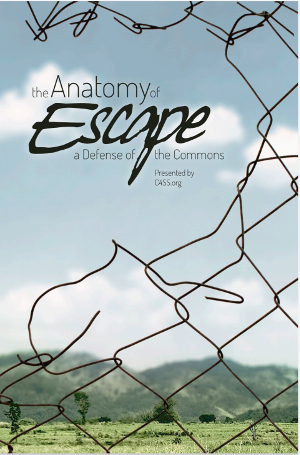

On May 11, the Los Angeles Times reported on President Obama’s visit to the U.S.-Mexico border in Texas in order “to push for an overhaul of the immigration system.” With all the usual political parlance, the President bragged that “his administration had made great strides in stopping immigrants from illegally crossing the border,” even while ridiculed Republicans for “want[ing] a higher fence.” For all his talk of fences, the President made no mention of the one he was attempting to straddle before a crowd including many Latinos.
There’s no easy way to completely or exhaustively define the many terms and sides of the American immigration debate. Calls for “reform” subsume everything from unadorned xenophobia and racism to (perhaps just as ridiculous) the fear that immigrants, in and of themselves, represent an undue burden on the U.S. economy, “stealing our jobs” or depleting government entitlement programs.
Laws that restrict and control immigration are the kith and kin of protectionist measures, the tariffs and other special favors that — under the pretext of protecting American workers — fortify Big Business and drive up consumer prices. On a fundamental level, laws that tell people where they may live are no different in kind from any other arbitrary restrictions the state places on peaceful existence.
Although the bands of criminal that we call states have covered and divided amongst themselves most of the world’s inhabitable territory, market anarchists don’t for a moment defer to their claims. As the ultimate absentee landlords, states control where people can live, work and trade in order to compel us into a plutocratic game of monopoly that we would never otherwise choose.
If it means anything at all, self-ownership means the right to move freely from one place to another, pressuring local markets to compete for labor. As Kevin Carson observes in Studies in Mutualist Political Economy, among the principle uses of England’s Poor Laws and Laws of Settlement for the ruling was to disallow “laborers from voting with their feet.” Since, for example, young manual laborers are often more willing to move for a job, mobility is one of labor’s principal sources of bargaining power.
It’s a rather blinding irony that those conservatives warning most frantically of open immigration’s exhaustion of the government coffers are often those least troubled by welfare for the rich. The war industry and the prison industry (just to name a pair) motor along at a breakneck clip, ravenously devouring taxpayer dollars all the way, but God forbid a brown child from south of the border find her way into a public school; that kind of privilege is just for U.S. citizens. So although, as an anarchist, I’m as opposed to the government education apparatus as I am to the government anything apparatus, the hypocrisy is clear enough.
Worries about immigrants’ impact on domestic unemployment and the scarcity of jobs are better directed at cartelization measures that capture the labor market for a handful of giant corporations in each industry. Each time a new “consumer protection” rule is launched, one more of the “little guys” is forced to close up shop, contributing to the pile of new applications at the local Walmart. As recently pointed out by economist Steven Horwitz, immigration is “no zero-sum game” whereby “any job a person acquires must have come at the expense of someone else.”
Rather, in a genuine free market — without today’s oligopolistic limitation on labor opportunities — there’s “room for everyone.” The crime of “illegal immigration,” like all victimless crimes that outlaw peaceful, noninvasive acts, ultimately translates to: “You don’t own yourself — the state does.”
Contrary to shrieks that a sovereign state has the right to protect its borders, a state can have no rights at all, at least not in any legitimate, moral sense. Only human beings have rights, and those are violated by dictates that determine where you can and can’t live.