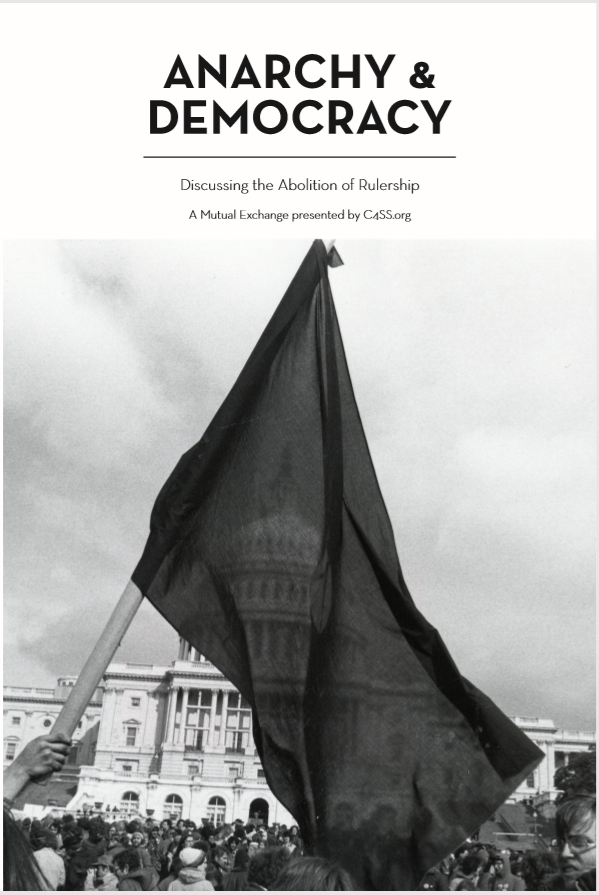
Last month, government officials in the United Kingdom responded to an independent review of the education system by lodging a plan to raise the cap for tuition fees by almost three times. The program, heeding a supposed “austerity” approach to the country’s budget, would set the ceiling at the equivalent of over 14,000 US dollars. The proposed plan was met with immediate protests, students objecting to the added burden of debt as an attempt to mend the government’s balance sheets on the backs of those least able to carry the millstone.
Today, following the House of Commons vote authorizing the fee hikes, the protests have intensified with the government unleashing its thugs against the affronted students. British lawmakers, already on the defensive, maintain that the impact of the cost increase will be absorbed easily by students, that it’s a fair, “sustainable” measure to counteract rising costs. Talk of economic sustainability — regardless of the British state’s attempts to mollify citizen apprehensions — hardly rings true considering the cartelized design of the United Kingdom’s state education system.
That system, though, is not unique or confined to the U.K. but is rather the standard assembled by all states, with some variations, around the world. In contemplation of education policy, many of us would raise few objections to the idea that those more able to pay ought to, through some arrangement, subsidize the education of the indigent population. That said, we need not defer to the assumption that such subsidies must necessarily ensue from the violence of the state.
Life insurance, for instance, is a kind of risk-anticipating subsidy, grounded on what we might consider a gamble, whereby some, the “losers” in that wager, ultimately subsidize others, the “winners” (forgive the irony in this particular example). Similarly, most people probably agree that, when all is said and done, the goals of whatever regimen society decides upon should be broad accessibility and a quality product in the education received.
Looking at the riots, it’s easy to see students’ cavils at the costs of their education as the callow attempts of the immature to avoid their responsibilities, to keep society at large on the hook for a service they benefit from. But to avoid that oversimplified characterization it’s necessary to inquire into what exactly these students are paying for and where their money is going. In Britain as elsewhere, contrary to the drivel of lawmakers, huge percentages of education expenditures are going not to balance governments’ budgets or improve quality, but to what economist Thomas DiLorenzo calls “a price-fixing conspiracy against the public.”
As “the victims of the [government] school cartel” — a scheme that includes state-protected corporate gorgers — British student protestors have every right to complain. The high costs of formal education, no less a crisis in the United States, are completely manufactured by the constraints of statism, the vast potential supply side strangled by controlling interests. If the state were actually motivated by its stated purposes, we could expect to see improvements corresponding with increased expenditures, be they from tax revenues, student fees, or otherwise.
That heap of societal wealth, instead of improving the service we’re superficially paying for, goes to feather the nests of everyone from big publishing companies, to university endowments, to contractors retained by government schools. Through the use of accreditation and a degree-focused corporate economy that actuates de facto attendance requirements for higher education (to approximate those imposed by law for early education), the state-corporate education cartels minimize the yield of education services.
In so doing, they exert an irresistible upward pressure on price and shove us into powerful academic institutions that sell extortionate letters to follow your name rather than substantive, practical education. “[T]he State,” reflected Joseph Stromberg, “functions to balance the interests of large economic power blocs while maintaining their common ascendancy in the face of potential threats from below.” His analysis correctly regards the state as a council defined by monopolization and manipulation of resources for its associates; whether they realize that or not, the frustrations of British students are a reaction to being hustled by that program, which feeds their money toward largely useless tasks.
Lower prices can only come if we abandon the state, allowing the supply to mushroom to meet demand. Though someday society may see the experiments in mutual “subsidization” that completely free interactions could issue in education, for now the only things being subsidized are bloated institutions that society could do without.
Citations to this article:
- David D'Amato, Cartelisation Harries the UK Student, Dhaka, Bangladesh New Age, 12/14/10
- David D'Amato, State-corporate cartel harries the UK student, The Canadian, 12/13/10


"Today, following the House of Commons vote authorizing the fee hikes, the protests have intensified with the government unleashing its thugs against the affronted students. "
You could show a bit of balance by pointing out that the "affronted students" were attacking the "hired thugs" and their horses. Or rather the usual Trotskyite minority that hijacks these demonstrations to cause trouble. If these people were in charge of the state it would be even more ghastly than it is now. What's even more absurd is the so-called anarchists joining in opposing government cuts.
This is a topic that I don't think gets the attention and treatment it deserves. If redefining any one area of society could lead to a sea change of the whole, then we need to look at education as that area.
Richard: Making carte blanche statements about the political nature of the protesters does nothing to assist your point. Aside from this, these students are heroes for actually resisting instead of remaining in a placated position where they voiced absolutely no concern for their own selves. And maybe you didn't catch the actual video footage, but the police charged the crowd first.
But keep on the side of the ruling class– it'll get you where you need to go, I'm sure.
Thanks David, I enjoyed that.
To Richard: The police is enforcing tyrannical laws, and is therefore entirely unlawful and a threat to the subjects/victims of the British monarchy. What if they are attacked? If they want to be safe, they can obey the law, and arrest the criminal monarchists.
As for the so-called anarchists, right back at you my friend. What's anarchistic about defending cops safety under a freaking monarchy?
My recent post Border Control is Organized Crime
Richard – I tend to think there’s enough pro-state, pro-capitalism disinformation out there to more than balance my humble op-eds, but I appreciate your take. As for calling into question the anarchism of opposing government cuts, I don’t think there’s necessarily an inconsistency there. Inasmuch as the state’s economic system creates a framework wherein we’re constantly squeezed to advantage a small elite, I’m not so sure we can’t oppose cuts to those few bones the state throws to mitigate the privations of the proles. Still, what the students protested here were fee hikes.
Todd – I wholeheartedly agree. The state’s mechanisms of education are indispensible to the functioning of its perverse caste society.
littlehorn – Thanks for the kind words! I agree with you and SocialistSleepover in that we need to worry less about police officers’ safety and more about voicing our concerns for ourselves and for one another against state oppression.
"The police is enforcing tyrannical laws, and is therefore entirely unlawful and a threat to the subjects/victims of the British monarchy."
Which tyrannical laws in particular were they enforcing? Looked to me as if they were trying to prevent vandalism. What do you think would have happened if the police weren't there? Storming Parliament and dragging out the politicians might be an anarchist's wet dream but it would do absolutely nothing for the anarchist cause – it would simply alienate public opinion. In an anarchist state there would presumably be some form of private security force.
Could you please also explain how the British monarchy is oppressing British subjects? I've lived in Britain for 27 years and I haven't felt oppressed by the monarchy. Rather I have felt oppressed by the state raiding my pay packet and various other petty regulations.
Don't get me wrong, the British state is in dire need of a clobbering but said clobbering will only come about when the masses come onside. They will not do so as long as resistance is symbolised by a bunch of violent Trotskyites spouting on about class war.
"Which tyrannical laws in particular were they enforcing? Looked to me as if they were trying to prevent vandalism."
Are you kidding? Are you an anarchist, yes or no? Do you not think that all legislation is a tyranny, as Spooner said? Do you not know that cops are paid with stolen money? Do you not see that the tyranny of majority is still a tyranny? That ALL the laws are tyrannical on that account. Which tyrannical laws? All of them. Seems to me like they are protecting an abusive tyranny that doesn't work to protect the people, but rather the special interests, as well as the monarchy itself. How do you think they get their money? Donations?
"Storming Parliament and dragging out the politicians might be an anarchist's wet dream but it would do absolutely nothing for the anarchist cause – it would simply alienate public opinion."
You mean, the same public opinion that exercises tyranny over millions of innocent people? Why should I care what they think? Nevertheless, I don't think any resistance, including this particular instance, is akin to a wet dream of dragging out the politicians from the parliament. Just because a cop is attacked, doesn't mean I'm a deluded troskyist, thank you. I'm pretty sure all anarchists understand that we shouldn't give a fuck about the politicians and organize outside their power.
"Could you please also explain how the British monarchy is oppressing British subjects? I've lived in Britain for 27 years and I haven't felt oppressed by the monarchy."
I was under the impression that the monarchy and the state were part of the same deal. But hey. Also, you have felt oppressed by the state for raiding your money and for imposing regulations. Well where do you think some of that money went to? Did you think the monarchy was a voluntary institution? Seen the queen pass the hat tip much these last few decades? Didn't think so.
There is a class war. And there's nothing wrong with defending yourself against criminal individuals, such as cops. I think that violent Trotskyites are doing the right thing when they do such a thing, and they should be applauded on that account. If they are wrong in other regards, praising resistance to the state is probably the best way to engage them and to change their minds.
I'd like to say something else. If taxation is one of the oppressive policies of the state, I'd say it's probably one of the least destructive ones, in my view. There are much more horrible state policies than stealing part of your income; like throwing you in jail, or killing people abroad. I would advise you to keep a bit of perspective, because if you say you are oppressed in having your money taken, people will automatically understand you haven't been more oppressed than that. That it's the worst shit you're going through. And frankly, there's much more serious crap the state does than stealing a percentage of your money, with all due respect. It's not a very inspiring case against the state at all. "I cannot retain 100% of my income!"
My recent post WikiLeaks pisses the Entire World off
Incidentally, for five years, the two coalition parties have complained bitterly about their Labour predecessors' ban on protests in Parliament Square – the logical, obvious place for a protest at what's going on inside than den of thieves.
Had they had the courage of their convictions these two parties now in government would have allowed the student protests to gather in Parliament Square originally, instead of cravenly following their predecessors by trying to steer the march and rally away from that area. Then the events of the Square last Thursday would likely have been avoided, as the protestors would have been there legitimately and not had to battle with police first to get in there and then to get out of their makeshift "kettle" prison.
Still, I've also written about the fees issue on similar lines to David and about the nature of the protests.